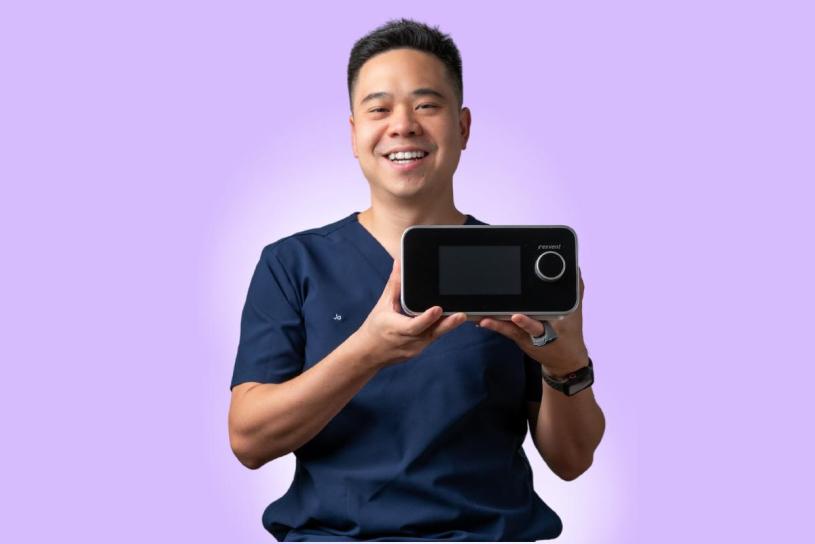
Meet Jo, whose journey into the world of sleep therapy wasn’t planned but personal. After suffering from severe fatigue, memory loss, and years of undiagnosed sleep apnoea, Jo’s life changed the day he strapped on a continuous positive airway pressure (CPAP) mask. That pivotal moment sparked a transformation: not only in his health but also in his purpose.
Today, Jo is one of the few certified sleep technologists in Singapore who has lived the struggle and now empowers others to reclaim their rest. Through his social media “Jo YesCPAP” and clinical expertise, he’s helping fellow Singaporeans understand that snoring isn’t just a nuisance. It could be a warning sign of something far more serious.
What inspired you to become a sleep technologist and how did your personal battle with sleep apnoea shape your passion for helping others?
I had particularly intense symptoms such as frequent dizziness, about six days a week, and vertigo attacks around five or six times a year.
While dizziness and vertigo aren’t typical signs of sleep apnoea, they were significant for me. I was in my late 20s and struggling with memory loss and extremely low energy. I’d only manage one or two productive hours a day. One day, my GP asked if I might have sleep apnoea, which led me down a path of discovery.
After my diagnosis, it took me six months to start CPAP therapy. I recalled an earlier encounter with a CPAP machine when a family friend brought one during a stay at our home, but I hadn’t paid much attention.
The difference was dramatic. Over time, I transitioned from a user to a “prosumer” and eventually became a certified sleep technologist. I now hold the RPSGT (Registered Polysomnographic Technologist) certification and dedicate myself to helping others through their own sleep apnoea journeys.
Many people overlook snoring as a harmless issue. When did you first realise you were experiencing something far more serious?
As mentioned, I had symptoms beyond typical snoring—daytime fatigue, memory issues, and dizziness. The turning point was in December 2015, when I suffered a vertigo attack while playing guitar on stage at a church camp in Malaysia. I spent the rest of the camp bedridden.
That same month, I had a severe sore throat that caused me to wake in the night in extreme pain. It was likely due to soft tissue in my airway touching when it narrowed, a classic sign of sleep apnoea.
But it’s important to understand that snoring lies on the spectrum of sleep-related breathing disorders. At one end is simple snoring, at the other is sleep apnoea, with conditions like hypopnoea and RERA (Respiratory Effort Related Arousal) in between.
All of these can disrupt sleep and cause micro-arousals that fragment rest, leading to tiredness, poor concentration, and reduced productivity the next day.
Sleep apnoea affects an estimated one in three Singaporeans, yet it remains widely undiagnosed. What do you think are the biggest misconceptions preventing people from seeking help?
A Straits Times article highlighted that one in three Singaporeans may have sleep apnoea, yet awareness is low. Most people don’t even know what it is, let alone seek treatment. A big barrier is lack of knowledge.
Some from the older generation believe they’ve slept fine their whole lives without a machine, so they assume nothing is wrong.
Others worry that CPAP therapy is unattractive or uncomfortable. Common concerns include looking “unsexy” to a bed partner, the machine being noisy, or discomfort from the mask. My team addresses these by offering hands-on mask fitting sessions. Patients try different masks and machines in real-time until they find the most comfortable setup.
So yes, there are barriers, but many can be addressed through better awareness and support.
As both a certified sleep technologist and a patient yourself, how do you balance the scientific and emotional aspects when guiding others through treatment?
When a patient sees a technologist who doesn’t use CPAP themselves, they may feel less understood. I’ve worn a mask, struggled with discomfort, and overcome all those initial barriers.
I can offer practical solutions from my own trial and error over a decade, from mask positioning to sleep posture. At the same time, I use my professional knowledge to optimise pressure settings and treatment efficacy.
It’s about combining technical expertise with lived experience to help patients succeed faster.
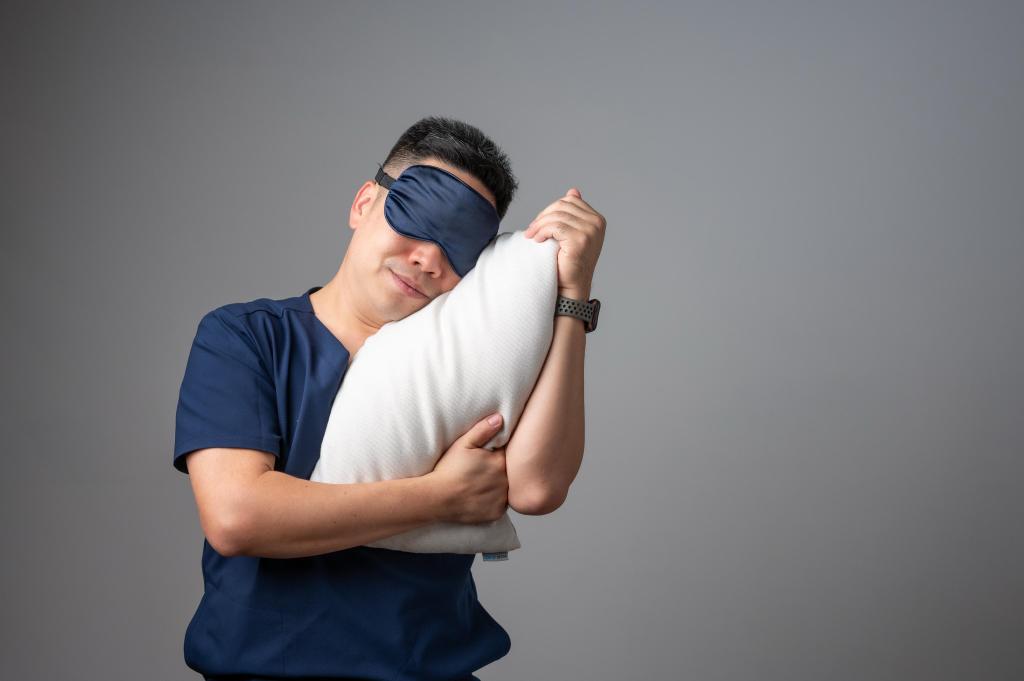
Good sleep helps regulate blood sugar and pressure. Even simple home tips, such as like side sleeping or slightly elevating the upper body, can help some people. Still, CPAP remains the gold standard for treating sleep apnoea.
What has been the biggest challenge in raising awareness about sleep apnoea in Singapore and how do you plan to make education more accessible to the public?
In countries like the US, Europe, or Australia, pharmacies often display CPAP machines and masks. This normalises their presence and piques curiosity. People start conversations and learn what they’re for. We don’t have that visibility in Singapore yet. No CPAP retailers seem to have partnered with pharmacies, possibly due to high commissions or other challenges.
On my end, I’m creating awareness through social media. I share tips on sleep health, how to wear and maintain your CPAP mask, and how to manage snoring. I know a few influencers on CPAP therapy, and if they’re willing to speak up, it could make a big difference. Sleep apnoea, if left untreated, can lead to heart attacks, strokes, and even early death.
I remember reading about a Singaporean man who died during a massage in Thailand. He was snoring and had breathing issues. While no autopsy was done, the signs strongly pointed to possible undiagnosed sleep apnoea.
With rising awareness of sleep health globally, what do you hope to see in Singapore’s approach to diagnosing and treating sleep apnoea over the next decade?
Our public healthcare system acknowledges sleep apnoea. However, most hospital sleep clinics have wait times of three to six months. I believe we need greater involvement from GPs. They regularly see patients with signs like tiredness, headaches, and weight gain. These should be triggers to consider sleep testing.
I collaborate with sleep test providers to flag potential cases. Health screening centres can play a role too. At the policy level, more subsidies for CPAP equipment and sleep studies would help.
Good sleep helps regulate blood sugar and pressure. Even simple home tips, such as like side sleeping or slightly elevating the upper body, can help some people. Still, CPAP remains the gold standard for treating sleep apnoea.
What is the hardest truth you’ve learned that no one prepared you for?
That no one is coming to save you. You have to actively seek out support and solutions and find others to walk alongside you in pursuit of shared goals.
If you could have a superpower for one day, what would it be and why?
Time travel. I’d go back to my younger self to share advice, insights, and preparations for the future—things I couldn’t have known back then.
Connect with Jo: YesCPAP and linktr.ee.

Health Advice Disclaimer
The information provided on this platform is for educational and informational purposes only. It is not intended as medical advice, diagnosis, or treatment, and should not be relied upon as a substitute for professional medical consultation, advice, or treatment from a qualified healthcare provider.
In Singapore, all health-related content is to be understood as general wellness information and not a substitute for medical consultation. Individuals are encouraged to seek advice from a registered medical practitioner under the Ministry of Health (MOH) before making any healthcare decisions.
