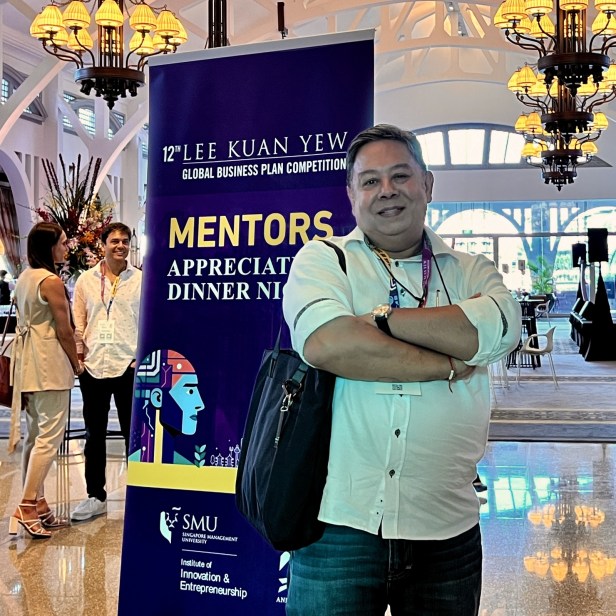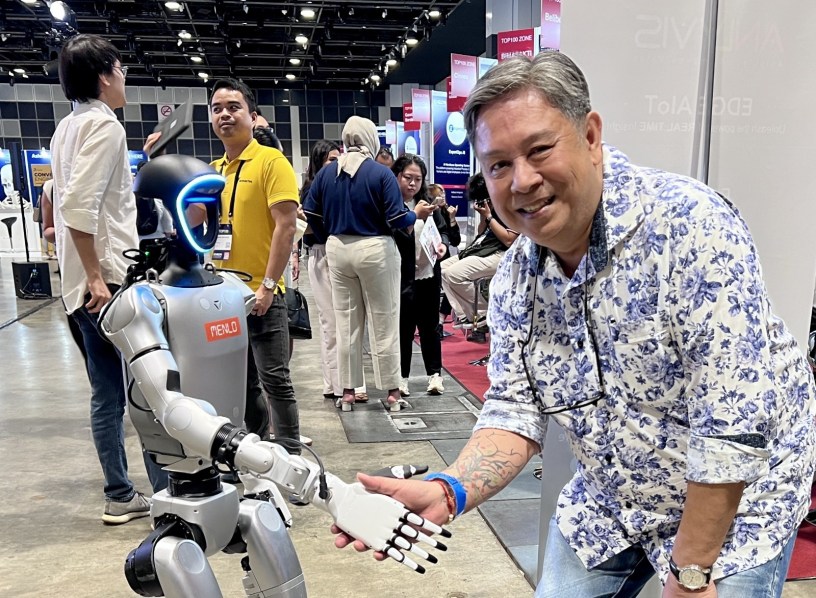
Meet Douglas, a seasoned mentor and strategic advisor whose journey spans from guiding early-stage startups to advising global firms expanding into Southeast Asia. With leadership experience across major organisations and several successful startup exits, he now channels his expertise into strengthening the business and startup ecosystem. Douglas has worked with more than 400 founders from 40 countries, helping them secure funding, break into new markets, and build sustainable growth strategies.
To Douglas, success is not just about financial gains. Deeply committed to enabling business as a force for good, he advises founders not just on achieving growth but also creating social impact through their ventures.
You have supported over 400 founders across 40 countries. What first inspired you to dedicate your career to building startup ecosystems?
When I first started business coaching with start-up founders, it was on a one-to-one basis. Honestly, I didn’t see it as a long-term path at first —I just thought I could help. Over time, I realised that my past experiences, including a couple of successful exits and “crash-and-burn” moments in startups, as well as my corporate background, allowed me to offer valuable insights.
I thought, “If I can help someone avoid the mistakes I made or fast-track their growth, why not?” People appreciated it, and the more appreciation I received, the more I enjoyed it.
In early 2020, I joined a Canadian accelerator programme as a startup mentor and began working with multiple cohorts and founders from different countries. I enjoyed the diversity of ideas and backgrounds of the people I mentored.
Later, I started mentoring at universities in Singapore, such as the National University of Singapore and the Singapore University of Social Sciences, and I’m now Entrepreneur-in-Residence at Singapore Management University. I also mentored at A*STAR and the American University of Beirut in Lebanon.
You’ve worked with founders from diverse socio-economic backgrounds, including youth entrepreneurs. What differences do you see in the challenges they face?
I’ve helped build programmes for youth entrepreneurs in high school and university.
They’re full of dreams, energy and action—which is great. But what’s often missing is the grounding in reality. Many forget that a startup is, in fact, a business. They overlook essential tasks such as onboarding customers, managing cash flow, contract management, delivery processes, and handling large orders.
These operational aspects may seem boring, but they’re essential. One of the biggest blind spots is failing to realise that passion and ideas alone aren’t enough. In a startup, you need to manage the business side, just like any other company.
45% of the founders you’ve mentored secured funding or achieved growth within a year. What do you think were the key factors behind this success rate?
Having a system is crucial. It must be structured and measurable. You need processes that are replicable and help you identify areas for improvement. It can’t be a series of random actions—those rarely lead to consistent success.
When you’ve got the right systems in place, the process becomes scalable, regardless of the startup’s product or service. Every founder and startup is different, but you still need a core foundation of systems.
On top of that, the founder’s passion is key. Investors need to believe in the founder’s ability to turn an idea into something powerful. I often ask founders, “How excited are you about your startup?” The ones who say they can’t wait to get out of bed and work on it—that’s the energy that drives results.
We built about 400 homes, helping over 2,000 families. In many ways, it felt like running a startup: building something from scratch, assembling a team, storytelling, fundraising, scaling and pivoting. It was purpose-driven work that changed lives—including mine.
Having worked at Avaya, British Telecom and Vonage, how has your corporate leadership experience shaped your approach to advising startups?
My corporate career was more intentional than my startup journey. Working in regional roles exposed me to various cultures and helped me build networks across the Middle East, Europe, the US and Asia.
This background helps me read Profit & Loss statements, understand contracts, and hire and manage teams—even though I’m not an accountant or lawyer. I’ve mentored countless management trainees and developed a customer-centric mindset.
These experiences naturally carried over to my startup work. Looking back, my corporate skills have been essential in helping startup founders—and in shaping my own growth as a coach.
With AI, digital transformation and globalisation shaping the startup world, what trends do you see defining entrepreneurship in the near future?
AI is definitely transforming how startups operate. For example, founders can now create high-quality explainer videos in minutes—something that used to cost thousands. AI can interpret contracts, perform competitor analysis, and provide market insights across countries in under an hour. It’s a huge timesaver.
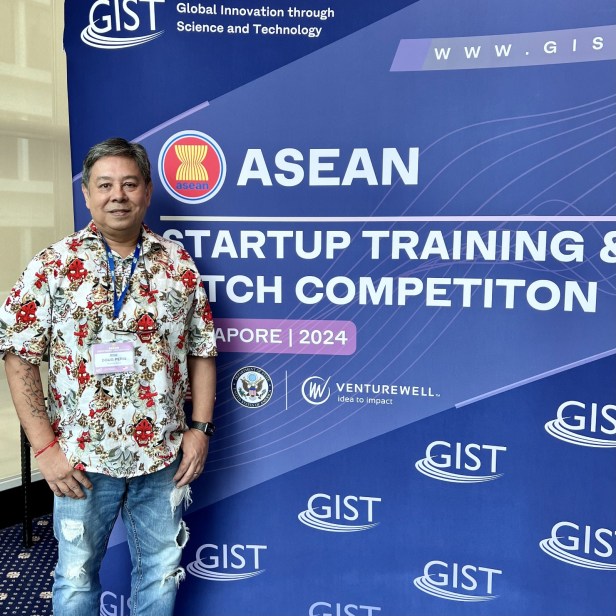
Secondly, cross-border business is increasingly common. Singapore is an ideal base due to strong government support and its location in Southeast Asia. I work with the Netherlands Embassy, which brings startups to Singapore, and with Australian accelerators doing the same. I work with international founders who are keen to establish a base in Singapore, and also with Singaporean founders expanding into new geographies like Japan and the Middle East.
Global events like SWITCH and GITEX are also hosted here. Founders want to understand what it’s like to do business and live in Singapore, and I help provide that perspective.
The third trend is purpose-driven entrepreneurship. Startups aren’t just about high tech anymore. Many now focus on sustainability, food innovation, wellness, waste reduction and social impact.
These aren’t fringe efforts—they’re mainstream. Startups today are embedding values and impact into their business models.
What is the one story that only you can tell—and how could it inspire or change someone’s life?
If I had to pick a personal story, it would be the 12 years I spent volunteering in Cambodia. We built homes for some of the country’s poorest communities. I had to form teams, raise nearly a million dollars in funds, and organise everything from logistics to accommodations.
We built about 400 homes, helping over 2,000 families. In many ways, it felt like running a startup: building something from scratch, assembling a team, storytelling, fundraising, scaling and pivoting. It was purpose-driven work that changed lives—including mine.
What’s your vision for Singapore in the next five years?
I believe Singapore will continue to grow as an innovation hub. It already attracts the most investment in Southeast Asia and serves as a stable launchpad for global ventures. There’s strong support from the government, private sector and international markets.
The region recognises Singapore as a source of strong startups and founders. My vision is for Singapore to be one of the top few global launchpads for entrepreneurs with international ambitions.
If you could have a superpower for one day, what would it be and why?
I’d want founders to meet the right people instantly. Whether it’s PR professionals, mentors, investors or advocates, the right connection at the right time can change everything.
Finding investors, handling rejections and enduring due diligence can be soul-crushing. But I believe there’s always someone out there who’s a fit. I just wish the founders could find them faster. So if I had a superpower, it would be instant access to the right people.
Connect with Douglas: LinkedIn.