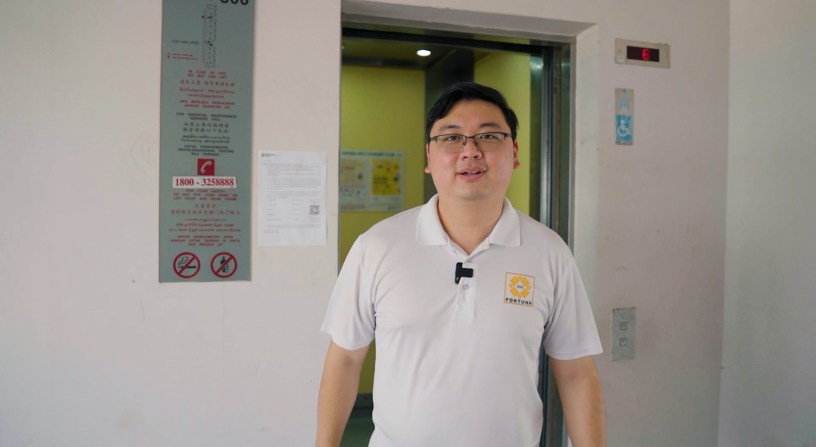
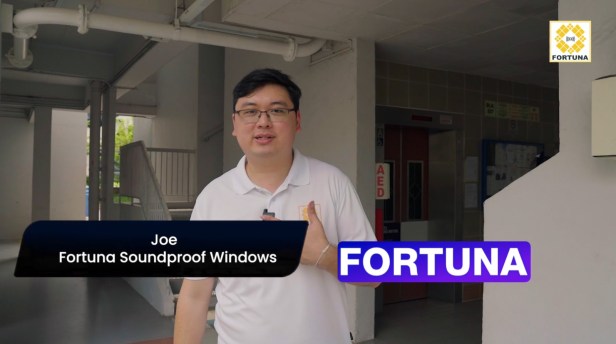
Meet Joe, who is on a mission to bring peace and quiet back into Singaporean homes—one window at a time. As the second-generation leader of Fortuna Soundproof Windows, Joe has dedicated his career to solving one of the most overlooked urban problems: noise pollution. Under his leadership, the company has become a trusted name in premium soundproof windows and doors, helping HDB and landed homeowners enjoy true tranquillity in an increasingly noisy world.
With a strong belief in innovation and customer-centric design, Joe combines technical expertise with real-world empathy. Whether it’s blocking out MRT rumblings, expressway traffic, or nearby construction, his solutions don’t just meet building standards—they exceed expectations. Through constant R&D, a commitment to quality, and deep respect for both legacy and modern needs, Joe is reshaping what it means to live—and sleep—comfortably in a city.
Fortuna Soundproof Windows is a second-generation company branching out from Fortune Decogate Design Pte Ltd, established in 1993. How has this legacy shaped the values and direction of Fortuna today?
Fortune Decogate was founded by my late father in 1993. He passed away seven to eight years ago. We’ve always served B2C customers directly, which means being accountable face to face. Our goal is to stand in the customer’s shoes and deliver value.
If we sell a gate for $500, the customer should feel it’s worth more. Underdelivering can lead to disputes, so quality and perception matter. This mindset carries into Fortuna. We now offer premium products but still prioritise B2C clients and their experience.
Internally, over 60% of our team has been with us for more than 30 years. We operate like a family, supporting each other through ups and downs. One technician transitioned into sales and will stay with us until retirement. I try to retain staff as long as they’re willing—when both sides stay committed, the relationship endures.
Your core material is UPVC, which is less common in Singapore compared to aluminium. What makes UPVC the superior choice for windows and doors in terms of soundproofing and insulation?
Previously, we focused solely on UPVC, but now we also provide aluminium as an alternative to meet customer needs, especially where UPVC falls short—such as in colour options.
UPVC has fewer than 10 colour choices because it’s plastic and cannot go through high-heat powder coating. Aluminium, on the other hand, offers far more colour flexibility. Still, UPVC is ideal for soundproofing, particularly for HDB flats, which are our primary market.
Most HDBs revolve around neutral colours—white, black, brown, grey—and we have these in UPVC for specific series. Compared to aluminium, UPVC is much thicker and provides better insulation for both heat and sound. Its chambered profile structure makes it harder for noise or heat waves to penetrate.
However, when it comes to durability, especially for tall windows or homes exposed to strong winds, aluminium may be more suitable. Regardless of profile, both materials support energy efficiency—important as we face rising global temperatures, especially during hot months like July. UPVC still has growth potential, but that depends on our upstream suppliers providing more colour options.
Fortuna has invested in R&D. How does innovation drive your product development, and what’s next in the pipeline?
Our R&D is driven by customer feedback. Every comment reveals an area for improvement—whether in our product, SOPs, or service. One recurring concern is what happens after the one-year warranty. We address this by educating customers on root causes, like leaking, and explaining how our design and installation prevent it.
Each feedback triggers a root cause analysis. If we can fix it internally, we do so. If not, we consult suppliers or seek better alternatives in the market. Only after testing and calculating ROI do we invest.
R&D is expensive—we’re often the first to attempt a solution, and if it fails, it’s money down the drain. But we back our decisions with statistics, results, and past data. Currently, we’re working on three main R&D areas: double-glazed fogging, sliding soundproof windows and doors and cost efficiency.
The key is to spend time understanding the business and the people before making any changes. People naturally fear change. Even successful changes can create new problems.
What are the most common noise problems Singapore homeowners face, and how do your solutions address them?
The first issue would be traffic noise. Most Singaporeans live in HDB flats, which are planned with proximity to buses, MRT stations, and malls. This convenience also brings constant traffic noise. The next issue would be construction noise. Singapore is always upgrading. Whether it’s LTA, BCA, or private developers, there is frequent heavy machinery work.
These sounds travel through the air and reach homes. Standard windows block only around 20% of the noise. Existing BTO and Custom Glass Products (CGP) windows lack strong air-tightness.
Our window systems are designed for better air compression. When the handle is locked, it compresses the perimeter of the frame, which enhances soundproofing. Thicker materials and glass also provide heat insulation.
What advice would you give to aspiring entrepreneurs in Singapore looking to transform a traditional family business into a modern, competitive enterprise?
I took over the company seven to eight years ago. Before that, I worked as a management trainee in the hotel industry. Joining a new organisation isn’t easy—people may be resistant, especially when they know you’re set to be their boss.
The key is to spend time understanding the business and the people before making any changes. People naturally fear change. Even successful changes can create new problems. Respect for all levels of staff is crucial.
If you can’t earn the trust of ground-level employees, it’s hard to win over middle or upper management. Even if you hold a top position and say “Let’s go,” no one will move if they don’t believe in you.
As a second-generation leader, I see myself as a bridge between the frontline and top management. Understanding both sides allows us to find win–win solutions that improve productivity and efficiency.
What is one value or principle that guides the way you live and work, and how has it shaped your journey?
For me, it’s respect. I treat people the way I want to be treated. In my first job as a hotel trainee, my manager didn’t like me because I had a degree. It took a full year to earn his trust. Even after that, I continued respecting him. Eventually, in the third year, we collaborated and created changes that were rolled out across hotel chains.
At Fortuna, it’s the same. I came from outside the construction industry, so it took time to build trust. But I led by example, backed by statistics and case studies. I showed how other companies had made improvements.
Once people saw the results—increased sales, smoother operations—they supported the change. Ultimately, everyone wants to do a good job. They just need the opportunity.
What’s your vision for Singapore in the next five years?
Singapore is moving towards a greener future—zero emissions, eco-friendly practices, and green-certified businesses. New flats will incorporate lifestyle elements and vibrant community features to attract Singaporeans, PRs, and foreign talent.
For our business, this presents opportunities. Windows are still crucial for natural ventilation and protection from the elements. At the same time, people want flexibility—fresh air when needed, peace and quiet when desired. We believe our soundproof systems can support this evolving demand.
If you could have a superpower for one day, what would it be and why?
I’d want the power to see into the future—just for one day. This would help us understand how today’s decisions impact future communities, businesses, and lives 10 or 20 years from now.
It could also accelerate tech development for better living, not just in Singapore or Asia, but globally. Earth is dying, and we must act with love and foresight.
Connect with Joe: Fortuna Window, Facebook and TikTok.


