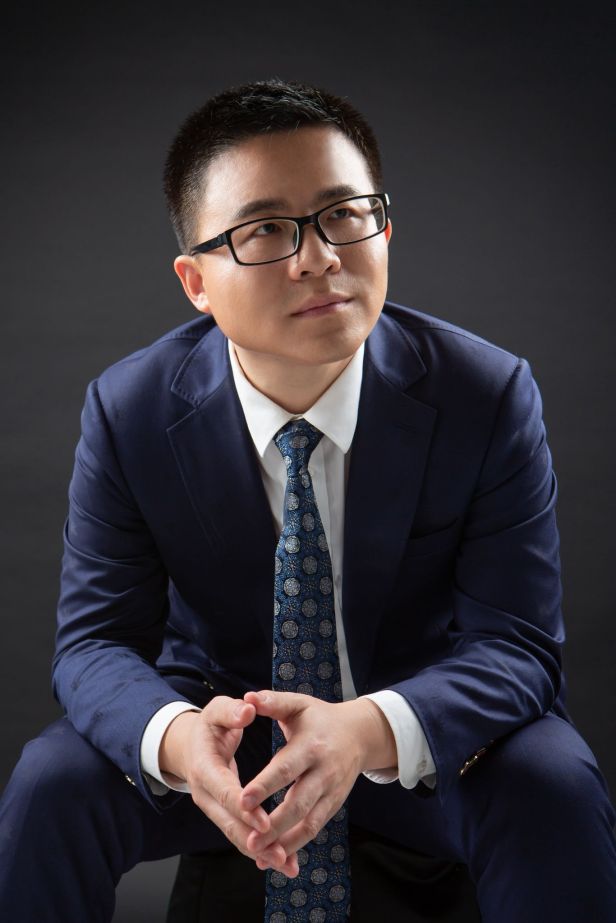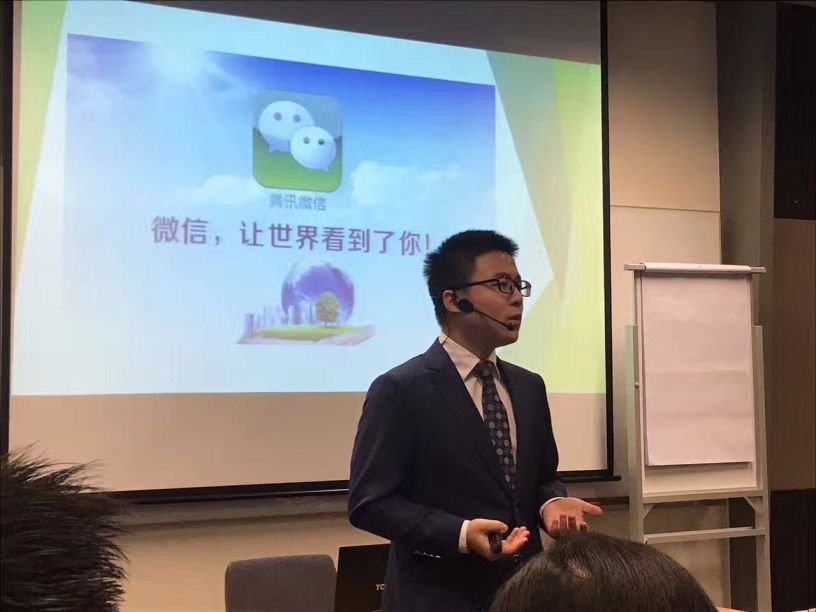
Meet David, the founder of Deren Marketing, a pioneering agency in Singapore specialising in Chinese social media and digital marketing. Since 2012, he has helped businesses bridge the cultural and digital divide—guiding clients through platforms like WeChat, Xiaohongshu, Douyin (TikTok China), and more. As an official partner for these platforms, David’s agency is trusted by regional brands looking to expand into Southeast Asia and Chinese-speaking markets.
With deep expertise in strategy, content, and platform insights, David leads a team of top-tier specialists who craft tailored campaigns that drive real engagement and results. Under his leadership, Deren Marketing doesn’t just help brands get noticed—it helps them resonate with the right audience, in the right way, across borders.
Could you share what inspired you to begin teaching WeChat marketing, and how the idea first came about, particularly when WeChat was still in its infancy?
I started exploring WeChat in 2014, after realising many Chinese-educated business owners in Singapore were curious about the platform but didn’t know how to use it. I wasn’t a teacher then, but I helped whenever they asked.
One day, a business owner in his 70s asked me to design a WeChat course. His marketing team, though young and English-educated, couldn’t figure it out. Initially, I declined, saying I wasn’t qualified to teach. But he was persistent.
Over tea, he explained how many Chinese-educated entrepreneurs had little support in the past. He saw China’s growth potential after the 2008 Beijing Olympics and wanted to enter the Chinese market but struggled with China-based WeChat tutorials that didn’t apply in Singapore. He said, “My time is limited. Can you create something for people like me?”
That conversation led me to create my first WeChat training—teaching Singaporean business owners how to use the platform to market, brand, and grow their businesses.
What were some of the initial challenges you faced while teaching WeChat marketing in Singapore?
The main challenge was tailoring the content. I had to make it relevant to Singaporeans — especially those who were older or not digitally savvy. Most of the examples from China didn’t work here. I had to localise every training point, down to the way we present menu options, navigation, and even terminology.
I also had to build trust. Many of my early students weren’t confident in digital tools, and some felt embarrassed asking “basic” questions. So, I had to create a safe, non-judgemental learning space. I encouraged questions and made the training very hands-on.
Another challenge was visibility. Social media marketing in 2014 wasn’t what it is today. Most Singaporeans didn’t fully understand how powerful platforms like WeChat could be — especially for branding, client engagement, and community-building.
Deren is now an official advertising partner of Xiaohongshu, WeChat, and Douyin. How were these strategic partnerships established?
Our official partnership with WeChat came about quite naturally. When Tencent’s overseas advertising team visited Singapore, they planned to meet organisations like NUS and Xiamen Airlines—both of which happened to be our clients. This coincidence gave us the opportunity to apply and become their official service provider.
It was a similar story with Xiaohongshu. Many of the campaigns we ran for clients were later highlighted by the platform itself as official case studies, demonstrating how overseas businesses could succeed there. Once Xiaohongshu realised we were the team behind those campaigns, the partnership came together smoothly.
We hadn’t originally set out to pursue these partnerships—we simply focused on delivering strong results for our clients. At the same time, many of our clients required official ad placements, which can only be managed through authorised service providers. This created a mutually reinforcing cycle: client needs met platform opportunities, and we naturally became their official partners.
The biggest misconception is thinking platforms like WeChat or Xiaohongshu are just Chinese versions of WhatsApp or Instagram. They’re not—they’re shaped by entirely different cultures and user behaviours.
Could you share some cases where you helped Singaporean companies successfully enter the Chinese market?
One client was a major Singapore real estate agency with strong financials but low brand awareness among Chinese buyers. We ran simple, targeted ads—“Singapore’s largest listed property agency”—and helped form a team focused on luxury homes. This gave them immediate visibility.
Another client wanted Chinese franchise partners. Instead of high-cost cities like Beijing or Shanghai, we tested ads in second- and third-tier cities like Chengdu, Zhengzhou, and Jinan—large populations, less competition. Campaigns were adjusted by performance, lowering ad costs while boosting ROI. Many paid US$5,000 just to view the franchise contract—clear proof of intent.
We used this same strategy for other industries, like international schools, with great results.
The key takeaway is China’s real opportunity isn’t just in top-tier cities. With the right targeting on WeChat, Xiaohongshu, and Douyin—where Chinese audiences really are—businesses can succeed in untapped, high-return markets.
For businesses that are new to Xiaohongshu, WeChat, or Douyin, what’s the biggest misconception they have?
The biggest misconception is thinking platforms like WeChat or Xiaohongshu are just Chinese versions of WhatsApp or Instagram. They’re not—they’re shaped by entirely different cultures and user behaviours.
Xiaohongshu isn’t just for pretty photos—it’s a powerful, search-driven platform used mainly by women to find detailed guides on food, travel, parenting, and more. Content is authentic and time-saving, unlike anything in the English-speaking world.
WeChat and Douyin are also unique. WeChat is far beyond messaging—it includes payments, mini-programs, and video channels. Douyin may look like TikTok, but the features and ecosystem differ. These aren’t clones—they’re distinct platforms businesses must approach on their own terms.
What makes a successful entrepreneur?
We’ve had the privilege of working with numerous brands, including five-star hotels and luxury brands. From these experiences, we’ve learned that successful entrepreneurs share three key traits.
First, they have clarity and focus. Without clear direction, even the most hardworking team can go nowhere. A strong leader must identify and stay focused on what truly matters.
Second, they think long-term. When we began hosting Xiaohongshu and WeChat sharing sessions, we didn’t charge fees. These sessions later led to government collaborations because our content was practical and local.
Third, they stay resilient and inspire others—especially in crisis. During the pandemic, we saw that if a leader loses confidence, the team crumbles. An entrepreneur must remain the pillar of strength.
What’s your vision for Singapore in the next five years?
I believe Singapore will increasingly serve as a bridge between East and West. While globalisation is shifting and protectionism is rising, Singapore remains neutral—without major conflicts of interest with either the US or China.
Singapore is already seen as a trusted brand. It’s known for rule of law, high standards, and professionalism. As Southeast Asia’s most advanced economy, it attracts global attention—especially from Chinese entrepreneurs expanding overseas. For them, Southeast Asia is the first stop, and Singapore is the top choice. This presents a strong growth opportunity.
If you could have a superpower for one day, what would it be and why?
Honestly, I’ve never really thought about having a superpower. I don’t believe such things truly exist. However, if it’s possible, I think what I really wish for is the ability to quiet my mind and focus anywhere, without being disturbed by external distractions.
That way, I could sit down and read peacefully, even in a noisy place. Right now, I often need to go to the library just to be able to finish a book. So perhaps it’s not really a superpower, but rather a goal I want to keep working on in the future—the ability to focus deeply, no matter where I am.
Connect with David: DerenMarketing, XiaoHongShu and Facebook.
David is a member of Rainmaker, a revolutionary movement that rallies like-minded people together based on the values of Love, Authenticity, Respect, Kindness and Youthfulness (LARKY).