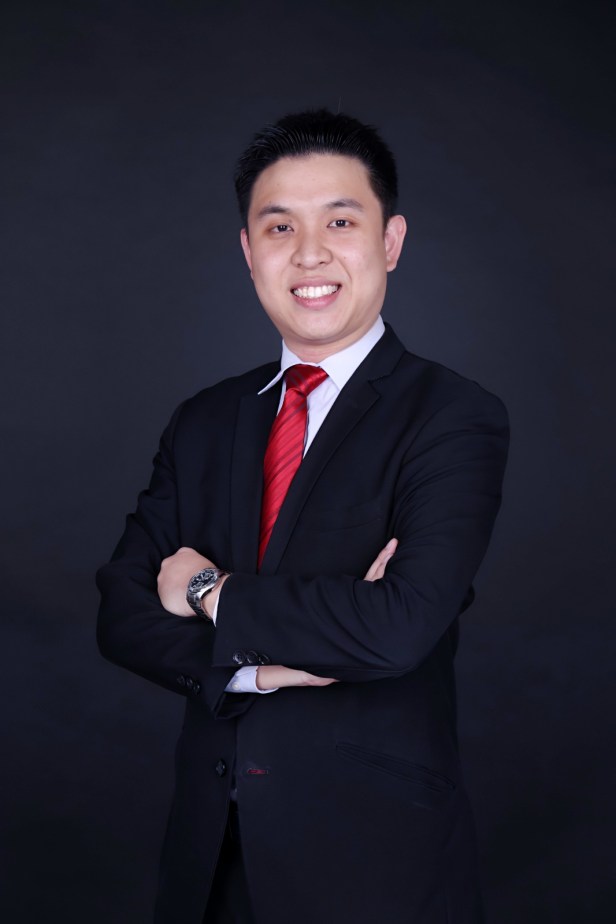
Meet Woon Jiun, the passionate founder of The Talent Craftsmen, a training, coaching and consulting practice dedicated to helping individuals and organisations rediscover the passion in their craft, purpose to serve, and partnership through leading teams. With a background in people development and leadership, he has impacted over 8000 talents across more than 70 organisations to unleash their full potential.
At The Talent Craftsmen, Woon Jiun combines deep empathy with strategic insight to craft personalised growth journeys and organisational development strategies. His mission is simple yet profound—to develop confidence and competence of talents for people-centered teams. As he quotes, “Elevate your Talents. Transform your Organisation.” With his partners, they help leaders and teams foster a culture of continuous learning and sustainable growth.
What inspired you to found The Talent Craftsmen, and what does the name represent to you?
The founding of The Talent Craftsmen wasn’t something I had planned to do so early. In fact, I originally intended to start it in another eight to ten years. But life has a funny way of showing you the right time—and for me, that time came sooner than expected.
So, I took a leap of faith and decided to start. The story of The Talent Craftsmen is rooted in my own career and life experiences, which have shaped a strong belief that people are the greatest asset of any organisation. Over time, I developed a passion for unlocking and nurturing human potential.
I chose the name The Talent Craftsmen because I genuinely believe that every person possesses innate talents. Each individual has unique strengths—just like the different lengths of fingers on a hand—and we don’t need to mould everyone into the same shape.
When we nurture people’s natural strengths, they grow faster, feel more fulfilled, and become happier. “Talent” reflects our focus on these individual gifts, while “Craftsmen” signifies the precision, expertise and dedication involved in bringing those talents to life.
Coming from a background in psychology and sociology, how do these disciplines influence the way you design coaching and development programmes?
My academic background in psychology, sociology, body language, and cross-cultural studies has a deep impact on how I design coaching and development programmes. At the core, it’s about understanding how the human mind works—how people learn, process information, retain knowledge, and ultimately grow.
I believe that learning isn’t just a matter of content delivery; it’s about how information is received through multiple senses—visual, auditory, kinesthetic—and how we subtly influence behaviour.
This understanding helps me go beyond surface-level instruction. It shapes the way I develop programmes that cater to different learning styles and personalities in a room. For example, I often build in “subliminal messaging”—subtle reinforcement techniques that make lessons stick long after the session ends.
It’s not just about what is said, but how it’s said, and how it’s received. That’s what drives impact. Many standardised programmes miss this entirely. But when you incorporate principles of psychology and sociology into programme design, you make learning relevant, inclusive and transformational.
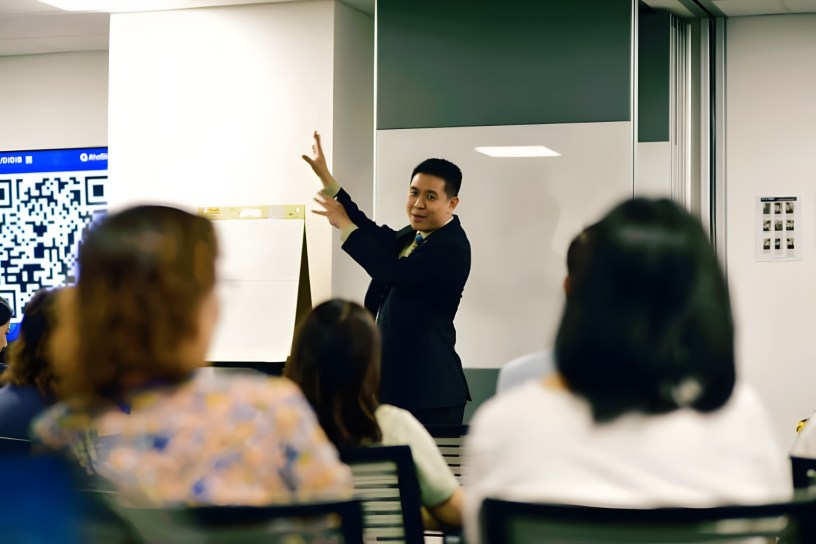
In group settings, I focus heavily on creating a psychologically safe space. That means ensuring everyone feels heard, respected, and empowered to speak without fear of judgment.
Many young people today face anxiety, peer pressure, and uncertainty. How does your approach help them discover clarity and direction?
Young people today grow up in a vastly different environment—one where social media and constant connectivity amplify judgment, pressure, and comparison. In this context, psychological safety becomes paramount.
Whether in coaching or workshops, I always start by helping them discover themselves—who they are, why they are here, and what drives them. This foundation of self-awareness, often framed around personal branding and purpose, helps reduce anxiety and provides a compass in moments of peer pressure or uncertainty.
In group settings, I focus heavily on creating a psychologically safe space. That means ensuring everyone feels heard, respected, and empowered to speak without fear of judgment. I also subtly reinforce boundaries and values through design and delivery.
When people feel safe and sessions are engaging and fun—because what’s fun is remembered—they open up, absorb more, and leave with a sense of clarity. Especially when exploring deeper themes like leadership, the impact is even greater.
Leadership is often seen as a skill one is born with. How do you counter this myth when working with emerging leaders?
I love this question—and I get it a lot. In almost every leadership workshop I conduct, I ask: “How many of you chose to be in this role?” Most responses are along the lines of “I was pushed into it” or “There was no one else.”
Very few say they actively sought the position. Many doubt their worthiness or question why they were chosen. That’s where we start. Leadership is not innate.
Yes, some people are born with traits—like extroversion or emotional sensitivity—that may help. But leadership itself is cultivated. No one is born with followers. Leadership is about influence. If you can’t influence people, you can’t lead them. And influence, like trust and credibility, is earned over time.
Leadership grows from experiences, training, mentoring and self-awareness. You restart the ladder with every new relationship or team. It’s not a destination—it’s a journey. So yes, leadership can absolutely be developed, and that’s what we help our emerging leaders see for themselves.
Beyond individual growth, how do your programmes contribute to shaping organisational culture and business performance?
Beyond personal coaching and training, we work a lot in consulting and team development. One underestimated tool is team building. It’s more than just bonding—it creates shared memories that form the glue for resilient teams.
Whether it’s in the army or corporate world, people who go through meaningful challenges together stay connected through highs and lows.
From a consulting perspective, we conduct deep needs analyses that look at both learning and non-learning gaps. My framework focuses on the 3 A’s: Ability (Skills and knowledge), Attitude (Motivation, both internal and external) and Approach (Processes, tools, and environment).
We consult on product-process-people alignment, design interventions, establish SOPs, advise on organisational design, and even run mentorship programmes. Culture change starts with diagnosing the root cause—not just sending people for more training.
On a personal level, what keeps you motivated to continue this work of developing talent every day?
For me, it’s about legacy. Developing talent has never felt mentally or emotionally draining—it fuels me. Even when physically tired, I still feel energised by the work. Every time a young professional I once trained or coached becomes a director, GM or leader, and they still remember me—that’s the most rewarding thing.
I don’t need grand gestures; I just need to know I’ve left a meaningful footprint. One talent at a time.
What’s your vision for Singapore in the next five years?
Singapore is home. I’ve lived and worked abroad extensively, but nothing compares to what we have here—order, safety, cleanliness, structure. But we must not grow complacent.
We are small, and our only true asset is our people. If we stop investing in talent, if we believe we’re already at the top, we risk losing our edge. My vision is a Singapore that continues to invest in its people, that strives to improve, and where everyone plays a part in shaping a forward-looking, adaptive society.
If you could have a superpower for one day, what would it be and why?
Teleportation. Hands down. Time is precious, and there’s so much of the world I want to explore and learn from. I love immersing myself in other cultures—understanding their people, food, customs.
If I could snap my fingers and be in Japan for the cherry blossoms or in Egypt exploring the desert, I’d do it in a heartbeat. Plus, it’s a practical power. If things ever get dicey, I can just teleport away!
Connect with Woon Jiun: TheTalentCraftsmen, LinkedIn and Instagram.

