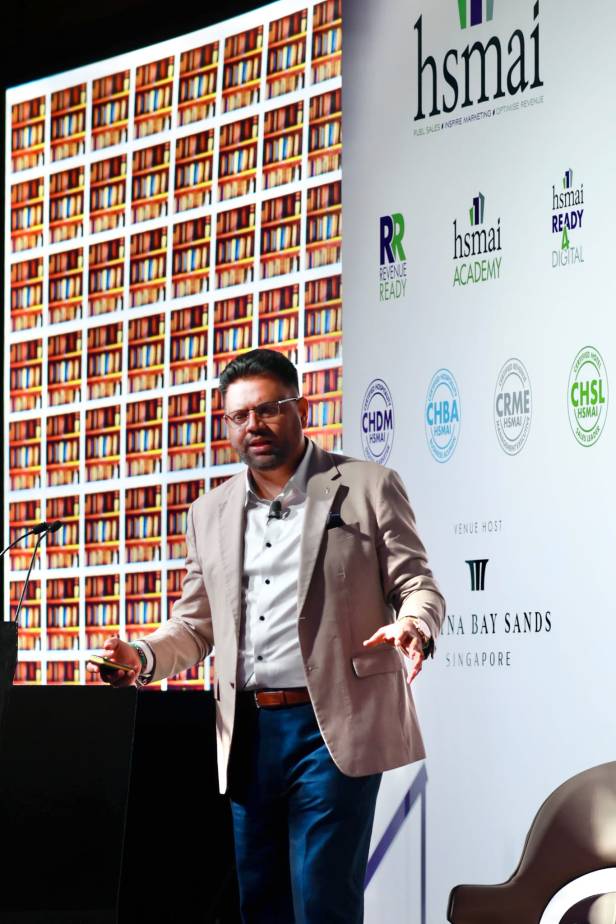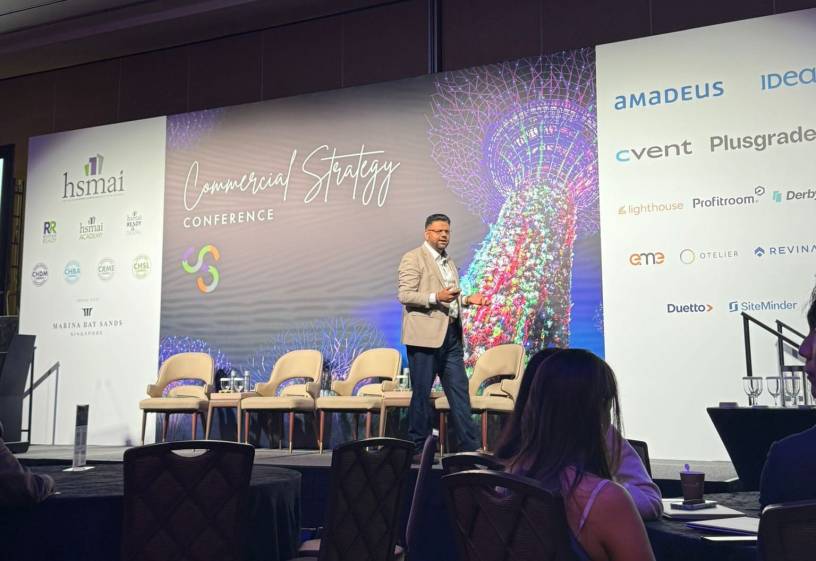
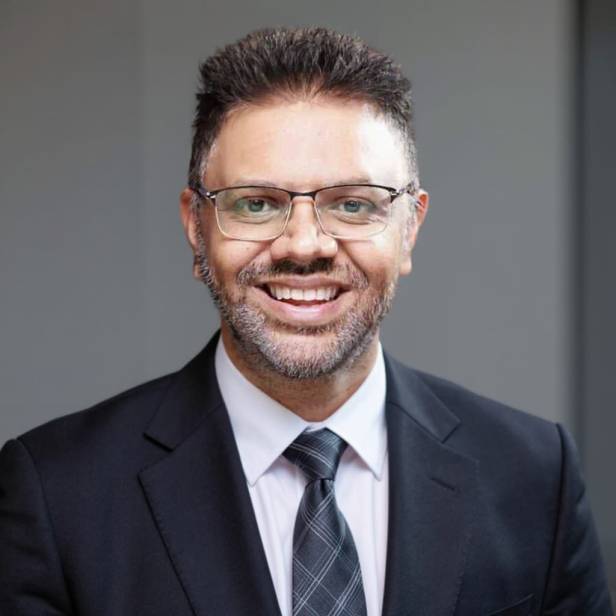
Meet Navodit, a dynamic leader known for embracing people-centric leadership with sharp market execution. With over two decades of global experience in commercial strategy, sales leadership, and business transformation, he has led high-impact initiatives across enterprise sales, digital transformation, and ESG integration. His work has spanned continents and industries—always with a clear focus on unlocking sustainable growth.
Driven by a passion for purpose, clarity, and impact, Navodit sees commercial leadership not just as a business function but as a powerful form of service. Whether it’s guiding organisations through the evolving AI landscape, aligning global teams across cultures, or embedding sustainability into core strategy, he continues to shape the future of business with integrity and foresight.
You have had over 20 years of experience driving growth and innovation. What initially drew you into a career in commercial strategy and leadership?
From the very beginning, I was fascinated by how to grow businesses—not just through products, but through people and strategy. What drew me in was the chance to operate at the intersection of market opportunity, human behaviour, and execution.
To me, commercial leadership isn’t just about pushing sales; it’s about unlocking value, aligning customer needs with organisational strengths, and building sustainable growth engines.
It’s this blend of problem-solving and impact that hooked me early on and still excites me today. Selling or leading commercial initiatives is one of the biggest forms of service in the industry—it’s one of the most valuable functions that drive an organisation’s growth engine.
You have led initiatives across enterprise, sales, partnerships, and business development. What is your framework for identifying and seizing new market opportunities?
Today, many companies struggle to identify new markets and scale growth frameworks. My approach uses a three-lens framework. First, customer truth—what are the real, often unspoken pain points customers face? Not just the obvious ones, but the deeper friction points. Identifying those is crucial.
Second, market timing—is the ecosystem ready in terms of technology, regulation, and adoption cycles? Are the stars aligning? And third, scalability—does the organisation, or its partners, have the unique capability to create leverage?
When customer truth, market timing, and scalability align, that’s when we know it’s worth doubling down. These are the core parameters I use for identifying and acting on new market opportunities.
You have driven digital transformation across industries. What do you see as the most exciting opportunities in AI and digital solutions for businesses today?
AI is evolving from being just a tool to becoming a strategic co-pilot for organisations. The most exciting opportunity lies not in automation alone, but in augmentation. Imagine a sales team spending 70% less time on admin and 70% more time building client relationships—that’s the kind of impact AI is making.
But AI must be managed well, or it can create chaos. Take supply chains, for instance—AI can help them self-correct before disruptions even happen.
The businesses that thrive will be those that integrate AI into their culture, using it to guide decision-making, client service, and innovation. AI shouldn’t be treated as a side project; it must be part of the company’s growth mindset.
To me, commercial leadership isn’t just about pushing sales; it’s about unlocking value, aligning customer needs with organisational strengths, and building sustainable growth engines.
You have managed regional and global teams. How do you ensure collaboration and alignment across diverse markets and cultures?
I’ve always believed alignment begins with purpose, not process. Teams in Singapore, London, New York, India, or Thailand need to understand why they’re moving in a certain direction—then they’ll find the best local way to get there.
Practically, three principles apply. First, shared clarity—crystal-clear mutual goals. Second, local autonomy—freedom to adapt strategies to local culture. And third, cultural curiosity—leaders who listen more than they speak. That balance between alignment and trust is what makes global teams truly effective.
You have emphasised integrating ESG practices into business strategy. How can companies make sustainability a growth driver rather than just a compliance exercise?
One common mistake is treating ESG as just a report card, when in fact it’s a growth lever. Consumers and investors are actively supporting companies that behave responsibly.
For example, when operations are redesigned to be greener, you not only reduce environmental impact but also unlock efficiencies, lower costs, and even access new markets.
Sustainability isn’t just about doing less harm—it’s about doing more good in a way that builds long-term brand trust and profitability. ESG must be viewed as a strategic advantage, not just a checkbox.
What are some of the biggest challenges you foresee for global businesses in the next five years?
Two challenges stand out. First is the trust deficit. With misinformation, geopolitical tension, and economic volatility on the rise, both customers and employees are questioning whom to believe. Organisations will need to rebuild trust through transparency.
The second is talent reinvention. AI and automation are evolving faster than education systems can adapt. Companies that don’t reskill their workforce at scale will fall behind. These two—trust and talent—will be the defining challenges of the next five years.
In your opinion, what makes a good entrepreneur?
A good entrepreneur is someone who can convert adversity into opportunity. Many entrepreneurs get stuck when facing challenges, but the best ones identify the right problems, surround themselves with the right people, and navigate through uncertainty with resilience and clarity. In a fast-changing world, these traits are more important than ever.
What’s your vision for Singapore in the next five years?
Singapore has the potential to become the world’s leadership lab—a hub where East meets West, where innovation coexists with regulation, and where a small size meets global ambition.
My vision is for Singapore to position itself not just as a financial or tech hub, but also as a talent hub—a place where sustainable, digital, and people-centric leadership is developed and shared with the world. It can be a model for how values-based leadership can shape global business.
If you could have a superpower for one day, what would it be and why?
If I could choose a superpower, it would be the ability to slow down time. In leadership, the best insights often come during pauses, not in the rush.
Imagine having an extra hour in every critical conversation—to listen more deeply, think more clearly, and decide more wisely. In a world that’s constantly speeding up, the power to slow things down could be the ultimate edge.
Connect with Navodit: LinkedIn.