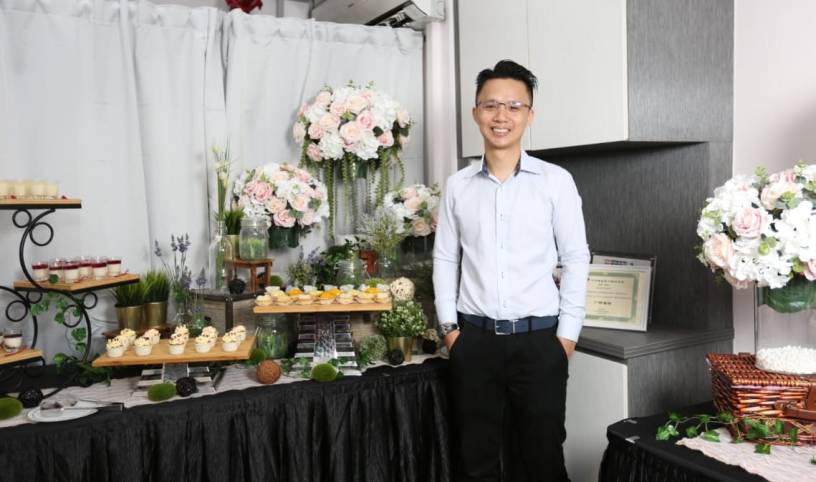
Meet Patrick, who walked away from a stable career at Global Foundries—where he rose to principal engineer—to chase a very different ambition: building and investing in food businesses. Since 2011, he’s transformed family roots in catering into a multi-brand ecosystem spanning central kitchens, pastry, retail, kiosks and manufacturing, while also backing ventures from urban farming to premium dining.
Recognised with the Spirit of Enterprise Award in 2019, Patrick now leads as Managing Director of his group and serves as President of the Association of Catering Professionals Singapore (ACAPS). His focus: innovation, operational excellence and resilient teams—so the F&B sector can thrive despite rising costs, manpower constraints and shifting consumer tastes.
What inspired you to leave Global Foundries and pursue your dream of becoming an entrepreneur in F&B?
I joined Global Foundries in 2011 and spent 14 years in the business. By then, I found myself at a crossroads. It had been my first job after graduating in mechanical engineering, and the semiconductor industry was a natural fit. After seven years, I had risen to principal engineer, but I began to feel that my days had become repetitive — meeting the same people, solving similar problems, with fewer opportunities to learn new things.
That was when I decided to try something different. At the same time, my parents were running their own business, and I had always helped them from a young age. Joining them felt like a natural transition and a chance to pursue something I was passionate about.
So, it was both a mid-career decision and a personal calling — a way to reach out to the world with a new business while also continuing the family legacy.
Building and investing in multiple brands across catering, patisserie, retail and manufacturing is no small feat. Which venture taught you the most valuable lesson?
Since 2011, I have grown the business through multiple ventures. In 2016, I launched my first start-up — a multi-brand catering concept that offered diverse cuisines to attract a broader customer base. That was the foundation of my entrepreneurial journey.
From there, I expanded into joint ventures, including urban farming, a French restaurant, and, more recently, kiosk businesses. Every venture has added value to the ecosystem, as I believe in keeping all brands connected and relevant to our core business.
Looking back, my first start-up in 2016 taught me the most valuable lesson. It was my first real taste of running something independently, and today it still contributes the highest revenue in my portfolio. It showed me the importance of diversification, creating synergies across businesses, and building a sustainable ecosystem rather than chasing isolated opportunities.
You were honoured with the Spirit of Enterprise Award in 2019. What did that recognition mean to you personally and professionally?
The Spirit of Enterprise Award is a very prestigious recognition. I was nominated, and receiving it was a milestone moment for me. As an entrepreneur, we work tirelessly behind the scenes, and any recognition — whether an award or positive media coverage — serves as validation that the effort is worthwhile.
For me, this was my first major entrepreneurship award, and it gave me the encouragement to keep pushing forward. It was both personally memorable and professionally motivating.
As President of the Association of Catering Professionals Singapore (ACAPS), what are your top priorities for the industry in your current term?
I was recently re-elected as President at our AGM in July 2025, and I take this appointment very seriously. This is my third year, and I have another two years to serve. Leading the industry is an honour and a responsibility, and together with our management committee, we aim to push forward initiatives that will strengthen the sector.
This term, our focus is on forward-thinking leadership. We are planning a retreat to re-examine the industry’s challenges and chart a roadmap for the future. Current issues such as rising costs, manpower shortages, and even food safety incidents continue to pose significant challenges.
Our priority is to work closely with government agencies and stakeholders to ensure the catering industry remains resilient, vibrant, and ready to tackle what lies ahead.
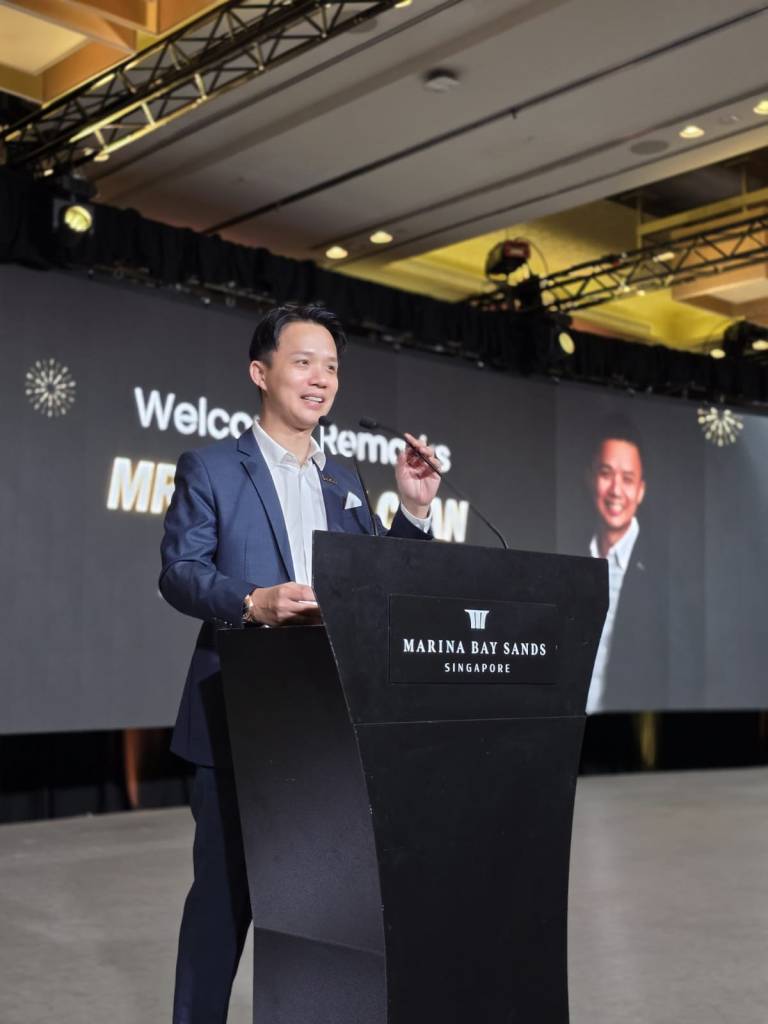
When I was younger, I had little guidance and often wished there were leaders from the industry who could mentor me. Now, I want to give back by helping students understand that F&B is a viable career path, even if it is not often seen as attractive.
With media interviews and panel invitations, how do you balance being a business leader and a thought leader?
Balance comes down to having a strong management team. I am fortunate to have a capable team running operations, which allows me to step outside and engage in thought leadership, learning from other industries and sharing my experiences.
Over the years, I’ve participated in interviews and panel discussions on topics ranging from second-generation entrepreneurship to post-COVID business recovery. Balancing these engagements with my role as Managing Director requires careful time management and the ability to prioritise.
I believe in saying no to opportunities that do not align with my focus and making sure that every interaction counts. This way, my 24 hours are optimised between running the business and contributing to the broader industry.
You’ve mentored students from tertiary institutions such as NTU, SMU and even secondary schools. Why is mentoring the next generation so important to you?
After COVID, I started working closely with career offices at local universities and secondary schools. We’ve run hackathons, mentorship programmes, and industry talks, and I’ve spoken to more than 5,000 students to date. I also open our kitchens for educational visits, giving students a chance to see a real central kitchen in operation — something they would not usually experience.
This is very meaningful to me. When I was younger, I had little guidance and often wished there were leaders from the industry who could mentor me. Now, I want to give back by helping students understand that F&B is a viable career path, even if it is not often seen as attractive.
By sharing knowledge and opening doors, I hope to inspire the next generation to consider entrepreneurship or careers in the industry.
What do you think makes a good entrepreneur?
Entrepreneurship evolves through different stages. In the beginning, you are hands-on with every detail, running daily operations. As the company grows, you build a management team, freeing yourself to explore new opportunities, network, and bring back ideas.
A good entrepreneur adapts to each stage, never stops learning, and evolves with the times. To me, entrepreneurship is about having the courage to try new things, staying relevant, and always being prepared to reinvent or innovate.
At the same time, it’s also about building a business that is sustainable, profitable, and able to give back — whether to employees, the community, or society at large.
What’s your vision for Singapore’s F&B industry in the next five years?
The F&B industry faces many challenges, especially with high rentals, manpower shortages, and demanding working conditions. Many young people are hesitant to join the sector, and we must make it more attractive and sustainable. Central kitchens and automation will play a bigger role, and I foresee opportunities to shift some operations overseas where costs are lower.
Consumer patterns will also change, and companies must adapt quickly. My vision is for Singapore’s F&B industry to remain resilient, innovative, and competitive — with new business models that ensure growth despite rising costs.
If you could have a superpower for one day, what would it be and why?
If I could have one superpower, it would be the ability to assemble and lead the strongest possible management team. Running a business is not just about capital or operations; it is about people. A company succeeds when its people are motivated, aligned, and happy working together.
With the right human capital, a business can overcome any challenge, scale sustainably, and achieve beyond what money alone can buy. For me, that would be the ultimate power — to build and sustain a team that can take the company to greater heights.
Connect with Patrick: Instagram and LinkedIn.

