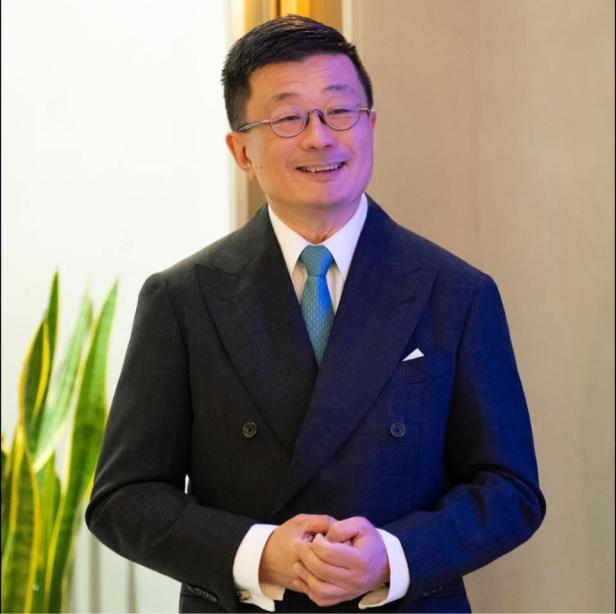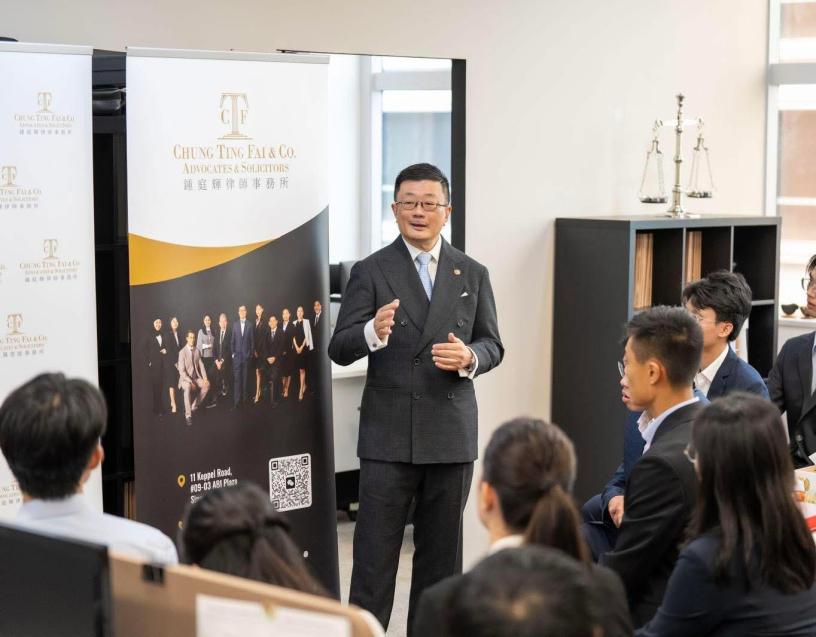
Meet Ting Fai, the founder of Chung Ting Fai & Co. and a veteran lawyer with nearly 35 years of experience. He has built a distinguished career that spans both contentious and non-contentious work. Many of his cases have been reported in the Law Reports and cited in subsequent decisions. His expertise ranges from high-stakes dispute resolution to wealth management, legacy planning, and advising family offices across Asia.
Beyond the courtroom, Ting Fai is also an international arbitrator, serving with the Hainan International Arbitration Court in landmark cases involving cross-border disputes. Known for his deep legal knowledge, cultural sensitivity, and forward-thinking approach, he is committed to modernising legal practice by embracing emerging fields such as AI, cybersecurity, and cryptocurrency law—ensuring relevance and resilience for the next generation of lawyers.
You have argued cases before all four Chief Justices of Singapore, which is a rare achievement. Which moments in your career stand out as the most defining?
I have been a lawyer for almost 35 years, and as you mentioned, I have argued cases before all the past and present Chief Justices. I would say I have yet to find a single definitive moment, because there are always newer, better, and more interesting cases to argue.
I am still learning along the way, and I believe there will be even more challenging cases ahead. As I often say, my most challenging and difficult case will be the next one I take on.
With over three decades of legal experience, how has the Singapore legal landscape evolved?
When I first started practice, my office bought a fax machine in my very first month. It was the first fax machine owned by a law firm in the entire building, and lawyers from other offices came over to see it, drawing caricatures and faxing them to themselves in amazement.
Back then, determining fees for a client involved weighing the physical file on a scale, and we still used telex to communicate. Over the years, technology has completely transformed the profession—the fax and telex are gone, and physical billing methods have been replaced by client management software to record hours worked.
Now, we stand on the brink of the AI generation, which will bring even more significant changes.

There is a certain pride in seeing my cases reported. It can also be amusing when the opposing counsel cites one of my cases to support their argument, and I can confidently say they are misinterpreting it—because I was there arguing it.
Many of your cases are reported in the Law Reports and cited in subsequent decisions. How does it feel to have your work influence Singapore’s legal precedent?
There is a certain pride in seeing my cases reported. It can also be amusing when the opposing counsel cites one of my cases to support their argument, and I can confidently say they are misinterpreting it—because I was there arguing it.
Singapore’s common law system relies heavily on earlier decisions, and with computerisation, all Law Reports are searchable at our fingertips. These reported cases mark important milestones in my career journey.
When advising wealthy families and family offices on trust, legacy, and estate planning, what are some of the most common challenges you see?
Singapore has been actively promoting family offices, even before COVID, and this effort accelerated after the pandemic. Most of my clients in this area are foreign, from countries such as China, Japan, Indonesia, and Malaysia.
Advising them requires sensitivity not only to their financial needs but also to their cultural backgrounds and personal idiosyncrasies. Understanding their temperament and interests is key—for example, if a client wants to start a philanthropic initiative for animal welfare, knowing their motivations and passions helps in structuring their legacy.
Serving as a panel arbitrator with the Hainan International Arbitration Court, how does arbitration differ from traditional court litigation in your experience?
I had the privilege of being the only foreign arbitrator in a case involving two Chinese entities—a landmark case for the court. Unlike domestic litigation, international arbitration always involves a cross-border element.
In Singapore, I wear the hat of a lawyer; in Hainan, I serve as a judge, assessing cases from the bench. This role offers valuable insight into the challenges parties face and allows me to approach decisions from a broader perspective.
The international dimension—different national interests and cross-cultural considerations—adds another layer of complexity and interest.
What legacy do you hope to leave for the next generation of lawyers?
I would not claim to leave a grand legacy, but for my firm and colleagues, I hope to modernise our practice before I retire—steering the ship away from outdated areas and towards new frontiers such as AI, cybersecurity, cryptocurrency, and cyber law. This ensures the firm remains relevant and sustainable for the future.
What’s your vision for Singapore in the next five years?
The next five years will be critical, as the nation and its leadership navigate a rapidly changing world. I hope Singapore will maintain its neutrality and prosperity while adapting to these challenges.
If you could have a superpower for one day, what would it be and why?
As I grow older, the superpower I would most wish for is to retain my memory. Beyond that, the desire to leap off buildings and fly no longer appeals to me—preserving my mind would be the greatest gift.
Connect with Ting Fai: TFChung, Facebook and LinkedIn.
Ting Fai is a member of Rainmaker, a revolutionary movement that rallies like-minded people together based on the values of Love, Authenticity, Respect, Kindness and Youthfulness (LARKY).