
Meet Markus, the visionary co-founder of GO-GENIE, who is on a mission to transform the logistics industry by blending smart technology with sustainability. What began during the COVID-19 lockdown as a simple stint in last-mile deliveries quickly opened his eyes to the inefficiencies and fragmentation in the sector.
Determined to address these gaps, Markus co-founded GO-GENIE—a platform that not only streamlines operations for merchants, logistics providers, and gig workers, but also embeds eco-conscious practices into every step of the process. By enabling shared resources, reducing underutilised capacity, and providing real-time visibility into operations and carbon footprints, his platform empowers businesses to scale without unnecessary waste.
What inspired the founding of GO-GENIE?
Honestly, GO-GENIE wasn’t born out of a Eureka moment, as many people might expect. It came from a lot of frustration. Back during the COVID lockdown, I was bored at home. I don’t watch shows, and I don’t play games. One day, one of my army mates called me and asked, “Hey, are you free? Do you want to do delivery?”
I asked, “Oh, you mean after the lockdown or during the lockdown?” He replied, “No, you can come tomorrow.” When I first heard that, I said, “Say no more, I’m coming to help you with deliveries tomorrow.” That was my first time getting involved in last-mile logistics.
I remember very clearly my first delivery—it was to a huge 3PL partner. I got a glimpse of what last-mile infrastructure in Singapore was like. During COVID, it was like looking into a bubble; we could see how the last-mile industry might look in the next few years. If the infrastructure didn’t continue to grow and evolve, it would not be able to support the entire industry.
At the end of the day, I felt like everyone was running their own race, but no one was trying to build the racetrack for the logistics industry. More and more players were coming in, trying to build their own warehouses and fleets.
But as they kept pouring in money to build, the industry became more and more fragmented. That was what inspired the founding of GO-GENIE.
GO-GENIE combines smart logistics with green initiatives. How does your platform simplify operations while supporting eco-conscious decisions?
For me, “green” cannot just be a marketing buzzword. Many businesses look at sustainability as a form of CSR or marketing, but it has to make business sense. Our platform connects merchants, logistics service providers, and gig workers into one ecosystem.
Resources are shared, and underutilised capacity is reduced—this means less waste and fewer empty trips. The beauty of this is that optimising for efficiency naturally cuts down emissions. From my perspective, the first step of sustainability is visibility.
There are many fantastic sustainability solutions out there—some expensive, some cheap—but without knowing your current carbon footprint, how can you know if a solution will actually work for your business?
For example, an event company might use sustainable materials for their booths, allowing them to be recycled or reused. But the logistics behind setting up the booth, bringing it back to storage, the electricity used for storage, and the transport required for recycling might actually be less sustainable than simply producing a new booth.
Businesses need to understand these things before adopting any solution. What we give our partners is real-time visibility into their operations and carbon footprint, so sustainability isn’t just a separate project—it’s built into their everyday work.
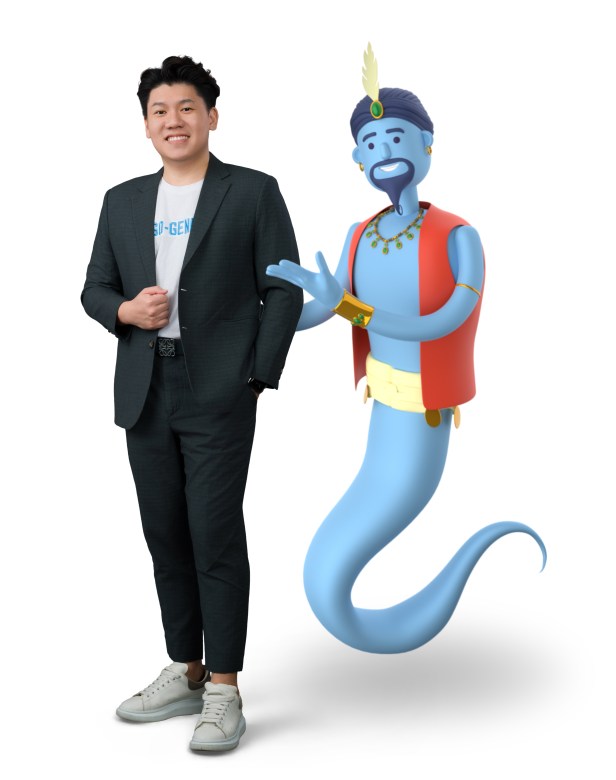
For me, “green” cannot just be a marketing buzzword. Many businesses look at sustainability as a form of CSR or marketing, but it has to make business sense. Our platform connects merchants, logistics service providers, and gig workers into one ecosystem.
Could you share how your warehousing and fulfilment systems work to ensure scalability, efficiency, and sustainability?
Most businesses see warehousing and logistics as a cost centre, but we see them as a network asset. Our ecosystem allows merchants to tap into shared warehousing, fulfilment, and last-mile delivery without heavy upfront costs.
The technology handles routing, inventory tracking, and space optimisation so businesses can scale up or down quickly. Whether you have one order a day or 10,000, we can meet your needs because we’re extremely modular and tap into ecosystem resources.
Traditional logistics companies often lock you into long-term contracts with fixed storage, which becomes a cost burden rather than a growth enabler.
At GO-GENIE, we work with clients ranging from global giants like Samsung to local favourites like DBS Bank, OCBC, and even influencers such as Melody and Ladyironchef. This showcases just how modular and scalable we are, regardless of business size.
You are known for forging strong partnerships. What do you look for in a strategic partner, and how do you ensure a win-win collaboration?
For me, partnerships are a lot about energy and alignment. We have to believe in the same destination, even if our vehicles look different.
At GO-GENIE, we look for partners willing to build, experiment, and share both successes and failures openly. For me, judging character is the most important factor.
What emerging trends in logistics are you most excited about, and how do you plan to leverage them?
Southeast Asia is going to see significant growth. One emerging trend is “logistics without walls”—more shared infrastructure, more tech-enabled collaboration, and less obsession with ownership.
AI will play a huge role in decision-making, from route optimisation to demand prediction. Our platform is being built to integrate these shifts, whether it’s AI, autonomous vehicles, or sustainability credits, so we can adapt quickly.
What do you think makes a good entrepreneur?
For me, it’s based on three things. First, self-awareness—knowing your blind spots, weaknesses, and strengths. Second, resilience—because you’ll get punched in the face more than once, often from people you thought you could trust the most. Those punches hurt the most.
Lastly, the ability to bring people along. Your vision doesn’t matter if no one else sees it. A good entrepreneur stays the same person regardless of winning or losing, and brings people along for the journey. You can have the best idea, but if people can’t see it, you’re just another joker.
What’s your vision for Singapore in the next five years?
Looking at where Singapore is today, it’s really about collaborating with the countries around us. We don’t have natural resources, so we should become a place that rewards collaboration as much as competition—where start-ups and individuals don’t have to fight alone but can plug into shared infrastructure and ecosystems to grow.
My vision is for Singapore to become a hub that proves sustainable growth and profitability can coexist.
If you could have a superpower for one day, what would it be and why?
For me, it’s very personal. I would like the power to let people see the world through someone else’s eyes, even just for a moment. Most of our problems come from a lack of perspective. We often say, “Try to understand others,” but it’s difficult when you can’t truly see from their perspective.
If I could, I would make better decisions, build better businesses, and perhaps become a better human being. That’s the superpower I’d choose.
Connect with Markus: GO-GENIE and Linktr.ee.
Markus is a member of Rainmaker, a revolutionary movement that rallies like-minded people together based on the values of Love, Authenticity, Respect, Kindness and Youthfulness (LARKY).

