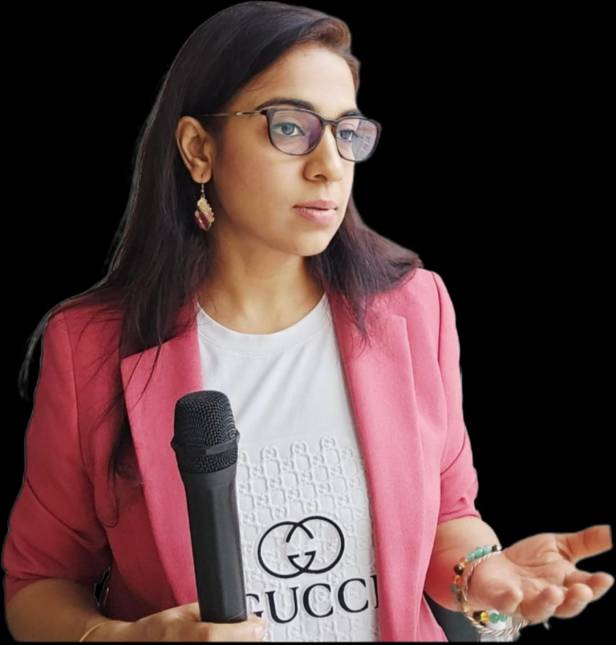
Meet Swimita, a former global HR leader turned Purpose & Power Coach who now helps high-achieving professionals overcome burnout and reconnect with their inner alignment. With over 20 years of experience in human psychology, leadership, and personal transformation, Swimita guides others to shift from survival mode to intentional, purpose-driven living.
Driven by her own journey through corporate burnout and rediscovery, Swimita developed the IMR framework—a powerful method to help clients identify energy drains, manifest clarity, and rise with renewed momentum. Today, she empowers individuals across the globe to pursue success without sacrificing wellbeing, proving that clarity, joy, and inner peace are the true markers of a fulfilling life.
What inspired you to become a Purpose and Power Coach, and how has your personal journey shaped the work you do today?
It wasn’t one single moment—it was a 20-year journey in HR, filled with multiple nudges along the way. After two decades in a global HR leadership role, I had ticked all the conventional boxes of success—stability, seniority, recognition.
I was meeting my targets and, on the surface, I was happy. But deep down, I felt exhausted and unfulfilled. I couldn’t find my purpose. I didn’t understand what I was running toward, and I kept shape-shifting to meet others’ expectations. Somewhere along the way, I lost myself.
Despite the recognition and achievements, I wasn’t happy. That was burnout. And unfortunately, burnout is common among high-functioning individuals—those who keep pushing without tending to themselves.
But that burnout set me free. When I was made redundant last year, I decided not to re-enter the loop of chasing targets and misalignment. Instead, I chose to reset and pursue a career that truly aligned with who I am. That’s how I became a Purpose and Power Coach—with the mission to help others avoid the decades-long struggle I went through.
High achievers often overperform and over-please to feel worthy, but this leads to burnout. Now, I teach that growth can be sustainable, and that purpose should never come at the cost of peace or wellbeing.
Many people suffer from burnout without realising it. What are some hidden signs people often overlook?
Yes, and the data supports this. I was surprised to see Mercer’s 2024 findings showing Singapore has the highest burnout rate in Asia-Pacific—82% of professionals report experiencing burnout. That’s alarming because burnout doesn’t scream; it whispers. You may be burnt out without even knowing it.
Signs include tired mornings, short tempers, emotional disconnection, and a sense of running on autopilot. With rising costs and widespread layoffs in Singapore, many people are operating in survival mode.
Our brains haven’t evolved much since primitive times. When we sense a threat—whether it’s job loss or mounting bills—our brains activate the same survival mechanisms as if we were facing a tiger.
The amygdala becomes overactive, and our prefrontal cortex—the “CEO” of the brain responsible for creativity, planning, and emotional regulation—shuts down. This is why people lack clarity. You can’t access clarity from a survival state.
Other signs of burnout include feeling numb yet mentally overactive, always busy but going nowhere, avoiding rest out of guilt, and losing interest in things that once brought joy. High-functioning burnout is real. But once you’re aware, you can begin to reset.
How do you help clients move from stagnation and unfulfillment to clarity and renewed energy?
Having worked in global HR for over 20 years, I have a deep understanding of human psychology. I’ve studied neuroscience, ancient wisdom, and the quantum field, which helped me develop a three-part signature framework called the IMR Method.
The first stage is Identify—we uncover what’s draining you mentally, emotionally, physically, and energetically. The second stage is Manifest, which involves gaining clarity through strengths mapping, energy audits, and value-based reflection. The third stage is Rise, where we create small, intentional shifts that spark momentum and joy.
Burnout steals your joy and sense of connection, so we work to reintroduce both through awareness and alignment. This isn’t about productivity hacks—it’s about living in alignment from the inside out. When you shift internally, your external world begins to reflect that.

High achievers often overperform and over-please to feel worthy, but this leads to burnout. Now, I teach that growth can be sustainable, and that purpose should never come at the cost of peace or wellbeing.
What are some common myths about burnout or purpose that you often have to debunk?
There are many. One is the belief that burnout only affects people who can’t manage time. In fact, it often impacts high-performing, responsible individuals who ignore the warning signs. Another myth is that finding your purpose means quitting your job or starting over.
But purpose isn’t tied to a job title—it’s about aligning with your core values. If laughter is your value, then bring that into your work. If growth matters to you, seek out growth opportunities where you are.
Another myth is that self-care alone can solve burnout. While it helps, burnout requires deeper emotional and energetic healing across multiple layers of your being. And finally, people often think purpose has to be a grand, world-changing mission. It doesn’t.
Purpose can be as simple as helping others feel safe, raising kind children, or using your voice for good. It’s built moment by moment, through the values you choose to live by each day.
As a global coach and wellbeing influencer, how do you personally avoid burnout and maintain balance?
It’s a real challenge, especially in a fast-paced, high-cost city like Singapore. That’s why I’m fiercely intentional about how I spend my time. I build spaciousness into my week and set daily intentions. For example, if I decide not to be angry today, I’ll notice at the end of the day that even in stressful situations, I managed to remain calm—because I set that intention.
I include micro-energy rituals like breathwork, silent pauses, and walks in nature without my phone. I check in with my energy before saying yes to events or meetings. I remind myself that rest isn’t a reward after burnout—it’s part of the strategy. In today’s world, balance isn’t a luxury—it’s a form of resilience.
What is your vision for the future of wellbeing and empowerment on a global scale, especially in how we work and live today?
I believe we are at a global inflection point, especially in advanced cities like Singapore. People are tired of performance for performance’s sake. They are asking deeper questions: “What does success really feel like?”
I envision a world where clarity and self-awareness are considered leadership skills—not private struggles. Where ambition is paired with energy and alignment. Where companies evolve from compliance-based structures to conscious cultures that prioritise wellbeing.
Singapore can lead this transformation by blending tradition, technology, and wellbeing to create a new blueprint for empowered living.
What’s your vision for Singapore in the next five years?
Singapore has long been a benchmark for innovation and efficiency. But with soaring burnout rates, rising living costs, and job insecurity, we need more than productivity—we need purpose and psychological safety.
I envision a Singapore where wellbeing is integrated into leadership development and company culture. Coaching and growth tools should be mainstream. The narrative of success needs to shift—from just financial gain to joy, rest, and human connection.
If you could have a superpower for one day, what would it be and why?
I love this question! If I could have a superpower for a day, I would pause time. In today’s fast-paced world, people are rushing through life without really feeling it.
If we could just pause for one day—breathe, reflect, and realign—I believe it would transform lives. Sometimes, it’s in the silence that we truly hear ourselves. That’s where the real power lies.
Connect with Swimita: LinkedIn.