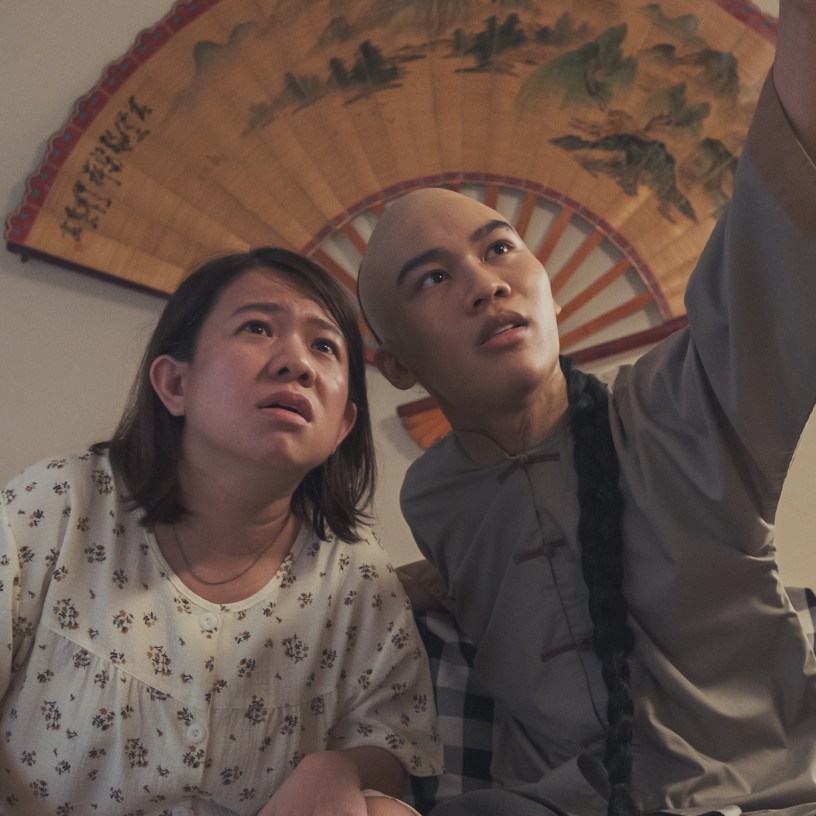
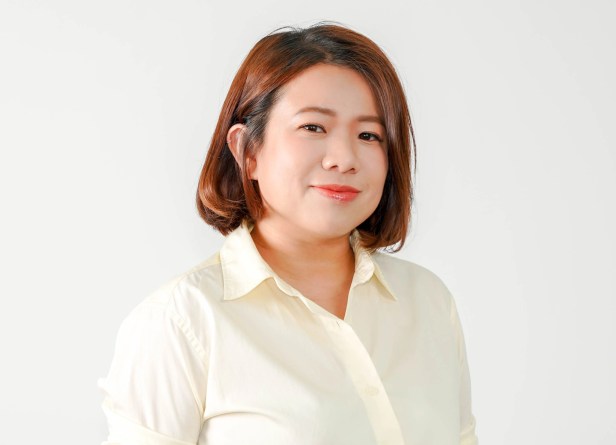
Meet Charlene, who is no stranger to the spotlight—rising from viral fame through her bold, relatable online Ah Lian persona to now taking centre stage as a lead actress. Best known for her role in the latest movie Follow Aunty La, Charlene co-founded the social media company Double Up with fellow creator Mayiduo, aiming to bring authentic and funny Chinese content to local audiences.
Balancing entertainment with intention, Charlene isn’t afraid to break stereotypes or speak up about the pressures of online criticism. Behind the camera, she’s deeply thoughtful and passionate about storytelling, using each skit, series, and performance to reflect slices of Singaporean life while staying grounded in her values. Her mission? To create content that entertains, connects, and stays true to her voice.
What inspired you to co-found Double Up with Mayiduo, and why did you choose to focus on Chinese content?
I’ve shared this a few times, but let me summarise again. I grew up watching Taiwanese variety shows, so Chinese content has always felt more familiar and natural to me. Before I met Mayiduo, I had been planning to launch a Chinese social media channel for years.
However, whenever I asked friends if they wanted to be part of it, most didn’t see the point. About six years ago, people didn’t really think about monetising social media—it was just seen as something done for fun. Many friends either didn’t have time or simply weren’t interested.
That changed when I met Mayiduo. He was actively exploring different opportunities—he had joined a DJ competition and gone for entertainment company auditions. I suggested that instead of auditioning for someone else’s company, why not create our own?
I already had this idea in mind—a Chinese-language social media channel, maybe even an online variety programme. I asked if he could handle filming, as I knew how to edit and had a background in media and communications.
After some discussion, we decided to go for it, bought a camera, and launched our platform.
As an online creator, it’s very common to face negative comments. How do you deal with online criticism?
When we first started, it wasn’t easy to handle online criticism. There were times when people left nasty comments, and I felt the urge to retaliate—especially when they attacked our education or character.
I did respond a few times. Over time, though, I’ve learned to let go. Kelvin doesn’t care much—sometimes he reads the comments, sometimes he blocks people. I don’t block anyone, but I’ve stopped actively reading comments.
That said, occasionally I still get tempted to check, and when I do, I remind myself: my online persona is different from who I am in real life. These people don’t know me personally, and their opinions shouldn’t matter.
At the same time, I’ve stopped saying things like “just comment—it helps the algorithm.” That may be true, but I no longer want to encourage irresponsible behaviour. Not all content creators are equipped to handle criticism.
Some are deeply affected, and it’s important that commenters are more mindful of the impact their words can have.
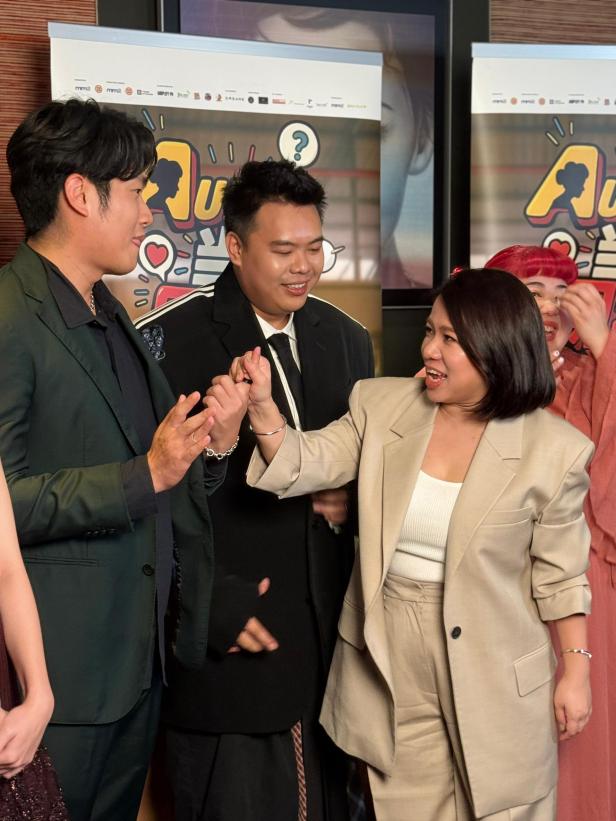
Online, I often take on a persona—for instance, speaking broken English or acting loud and exaggerated. But that’s a performance. I’m effectively bilingual and well-educated, and sometimes people are surprised to find that I can speak fluent English. In fact, some even ask whether I can speak English when inviting me to events!
You mentioned that your real personality is different from your online persona. Can you share how are you different in real life?
Of course. Like many Singaporeans who went through neighbourhood schools, I can be loud and joke around in real life. But that doesn’t mean I go around using vulgarities or being crass in my everyday life.
Online, I often take on a persona—for instance, speaking broken English or acting loud and exaggerated. But that’s a performance. I’m effectively bilingual and well-educated, and sometimes people are surprised to find that I can speak fluent English.
In fact, some even ask whether I can speak English when inviting me to events! Ultimately, it’s about being professional. To make content interesting, we sometimes take on characters and play specific roles.
If we were all just being our authentic selves 100% of the time, some shows wouldn’t be as engaging. It’s just like acting—there’s a purpose behind the performance.
What was the most memorable part of being the lead actress in the film Follow Aunty La?
The film took two years to materialise, and it was something our company—especially Mayiduo—wanted to do. Since he’s directing and producing it, I simply supported his vision and gave him full creative freedom. I told him: “If you want to be a director, do it your way. Cast whoever you feel is right. Even if I only play a small role, that’s fine.”
The most memorable part of filming for me was a crying scene in the rain. It was emotionally intense, and I had to prepare for hours—crying repeatedly beforehand just to get into the right mindset. I didn’t know if I could pull it off, and I was overthinking every detail—would it be too much, too fake? But surprisingly, we nailed it in one take. That scene really stayed with me.
What are some of the biggest challenges you face as a content creator?
The biggest challenge is staying true to yourself while continuing to innovate. Certain content formats—like my Ah Lian persona—go viral easily. When I pull back from that and just act more like myself, we lose some followers.
People even comment, “You should go back to being Ah Lian—you’re not entertaining anymore.” But being authentic matters to me. It’s a constant balancing act between staying true and playing the game for virality. Many creators lose their way when they chase only what works algorithmically.
It’s also hard to keep innovating when there are so many new creators entering the space. The key is to evolve while maintaining your core identity.
Many aspiring creators struggle with consistency and growth. What advice would you give to those just starting out?
Even six years in, I still struggle with consistency and growth. The key is to start with content that’s authentic to who you are. Viral content is tempting, but if it’s not sustainable or true to your values, it won’t last.
Ask yourself: are you enjoying what you’re creating? If the answer is yes, then you’re on the right path. Many creators burn out or lose direction because they’re doing it for the views rather than from genuine interest. Stay grounded. Do content you truly believe in.
What’s your vision for Singapore in the next five years?
We’ve matured a lot in the past five years. Social media content is no longer limited to people filming themselves with a phone doing silly dances. We’re seeing higher production values, and brands are investing more in digital creators.
In the next five years, I see us moving towards short films, micro-dramas, and higher-quality productions on social platforms. If you look at China’s Douyin, we’re still catching up—but we’ll get there. Singapore’s content scene will be more polished, more creative, and more professionally supported.
If you could have a superpower for one day, what would it be and why?
Very simple: I’d want to bless everyone I love—my friends and family—with good health and happiness for the next 30 years. I don’t need powers like teleportation or invisibility. Maybe it’s my age and outlook now, but I’ve come to see that no matter how successful you are, if your health fails, it’s all meaningless.
Health and happiness matter most. If I could guarantee that for the people around me, even just for a day, I’d consider that the greatest superpower.
Connect with Charlene: linktr.ee
Follow our socials found here: linktr.ee or contact us here if you wish to share your story.
