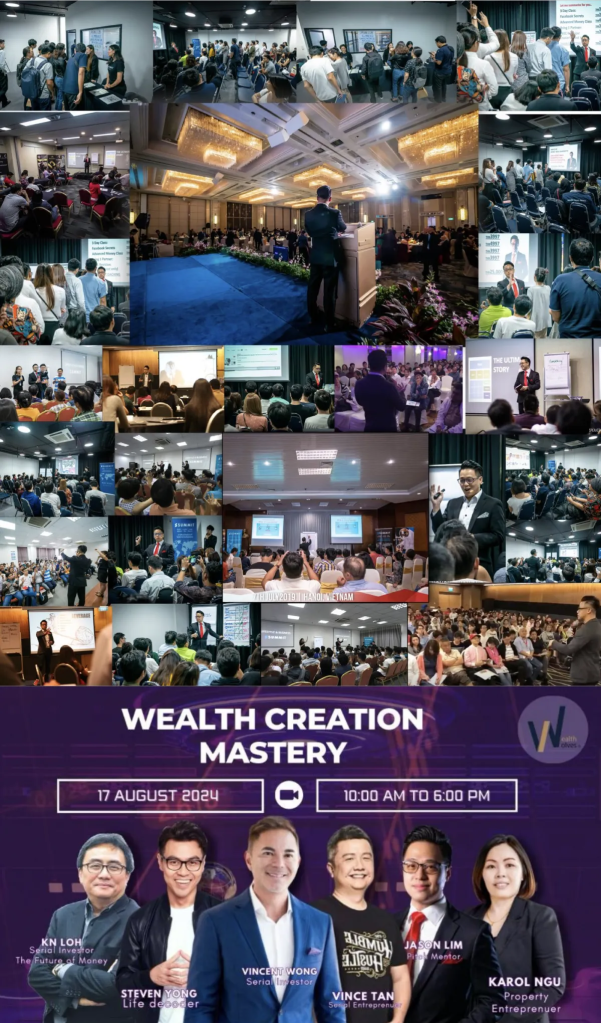
Meet Jason, the visionary teacher behind the “PIN Code” of persuasion—Pitch, Influence, and Negotiate with clarity and confidence, even in fear and confusion. Once an extreme introvert terrified of public speaking, Jason now empowers others to unlock their potential and build lasting financial freedom through the mastery of persuasive communication.
Driven by a mission to turn seekers into achievers, Jason believes true wealth is built through skills—not shortcuts—and should last beyond four generations. From hitting rock bottom to creating a proven system that has transformed thousands of lives, he now dedicates his life to helping others fast-track success, avoid costly mistakes, and build their own rivers of wealth.
Your journey from extreme introvert to celebrated speaker is inspiring. What was the turning point that made you believe you could stand on stage and teach others?
It really started with a fire in my gut—a deep, almost annoying feeling that wouldn’t go away. At the time, I was still confused, broke, and figuring myself out.
Then came Jane, a Malaysian girl struggling to pay rent. She was barely surviving and had considered giving up and returning home. Her parents had supported her for months, and the guilt was weighing her down.
That’s when I started teaching her what I knew. A few weeks later, she returned transformed—confident, well-dressed, smiling. She had become one of the top 10 sales producers in her company for three consecutive months.
I was shocked. I asked her what course she took, and she said, “I just did what you told me: stop overthinking, take action, and keep practising until the results showed.” That moment changed me.
It lit a fire that went beyond money. Seeing someone rise because of what I taught—there’s no price tag on that.
You speak about ‘rock bottom’ as the birthplace of your blueprint. What were the key revelations during your darkest period that shaped your current method?
There were five core revelations. First, you must become difficult to replace. If you’re easy to replace, you’ll always be underpaid—whether you’re an employee or founder. I realised people like Lewis Hamilton and Kobe Bryant didn’t do 4,000 things once. They did a few things 4,000 times. They practised obsessively.
Second, I learnt that skills equal success. Walking past an aunty selling tissues daily reminded me that kindness isn’t enough—you need relevant, in-demand skills to produce value.
Third, no matter how good you are, if you’re invisible, you won’t earn. You need eyeballs. The best burger isn’t the one that tastes the best, it’s the one people know—like McDonald’s.
Fourth, your body is an asset. What’s the point of financial success if you spend it all on medical bills? Health is wealth. Fifth, the right mentor can change your entire trajectory. Not just for strategies, but for perspective.
These lessons became the foundation of my blueprint for success.
You often say, “Success is a system, not a talent.” What are some of the core skills you believe anyone can—and must—master to unlock long-term wealth?
The method of an eagle does not work for a duck. Don’t blindly copy tactics—find your source code and walk your own destiny path. But if there’s one skill that I believe every founder must master, it’s persuasion.
This skill is like wings to both eagle and duck. Without it, you’re not only jeopardising your business—you’re putting your family at risk too.
Statistics show that 75% of venture-backed startups fail, and nearly half never reach profitability. Common reasons include insufficient revenue to support cash flow, high burn rates, funding gaps, or lack of investor interest.
Business struggles often bleed into family life. Research indicates that children without meaningful conversations with their parents are 65% more likely to develop low self-esteem and engage in behaviours such as drug use, underage drinking, early pregnancy, or violent crime.
Strong communication is crucial. A study by the National Communication Association found that 75% of couples who engage in open and honest conversations report high satisfaction in their relationships.
Meanwhile, the Journal of Social and Personal Relationships reports that 80% of couples with effective communication skills resolve conflicts without lingering resentment—whereas 58% of couples with poor communication face unresolved tension or eventual divorce.
Persuasion isn’t just a business skill—it’s a life skill that strengthens families, relationships, and the communities we build.

The method of an eagle does not work for a duck. Don’t blindly copy tactics—find your source code and walk your own destiny path.
Can you share one transformation story that deeply impacted you as a coach?
There was one graduate who shared his story on stage at one of my events. No one knew it at the time, but he was going through a divorce. His startup was struggling, and money wasn’t coming in.
His wife had reached her breaking point. But through the programme, he was able to turn things around—both in business and at home. He saved his marriage. That moment made me realise I wasn’t just teaching business tactics. I was changing lives. It left a permanent mark on me.
Can you share one simple persuasion method anyone can use in sales or communication?
One word: relevance. Relevance is the secret sauce in persuasion. You could be speaking to one person or a hundred—if what you say is relevant to them, they’ll listen. Even a disengaged audience can be reawakened when you speak directly to what matters to them.
When you’re dating, you’re always thinking about the other person—what they want to eat, how they feel. But in long-term relationships, we forget to stay relevant, and that’s when things fall apart. The same goes for sales.
What do you think makes a good entrepreneur?
Willingness. Willingness to dance with fear, disappointment, and mistakes. Entrepreneurship isn’t about removing fear; it’s about learning to move with it. At every level, you’ll encounter new fears and challenges you never saw coming.
You’ll make mistakes, and you’ll disappoint people. The key is to stay willing—to keep showing up, keep learning, and keep growing.
Look at Michael Jordan and Phil Jackson. Phil Jackson wasn’t the greatest player, but as a coach, he led Michael Jackson and the Chicago Bulls to six championships. The difference? Jackson had perspective. He removed blind spots and offered clarity.
A good entrepreneur recognises their blind spots and seeks guidance from experienced, qualified experts—not just well-meaning but uninformed voices. They are willing to make tough decisions, even during times of personal hardship, and understand that success requires clarity, courage, and the ability to hire people better than themselves.
True entrepreneurs value skills over ego, embrace support from coaches and mentors, and remain resilient through uncertainty. They know that one blind spot can derail everything, and that success is not about doing everything alone—it’s about building the right team and following a proven, repeatable system.
What’s your vision for Singapore in the next five years?
My vision is simple: less suffering. We’ve achieved first-world infrastructure and global recognition, but too many are still silently struggling. Achievers bear the weight of regret, guilt, or emotional fatigue.
If we could combine success with inner peace, I believe Singapore could truly reach its next level—not just in terms of wealth, but in well-being too.
If you could have a superpower for one day, what would it be and why?
I’d want the power of the superbrain—like the one in the movie Limitless. A brain that operates at 100% capacity. My obsession is source code: the root patterns that govern success, failure, behaviour, and growth.
If I had one day to master the entire source code of the world, I’d download it all, and teach it to every founder I could reach—before I die.
Connect with Jason: AuthorJason and WhatsApp.