
Meet Lukas, a former commercial property agent with a sharp eye for opportunity, who took a leap of faith into Singapore’s dynamic and ever-evolving food scene. For the founder of The Gourmet Factor, that leap turned into a fast-growing portfolio of mid-to-high-end F&B concepts, blending culinary creativity with strategic investment and back-end operational excellence.
In just over a year, The Gourmet Factor went from a single café joint venture to a multi-brand F&B group, managing diverse concepts from wood-fired halal dining to Italian high-energy restaurants. With each new outlet tailored to its location and audience, Lukas’s focus on brand storytelling, operational synergy, and investor confidence continues to set the company apart in a highly competitive market.
What inspired you to start The Gourmet Factor, and how did you envision combining culinary creativity with strategic investment from the start?
I’ll need to go back to how it all began. Before this, I was a commercial property agent focusing on shophouses. Through a couple of networking sessions, I entered a joint venture with a partner from Rise Bakehouse.
At the time, there was only one outlet at Potong Pasir. I tried the cakes and coffee, thought they were pretty good, and we decided to collaborate. We found a space at 111 Somerset and opened our first outlet there in July 2023.
Over the next 10 months, I opened four outlets. I would say I’m an accidental F&B entrepreneur. Two months after our first opening, I was marketing a restaurant for takeover when two Malay chefs whom used to work in Michelin-star restaurants came to view the space.
They had a brand and had secured the unit with an Indonesian investor. The day before handover, they told me their investor had pulled out. After a day of discussions, I took a leap of faith and partnered with them to start a Muslim-friendly wood-fired restaurant.
While we were renovating, an interior designer asked if I’d be keen on collaborating on a project at Jewel Changi Airport—a highly sought-after location. We went in on a joint venture.
Around that time, a long-time accountant friend approached me about a couple from Sydney looking to bring their Italian brand, Fortuna, to Singapore. We checked it out, and a few months later, we became their local exclusive partner.
After setting up a series of restaurants in under a year, I realised we needed synergy across the brands. That’s when I decided to consolidate them under a single company with a corporate HQ. We now provide backend support—HR, finance, marketing—for all our outlets. That’s how The Gourmet Factor came about.
Many F&B ventures struggle with balancing artistry and profitability. How does The Gourmet Factor manage to combine brand storytelling with sound business fundamentals?
Profit margins in the F&B industry typically range between 8% to 12%. To ensure sustainability, we don’t just replicate what others are doing. When we launched Rise Bakehouse, for instance, we paid close attention to every detail—from the logo design and artisanal cakes to each customer touchpoint.
Our Chinatown outlet was tailored to its surroundings, incorporating heritage-themed interiors like vintage cameras and televisions. The menu was also localised with flavours such as kaya, pistachio, and black sesame.
In contrast, our 111 Somerset outlet had a Korean-inspired, pinkish aesthetic catering to a younger female demographic.
This localisation strategy and attention to detail in branding and storytelling ensure each outlet feels unique and relevant to its neighbourhood. It’s this level of strategic planning that allows us to maintain a creative edge while still being commercially viable.
We believe in a holistic approach—great food alone isn’t enough. Every detail matters, from customer engagement and marketing to backend operations and support.
Take Fortuna, for example. It’s not your typical Italian restaurant. We added vibe, energy, and fun elements to it—lots of customer engagement. That’s a big part of what makes it successful. We’ve also had investors come on board who believe in our vision and support our expansion.
What are some key elements you look for before deciding to start a new F&B concept?
We always aim to strike a balance between passion and profitability. It’s easy to get swept up by enthusiasm—many dream of starting an omakase or fine-dining concept—but it’s important to recognise market trends.
After COVID, the high-end market saw a brief surge as people sought premium experiences, but with current economic uncertainty, we’re seeing more belt-tightening. That’s why we position ourselves in the mid-to-high tier—broad enough to attract a mass audience but still premium enough to command value.
Before committing to a new concept, we always run the numbers to ensure viability. If it doesn’t make business sense, no matter how exciting the idea is, we won’t pursue it.
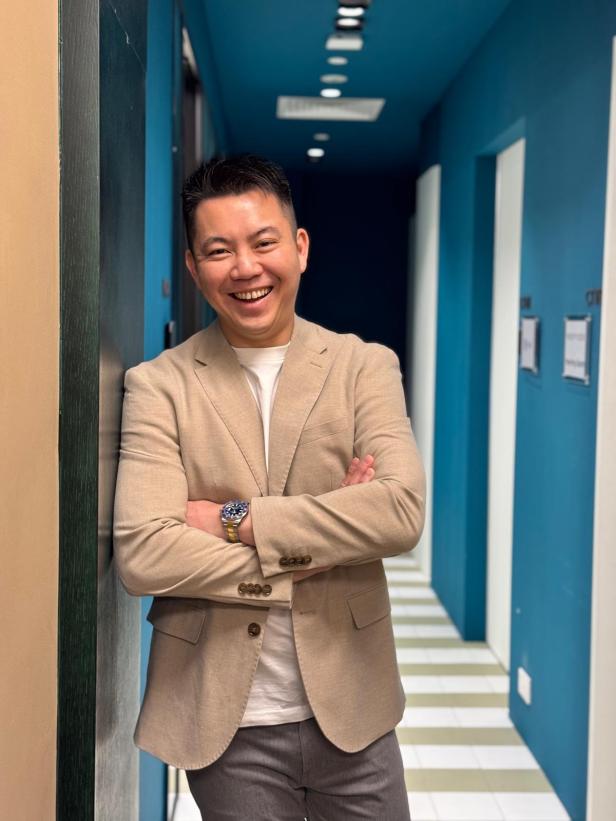
Another critical trait is the ability to leverage. I’m trained in accounting, but I’m not a chef, nor am I a marketing expert. Today, I run successful restaurants because I hire people better than me in every area—kitchen ops, design, finance, service. Leverage isn’t just a strategy; it’s a mindset.
What makes Singapore such a competitive yet exciting market for F&B innovation, and how does The Gourmet Factor stay ahead of trends?
Singapore is a small but dynamic market. As a nation, we love food, and dining is a key part of our lifestyle. Because there’s limited travel within the country, locals tend to spend more on eating out.
We stay ahead by identifying gaps in the market. When we started Oud Restaurant, we noticed very few halal wood-fired dining options. Likewise, when launching Fortuna in Chinatown, we saw that while there were many Italian restaurants, few offered a high-energy, customer-centric experience.
With Shin Katsu, our latest tonkatsu concept in partnership with Chef Masato (formerly head chef of Ma Maison), we noticed a lack of premium tonkatsu brands despite the dish’s popularity.
So, we created a space with elevated service—explaining the menu, offering recommendations, and walking guests through how to best enjoy their meal. Every new concept is carefully positioned and supported by a well-thought-out customer journey.
What advice would you give to aspiring food entrepreneurs or chefs with great ideas but need the right ecosystem to bring it to life?
Chefs are like doctors. They’re great at their craft—in this case, cooking—but may struggle with the business side: HR, marketing, P&L, logistics. That’s where The Gourmet Factor steps in. We partner with chefs who are brilliant at what they do and provide them with an ecosystem—capital, backend support, operations, and service training—so they can focus on food while we manage the rest.
My advice: understand that it’s not just about food. You need a strong brand, a solid team, and consistent customer experience. Passion is essential, but without structure and systems, the business won’t scale.
What do you think makes a good entrepreneur?
A good entrepreneur must be adaptable and open to change. Trends shift quickly—fine dining might be hot now, but in six months, consumer preferences could change. You need to stay alert and adjust accordingly.
Another critical trait is the ability to leverage. I’m trained in accounting, but I’m not a chef, nor am I a marketing expert. Today, I run successful restaurants because I hire people better than me in every area—kitchen ops, design, finance, service. Leverage isn’t just a strategy; it’s a mindset.
What’s your vision for Singapore in the next five years?
I think the Singapore government has been supportive—there are grants for kitchen equipment, digitalisation, marketing, and more. But due to past misuse, these have tightened. I hope to see more support targeted at serious, compliant operators.
I also hope for better regulation of home-based dining. The rise of home chefs is exciting, but currently, there’s little oversight. In commercial setups, we go through food hygiene courses, wear proper gear, and follow strict SCDF and NEA guidelines.
Home-based kitchens don’t face the same scrutiny, which can be risky. With stronger support and fair regulation across the board, I believe Singapore’s F&B scene will continue to thrive and innovate.
If you could have a superpower for one day, what would it be and why?
If I could have a superpower for one day, I’d want the ability to balance global food supply. There’s more than enough food in the world, but due to political, logistical, and economic challenges, some places suffer from severe shortages.
Here in Singapore, we’re fortunate. We waste food while others go hungry. I’d use that power to redistribute resources and ensure that everyone, everywhere, has access to basic nutrition and sustenance.
Connect with Lukas: TheGourmetFactor, LinkedIn and Instagram.

