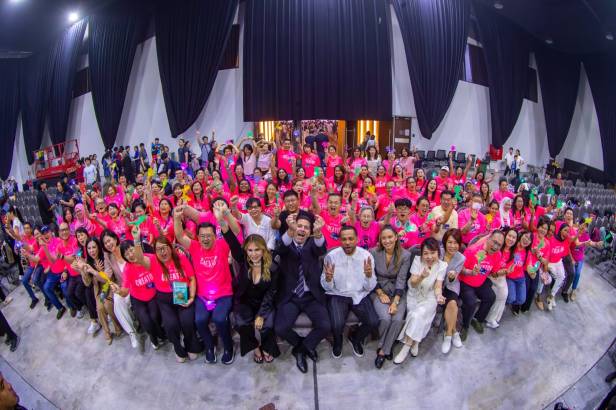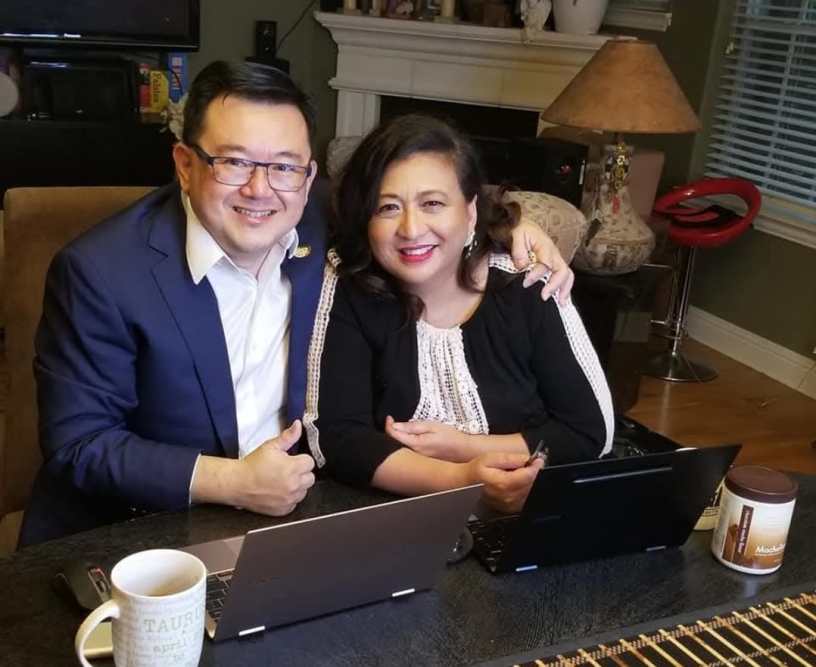
Meet Richard, a successful Singaporean engineer, and his wife—both thriving in corporate America—who made the bold decision to walk away from their careers. For this husband-and-wife duo, it wasn’t a story of struggle, but a conscious choice to build a different kind of future.
Driven by a desire for time freedom and long-term income security, Richard discovered Market America’s UnFranchise business model in 1998—and never looked back. Today, after more than 26 years in the business, he has helped pioneer Market Singapore, guided teams across continents, and mentored countless aspiring entrepreneurs.
What first attracted you to the Market America and UnFranchise business model, and how has your journey evolved since joining?
What attracted me to Market America is quite an interesting story. Back in 1998, when my wife, Stephanie and I were both 29 years old, we were living what people call the “American Dream”. We had great jobs at reputable companies—Stephanie was with AT&T, and I was working for National Semiconductor.
People often assume that career change comes from job dissatisfaction or layoffs, but that wasn’t the case for us. We loved our jobs and were performing well.
In fact, Stephanie became a department manager at 29, overseeing engineers in a very male-dominated, white-collar industry in Dallas, Texas. It was an incredible achievement, especially for a Singaporean woman. But with that success came intense stress.
I saw the toll it was taking on her health, and I asked myself: do I want my wife to go through this for the rest of her life? I started searching for a way she could work from home. Keep in mind—this was 1998. Working from home wasn’t common at all.
Then one day, while carpooling to work, my colleague mentioned that his wife had a business she operated from home. Initially, I was sceptical. But I trusted the person who introduced it to me, and I trusted myself to study the numbers. I sat through the business presentation seven times.
On the seventh time, it clicked. I told myself, “This works.” I went home and told Stephanie, “I’ve found your retirement plan.” She was dismissive at first—she thought it was rubbish. But I said, “It’s okay. I’ll do it for you.” In just three and a half years, in 2002, Stephanie walked away from her corporate job. That was our first goal achieved.
Around that same time, I started a traditional marble and granite business and left my engineering job. Even though that required a large capital investment, I remained committed to our goal. I eventually sold the business in 2009—right in the middle of the US subprime crisis—because I had already decided to retire early and return to Singapore.
After returning, we wanted to pay it forward. In 2014, we helped bring Market America to Singapore.
For those unfamiliar, how would you explain the concept of the UnFranchise system and what makes it different from traditional franchise or MLM models?
We call our business model the “UnFranchise”. The founder of our company recognised that the franchise system is highly effective—franchisees succeed because they follow a proven system with established branding, marketing, and training support.
We adopted the same principles. For example, the training materials I use in the United States are exactly the same as those I use in Singapore or Malaysia.
Everything is standardised and governed by the company, ensuring consistency and success across all markets. The key difference is accessibility. Traditional franchises can cost hundreds of thousands—or even millions—of dollars to set up. They’re also limited by location and tied to royalty fees.
In contrast, our UnFranchise model operates online, with a much lower barrier to entry and no royalty fees. In fact, the company pays us for moving products and services.
Because it’s an online model, we’re not geographically bound—we operate across nine countries without needing physical storefronts, staff, or inventory.
Some people lump us under MLM (multi-level marketing), but we’re very different. MLM is a payout structure based on multiple tiers—typically, the higher up you are, the more you earn, while those at the bottom often struggle.
Our founder wanted a model that empowers average people to succeed. That’s why he created the Binary Compensation Plan back in 1992—an industry first.
Instead of focusing on width (recruiting endlessly), we build in depth, encouraging teamwork rather than competition. Because our compensation is based on volume across two sales organisations, everyone has an incentive to work together. This “binomial marketing” system has been adopted by over 800 companies since, but we were the originators.

When someone new joins, I sit down with them to set clear expectations—this isn’t a get-rich-quick scheme. It’s a serious business that can provide ongoing income, even after retirement.
How do you educate new business partners about building a sustainable UnFranchise business, especially in today’s digital and competitive environment?
Knowledge and attitude are key. When someone new joins, I sit down with them to set clear expectations—this isn’t a get-rich-quick scheme. It’s a serious business that can provide ongoing income, even after retirement. Imagine getting paid beyond age 65—that’s powerful.
We guide new partners with a “Getting Started Guide” and a “12-Week Mentorship” to build the right mindset and skills. Most aren’t entrepreneurs at the start, but this system helps them grow.
Our company’s investment in digital tools and e-commerce means I can approve an order from Bali, and it’s fulfilled automatically.
Our apps track video views and site visits, letting us focus on people whose timing is right. Education, mentorship, and smart tech are the pillars of our growth.
What are some common misconceptions people have about Market America and the UnFranchise business, and how do you address them?
People often ask if we’re one of those companies—is it MLM, a pyramid scheme, or a scam? These questions usually stem from past impressions or hearsay.
But here’s the truth—Market America has been around for 33 years, and I’ve personally been with the company for 27. That kind of longevity speaks volumes about the credibility and stability of the business.
Unlike companies that produce just a few products, we’re a product brokerage business. We don’t manufacture our own items—we partner with top-tier manufacturers to offer the best.
When I encounter scepticism, I don’t just answer the question—I address the person behind it. I try to understand their level of awareness and encourage them to do their own due diligence. This model works—especially if you take it seriously. Having run both traditional and network businesses, I’ve seen how the right training and mindset can help everyday people succeed.
How do you balance product retailing, team building, and personal development in your business strategy?
The beauty of our business lies in its simplicity and sustainability. You don’t need thousands of customers—just 10 to 15 loyal ones who regularly buy a couple of products, around S$100 worth. It’s a manageable number for most people. Once you experience the benefits yourself, sharing comes naturally. We don’t “sell”—we share, and that mindset changes everything.
Team building starts with simple habits. I train my team to do just two business exposure appointments per week. It may sound small, but it builds consistency. The system only requires one new partner every three months. It’s about forming behaviours, not chasing numbers.
Personal development is also key. Most people aren’t born entrepreneurs. We offer ongoing product education and mindset training to help individuals grow their belief, confidence, and skills—because success starts from within.
What are your goals for the UnFranchise business, and what advice would you give to someone considering starting their own journey with Market America?
I’m a goal-oriented person. My first goal was to help my wife retire, which we achieved in 3½ years. The second was to sell my traditional business by 2009 and reach FIRE—Financial Independence, Retire Early—which I did. Now, our focus is on paying it forward by helping others create ongoing income and, more importantly, reclaim their time.
Time freedom is especially crucial in Singapore, where many are asset-rich but time-poor. If we can help one parent stay home or reduce their workload, that’s a meaningful win. My advice? Do your due diligence, but keep an open mind. Whether you’re 18 or 65, this business offers real options—and the journey is worth it.
If you could have a superpower for one day, what would it be and why?
My favourite superhero is Thor, the God of Thunder—known for his strength, power, and his mission to protect the world. If I could have a superpower for one day, I would choose his. Just like Thor uses his strength to save the world, our mission in life is to make an impact—one family at a time.
Connect with Richard: Facebook and Instagram.