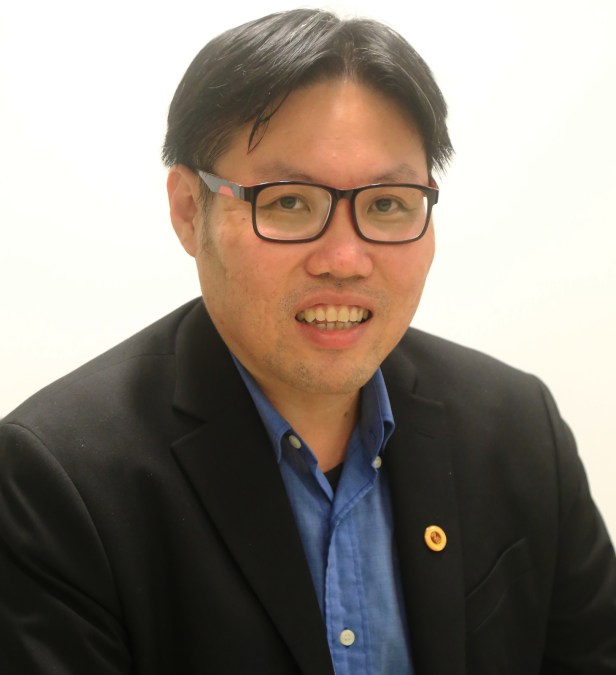
Meet Dennis, the co-founder of El Pando, a software company inspired by the interconnectedness of the Pando tree. Starting with nothing more than curiosity and a BASIC interpreter on ROM, his journey began at the age of 10—long before coding became cool.
What started as a childhood hobby quickly evolved into a lifelong passion, eventually leading Dennis to build Singapore’s first smart card-based single sign-on system (SOS) for public sector while still an intern. His story is a testament to how accidental discovery and relentless curiosity can shape a purposeful and impactful tech career.
What inspired you to start a company that tackles complex problems with simple yet elegant designs?
I started coding at the young age of 10, and over time, it evolved from a hobby into a deep passion. After graduating, I worked as a software engineer and team lead in MNCs and GLCs.
That was when I realised that software development goes far beyond just writing code—it’s a complex, multidisciplinary engineering process. I also observed that, as an engineer in a large corporation, I had very limited influence over high-level software engineering decisions, despite their significant impact on the overall development process.
This inspired me to start my own software company, El Pando, where I could apply my own philosophies to software design and development.
What got you interested to start coding at such a young age?
It happened by chance. When I was young, my brother got a personal computer. This was back in the 1980s, a time when not many families in Singapore owned one. It was an IBM-compatible PC with no hard drive. You had to boot it using a floppy disk.
If you didn’t insert a floppy disk, the computer would boot into the ROM BIOS, which will load a BASIC interpreter—a programming environment built into the system. I found it interesting, so I started playing around with it.
I then began borrowing books on BASIC programming from the National Library and experimenting further. That was essentially my first exposure to programming.
Later, I became curious about DOS, configuring memory, and using various tools to manipulate data. When I went to junior college, I took up Computing as a subject and finally received formal education in computer science.
In short, there wasn’t any inspirational story—it was simply a matter of opportunity and curiosity that led me down the path of programming.
As an intern, you also developed Singapore’s first smart card-based single sign-on system for public sector. How did that come about?
That was during an internship with Cisco Computer Security. It was actually my first experience developing a real-world application. Before that, most of my work involved assignments and small-scale personal projects.
During the internship, my supervisor asked me to build a prototype for a single sign-on (SSO) system commissioned by the Ministry of Home Affairs. At the time, they had just started rolling out the Public Service (PS) card, which was a smart card issued to all public service officers. The goal was to use this PS card to implement a secure SSO system across government agencies.
The initial task was to create a prototype, but I misunderstood the assignment and ended up building the first fully functional component of the system.
Seeing the progress, my supervisor asked me to continue building the rest of the system. It was a Windows-based application—we were still using Windows 98 and Windows NT back then.
I spent six months developing the system, and it was later showcased at InfoSecurity Asia in 1998. From what I heard, it was deployed across several agencies.
It was a very enriching experience, being my first exposure to building software that was used in the real world. Of course, I made plenty of mistakes—especially when it came to system design and code reuse—but I learned a lot. My supervisor later cleaned up my code and helped finalise the system.
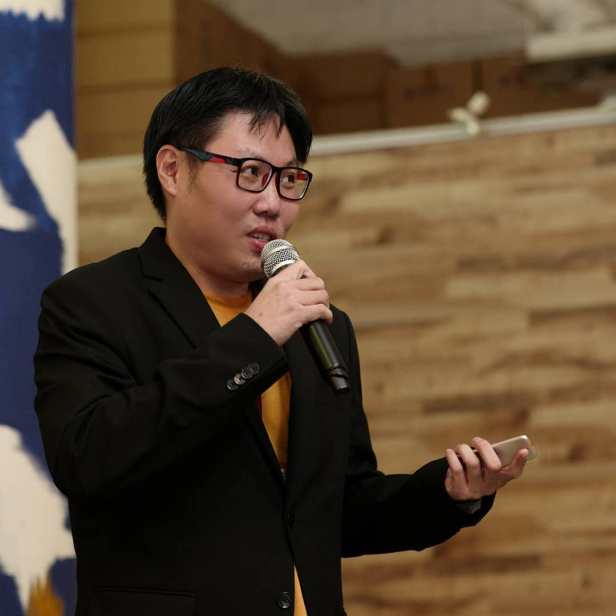
The Pando tree colony shares one massive underground root system, making it one of the world’s largest and oldest living organisms. Inspired by this, we design our systems to offer a clean and minimalistic user interface while maintaining a robust, interconnected backend.
Your company is named after the Pando trees, symbolising interconnectedness beneath the surface. How does this philosophy influence your approach to software architecture and user experience?
The Pando tree colony shares one massive underground root system, making it one of the world’s largest and oldest living organisms. Inspired by this, we design our systems to offer a clean and minimalistic user interface while maintaining a robust, interconnected backend.
Just like Pando trees, we believe the unseen architecture beneath the surface should be strong and resilient to support a seamless experience for users.
What are some of the biggest challenges clients in government, medical, or academic sectors face, and how does your company solve them?
Clients from these sectors typically have highly complex and unique workflows that require tailor-made solutions. At the same time, they want these systems to behave like Software-as-a-Service (SaaS) platforms—requiring minimal effort to manage.
Our solution is what we call “Bespoke SaaS”: we tailor each system to our client’s needs using our existing software components to reduce development time, while also managing and hosting them like a typical SaaS provider. This gives clients the best of both worlds—customisation and convenience.
Can you share a memorable project that pushed your team’s boundaries and how you overcame those challenges?
One memorable project was during COVID-19, when we were commissioned by MUIS to build a nationwide mosque booking system for Muslims to reserve prayer slots. Due to crowd control restrictions, we had to account for multiple prayer sessions each day—five daily prayers, weekly Friday prayers, and special ones like Taraweeh during Ramadan.
We also had to design the system to be highly flexible to adapt to rapidly changing government policies and occasional emergencies, such as sudden mosque closures. The domain knowledge required was entirely new to us, but we adapted quickly and delivered the solution under pressure.
With El Pando being a registered supplier for the Singapore government, how do you ensure compliance, scalability and innovation when working on public sector projects?
Government projects come with stringent cybersecurity standards. Our systems undergo extensive assessments before going live—vulnerability assessments, penetration testing, secure code reviews, load testing, and integration testing.
We anticipate client needs from multiple perspectives and propose tailored, future-ready solutions. Our approach combines technical compliance with innovation and foresight, ensuring both stability and impact.
What do you think makes a good entrepreneur?
A good entrepreneur must be resilient, innovative, and an excellent problem solver. They need to be adaptable and able to navigate both uncertainty and complexity while staying grounded in their mission.
What’s your vision for Singapore in the next five years?
The global focus is undoubtedly on AI, but I believe Singapore is also positioning itself strongly in other deep tech sectors. Over the past decade, the government has increasingly supported deep tech entrepreneurs through grants, incubators, and academic partnerships.
I foresee more structured collaborations between government, academia, and commercial entities. Historically, Singapore’s economy was driven top-down by government-linked corporations, but there’s now a shift towards grassroots innovation.
Whether this will be successful depends on how well stakeholders align—and whether the government allows enough autonomy for entrepreneurship to thrive.
If you could have a superpower for one day, what would it be and why?
I think I’d choose time travel—the ability to glimpse the future and revisit the past. It would be powerful to understand what lies ahead while learning from what’s already happened. That perspective could reshape the way we build and live.
Connect with Dennis: El Pando, LinkedIn and Facebook.