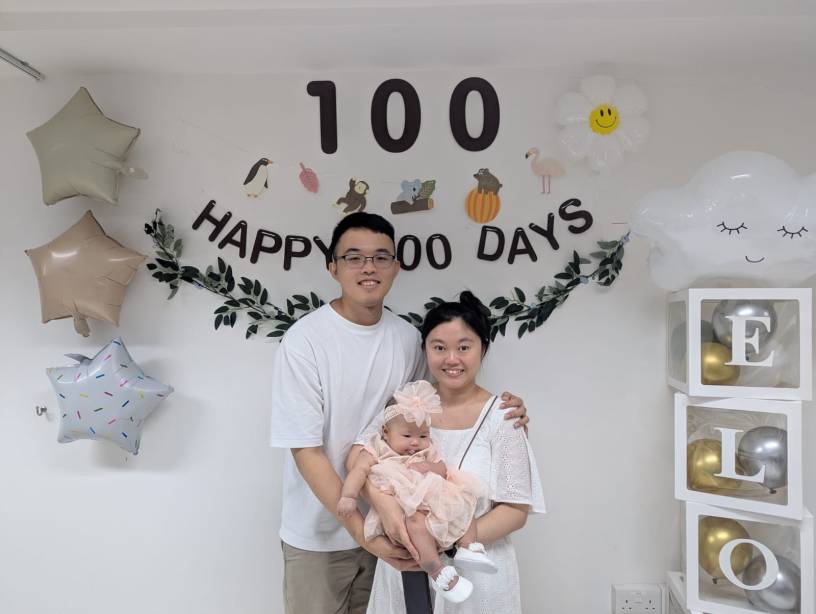
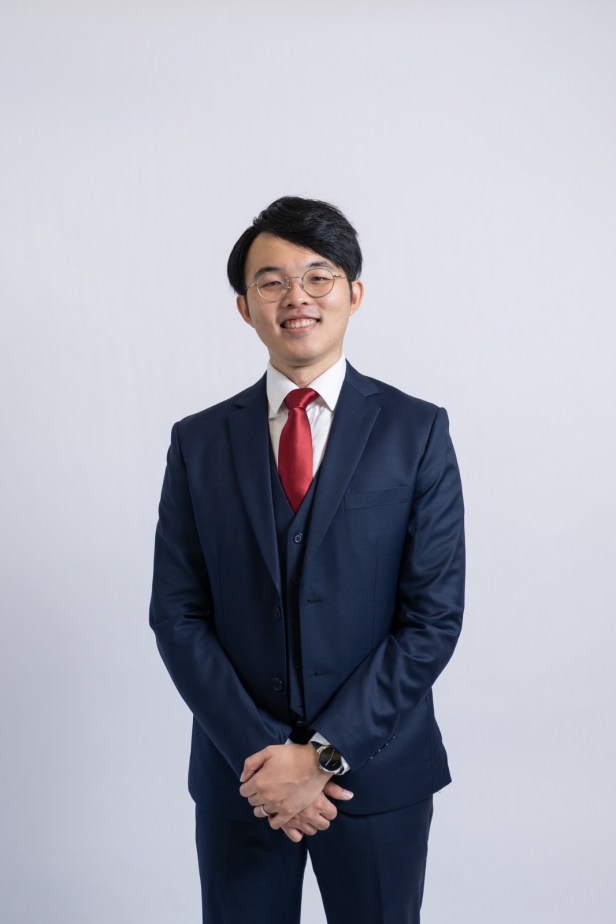
Meet Yu Hong, an estate planner redefining the way we approach wills, probate, and legacy matters. Drawing from personal development breakthroughs and deep empathy, he brings more than just legal clarity—he brings human connection.
Believing that estate planning is about relationships and peace of mind—not just assets—Yu Hong guides clients through emotionally charged moments. From avoiding costly mistakes to fostering honest family conversations, his goal is to build a kinder, more understanding society, one client at a time.
What inspired you to specialise in wills and estate planning, and why do you think it’s important for families and businesses?
It’s been a long journey, and a little spiritual. I was struggling in my business at first because the revenue generated from will writing was minimal, and the costs were high.
Every time I questioned my direction, an opportunity would arise. I often told God, “You said man shall not live by bread alone, yet here I am serving people who can’t afford much.” Many clients were elderly, abandoned by their children, with no insurance.
I remember one man who used to earn $30,000 a month. When I met him again, he had no visitors for two years, his wife had passed away, and his children had cut ties. He had money, but no one around him when he needed it most. That shook me.
From then on, I realised wealth isn’t the goal—we must prioritise relationships and purpose. Each time I doubted, God reminded me that this work has value. I began to specialise in this area because I felt deeply for it. With every objection or challenge, I found reassurance through prayer and purpose.
Business owners do need succession planning and there are many benefits. For instance, many sole proprietors think that when they pass, they can just collapse the business and pass the money on. But what if you enter a partnership with another sole proprietor?
You can structure agreements so that your business and your partner’s can benefit even after either of you pass away. This needs to be in writing—not just verbally agreed.
A business owner passed away, leaving company shares worth $2 million to his wife. But the surviving business partners couldn’t afford to buy out her share. They offered her $200,000. Feeling short-changed, she took legal action and eventually settled for $450,000.
That might sound decent, but legal fees were significant, and the process took years. She wasn’t even a business owner—just the spouse. The emotional and financial toll was huge. These conversations and agreements should happen before it’s too late.
What are the most common misconceptions people have about wills and estate planning, especially in Singapore?
The most common misconception is that writing a simple will is enough. People tend to compare based on price, thinking, “I’ll just do a basic one.” But unless someone asks you the right questions—questions that bring out hidden risks—things can go very wrong.
In Singapore, a major complication is HDB ownership. Many people think that their HDB is their asset to bequeath, but a will cannot dictate what happens to an HDB flat if it’s co-owned. I’ve seen cases where someone willed their HDB to a particular sibling, only for the other siblings to contest it.
The testator had never discussed this with the family, leading to disputes. These are avoidable issues, but only if you go beyond just writing a will—you need full estate planning, and you must be willing to ask and answer the difficult questions while you’re still alive.
How can business owners future-proof their legacy through proper succession planning and shareholder agreements?
Honestly, succession planning and shareholder agreements are your only tools to future-proof your legacy. If you don’t talk about succession now, it won’t magically happen later.
These agreements aren’t just for death—they’re also relevant for retirement, resignation, or even when a partner needs to be removed.
If you’re a shareholder, you’ll want your share to go to your loved ones at a fair value. But your partners might not want to pay that price. That’s why it’s so important to have the conversation now.
Future-proofing means confronting the future before it arrives. Talk it out, define what’s fair, and lock it in—because when the time comes, it’ll be too late to negotiate.
I’ve always wished for a world where people are more understanding, and that stems from my own past. The world is full of people with good hearts, but many get discouraged by a society that’s become sceptical and transactional.
What is one surprising or often overlooked detail that can cause complications during probate application?
A common issue with probate applications is the absence of a schedule of assets. This document is crucial, and not having it can delay court processes significantly. Sometimes people forget to include it or fail to update it.
You may have already submitted your application and scheduled your court date, only to realise later that someone has another bank account or an asset that wasn’t declared. This means rescheduling and additional paperwork.
Letting your executor know where to find your will and supporting documents is also important. If they don’t know, they end up spending time searching or guessing.
There was a case where a father left $2 million in bank accounts to his daughter. She had no idea which banks the money was in, so she had to send letters to every bank through a lawyer—each letter costing about $300. The total legal cost amounted to $36,000.
Fortunately, she recovered the $2 million, but what if there had only been $2,000 in the accounts? The losses would have been devastating. So, not having an updated schedule of assets is a major risk people often overlook.
You have a strong interest in personal development. How does this influence the way you support clients during emotionally charged estate matters?
I’ve always loved personal development because it teaches us that the answers we seek are often within ourselves. In the past, I used tools like NLP to interpret people’s behaviours or anticipate their responses. But after my own personal breakthrough, I realised that true support comes from being present with people, not strategising how to get through to them.
Now, when I meet clients, I focus entirely on what matters to them—not what I assume matters. There was an elderly woman who wanted to ensure her children wouldn’t fight over her property. Her concern was deeply relational, not legal.
So I advised her to have that important conversation with her family. The law cannot solve emotional or relational conflicts—it can only frame the distribution. So being present, listening without judgment, and helping clients process their fears has become a crucial part of my work.
It’s no longer about showcasing knowledge—it’s about being human with someone in need.
What drives your passion to make people more supportive of each other through your work?
I’ve always wished for a world where people are more understanding, and that stems from my own past. The world is full of people with good hearts, but many get discouraged by a society that’s become sceptical and transactional.
Scammers have made people distrustful—even when someone genuinely wants to help, they’re often met with suspicion. That’s heartbreaking.
Through my work, I try to be a light for people—whether it’s in business networking, friendships, or client relationships. I let people know there is still kindness in the world, and it’s okay to live for others.
The world changes when we choose to understand rather than judge. Everyone makes decisions based on their current circumstances—even people who scam others.
If we don’t address those root causes, nothing will ever change. My goal is to influence one person at a time, helping them face their past fears, heal, and build a more compassionate future.
What’s your vision for Singapore in the next five years?
I feel genuinely sad about the rising depression rates among youths. I’ve been there—I’ve given up on life before. But I’ve also learned that giving up is never the answer. It deeply affects loved ones and society as a whole.
When a young person dies, it’s not just an individual loss—it’s a loss to society, especially in a country with a declining birth rate. We’re losing people who could have made a difference. My hope is that Singapore becomes a kinder place where people are less focused on “grinding” and more accepting of life as it is.
The youth today often don’t talk about their struggles because they’re afraid of judgment. We need to normalise kindness. Words hurt, and in today’s society, they hurt even more. We must learn to accept others where they are and help them without pushing them away.
If you could have a superpower, what would it be and why?
I would want the power to heal people—not just physically, but emotionally and spiritually. When someone comes close to death, their whole perspective shifts. I once wrote a will for a woman in ICU, and it was the first time I prayed for someone in public.
I didn’t pray for healing—I prayed for time. Time for her to settle her affairs, to talk to her loved ones, to find peace. She eventually got baptised and was later moved out of critical care. That experience showed me how powerful even a little more time can be.
When people get a second chance, they live life differently—with more meaning and love. That’s the kind of transformation I want to help people experience. A life worth living is always a life worth saving.
Connect with Yu Hong: Instagram, TikTok and LinkedIn.
Yu Hong is a member of Rainmaker, a revolutionary movement that rallies like-minded people together based on the values of Love, Authenticity, Respect, Kindness and Youthfulness (LARKY).

