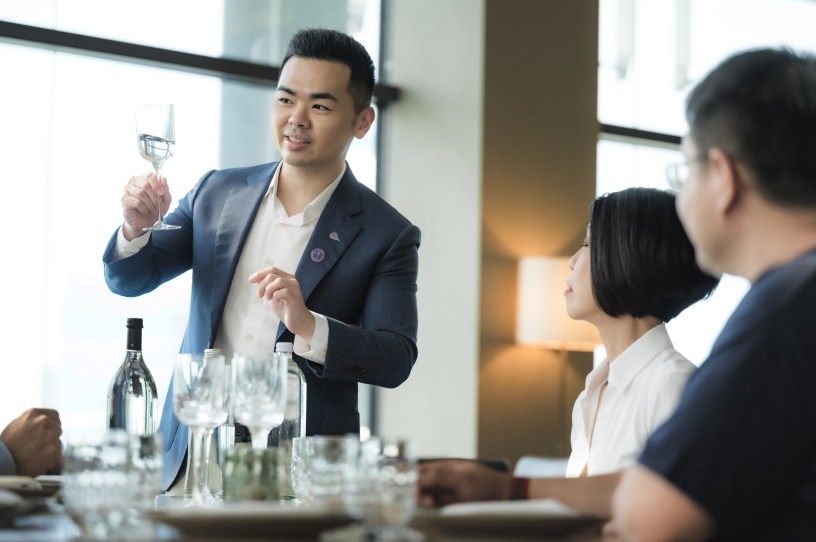
Meet Sam, who is on a mission to educate people on water tasting. Most people think water is just water—but did you know that different types of water can actually taste distinct and offer unique health benefits? As Singapore’s first certified water sommelier, Sam is on a mission to raise awareness about water appreciation, from mineral content to food pairing possibilities.
Through guided tastings and education, he is helping people discover how water can enhance both wellbeing and dining experiences. With increasing focus on health and sustainability, more Singaporeans are turning their attention to what they drink every day, whether it’s for detox, digestion, or fine dining.
What inspired you to become Singapore’s first certified water sommelier, and how did that journey begin?
I was working for my family business between 2016 and 2018, but I eventually realised it wasn’t the right path for me. While searching for a new direction, I came across Martin Riese, a prominent certified water sommelier based in the US, who had even been interviewed by Conan O’Brien.
His work sparked my curiosity about the profession, so I began researching it. He was the one who introduced me to the concept of what a water sommelier does. Eventually, I pursued a certification programme at the Doemens Academy in Munich, where I learned about the different types of water on the market and how they taste.
That experience inspired me to start something similar in Singapore—to share not only premium waters but also the knowledge around them. From there, I began connecting with people in the industry—suppliers, distributors, and fellow sommeliers—and the journey has continued ever since.
Many people see water as just water. How do you educate others to appreciate the different types of water?
There are a few ways, but I personally feel that the most effective method is through a physical water tasting session. When a sommelier guides someone through a curated tasting of several types of water, the differences become immediately apparent.
People start to notice the subtleties and become curious about why one water tastes different from another. That curiosity opens the door for education. It’s much harder to explain these differences just through words—it’s not as impactful.
Of course, I also use platforms like TikTok for educational content, but nothing beats the effectiveness of an in-person water tasting.
What are some misconceptions people have about water tasting?
There are quite a few, but one of the most common ones is health-related—many people wrongly believe that drinking natural mineral water can cause kidney stones.
They associate the word “mineral” with harmful deposits, but that’s a major misconception. Understanding what causes kidney stones and how certain waters can actually help prevent them is important.
Another misconception is that people often ask me whether one brand is “good” or “bad,” expecting a straightforward answer.
But there’s no one “best” water—different waters serve different purposes. High-mineral waters, for instance, might be good for health benefits, while low-mineral ones are better for detox or dilution. People tend to look for a single best brand, but it really depends on the context and purpose.
We know wine or tea can be paired with food. How does water pair differently with different types of food?
When it comes to water pairing, it’s important to consider both the objective and subjective aspects. Objectively, certain minerals in water—like bicarbonate—can chemically interact with food. For example, bicarbonate can neutralise the acidity in coffee or tea, which changes the taste experience.
That’s chemistry at work. Subjectively, people often match heavier mineral waters with richer foods and lighter waters with lighter dishes. But some might prefer a contrasting experience, like pairing high-mineral water with oysters.
There’s no single rule, so I encourage people to understand both perspectives and make informed, personal choices.
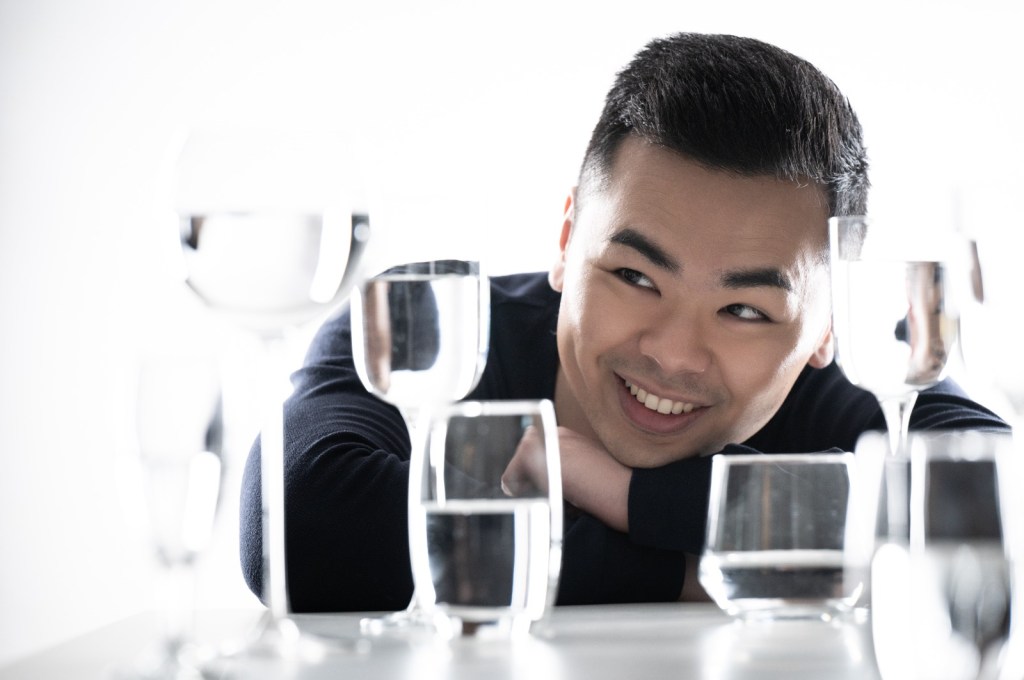

Educationally, as a certified sommelier, I want to help people make more informed decisions about the water they drink—whether it’s for health, taste, or pairing purposes.
Do you think water appreciation will become a larger movement in Asia, and what role do you hope to play in it?
Yes, I believe water appreciation will continue to grow, especially as people become more aware of the health benefits and taste profiles of different waters.
As interest grows, I hope to play a few roles. Professionally, I import mineral waters into Singapore that offer more variety than what’s currently available.
Educationally, as a certified sommelier, I want to help people make more informed decisions about the water they drink—whether it’s for health, taste, or pairing purposes.
I’d also like to contribute by publishing a book with the professor who created the certification programme I attended, as there’s currently no definitive reference material on the topic.
What is one simple way someone can start enhancing their water drinking experience at home?
A simple way is to start buying and tasting a range of natural mineral waters. Compare them yourself and notice the differences in taste and mouthfeel. Ask yourself what you enjoy and why.
Without trying different types, you’re limited to just one experience—usually purified tap water. Beyond that, you can educate yourself further by attending water tastings or finding reliable online resources, although such content is still limited.
This is why I’m planning to co-author a book—to help more people access credible information about water appreciation.
What’s your vision for Singapore in the next five years?
In terms of water, I hope more Singaporeans learn how to take advantage of the many health benefits offered by different types of water.
There are waters high in calcium and magnesium that are great for bone health, especially as osteoporosis rates rise. These waters are already available in the market, but not many people know about them.
My vision is for people to become more curious and more aware of their options, and to be empowered to make informed choices.
If you could have a superpower for one day, what would it be and why?
I’d be Thanos—but with a twist. Instead of eliminating half the world, I’d use that power to make everyone more aware of how water can enhance their health and enjoyment of food.
I’d also want to solve the issue of plastic waste in the water industry. While PET bottles are widely used, they’re not environmentally ideal, and even glass may not be the most sustainable alternative.
If I had Thanos’ power, I’d find a solution that reduces our reliance on single-use plastics while maintaining practicality and quality.
Connect with Sam: Instagram and LinkedIn.
Sam is a member of Rainmaker, a revolutionary movement that rallies like-minded people together based on the values of Love, Authenticity, Respect, Kindness and Youthfulness (LARKY).