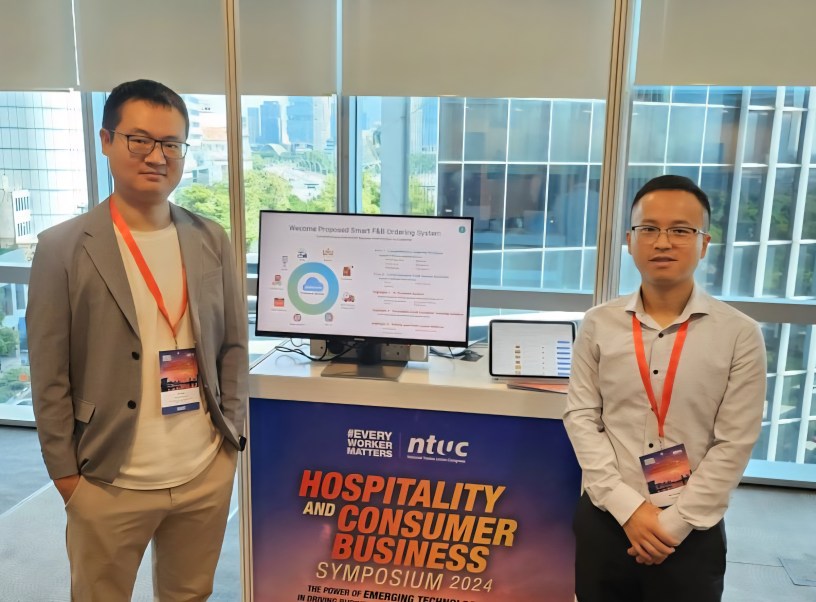
Meet Dr. Sun and Isaac, the founders behind Wecome.sg and Cates.sg. In a rapidly evolving F&B landscape, Wecome is redefining how small hawkers, restaurant chains, and delivery ecosystems operate with cutting-edge technology. Founded in Singapore, the company offers a fully integrated platform that combines POS systems, digital ordering, bulk delivery, and sustainable solutions—all tailored for the modern dining experience.
With a strong focus on innovation, AI integration, and smart logistics, Wecome and Cates are bridging the digital gap in the food industry. From university canteens to large-scale industrial parks, their vision is to become Asia’s leading F&B infrastructure partner—empowering food businesses with tools that are efficient, eco-friendly, and future-ready.
What inspired the creation of Wecome and what gap in the F&B industry were you hoping to fill?
Wecome was founded in 2018 after we identified a major gap in the F&B industry. At the time, most competitors were offering either standalone F&B systems without integrated delivery solutions, or delivery platforms that didn’t support restaurant POS systems.
This fragmentation reduced efficiency for both restaurant owners and customers, who were unable to access both dine-in and delivery functions in a single platform. Small F&B operators, such as hawkers and food stalls, were struggling to extend their traditional operations into the digital space.
Meanwhile, customers were demanding greater convenience, such as ordering on the go or avoiding queues through pre-ordering. We recognised this gap and built a comprehensive platform that integrates the entire F&B ecosystem—from POS systems to omnichannel ordering options like mobile apps, QR code ordering, kiosks, and most importantly, integrated delivery.
Wecome was arguably the first in Singapore to offer a bulk delivery solution directly within the POS system. Our vision was to make digital tools accessible to SMEs and smaller restaurants that might otherwise be left behind in the digital revolution.
Among the many restaurant management systems in the market, what makes Wecome stand out from the rest?
What truly sets Wecome apart is our integrated food chain approach. Unlike competitors that focus solely on either restaurant operations (like many POS vendors) or customer-facing delivery platforms (like Grab or Foodpanda), we’ve built a holistic ecosystem that connects every touchpoint.
With Wecome, a user can dine in, order takeaway, or request delivery—all within the same platform. This creates a powerful, seamless experience with all data unified in one place. Our solution includes a robust POS system and omnichannel ordering capabilities such as mobile apps, QR code ordering, NFC, kiosks, and innovative delivery options.
These include human delivery, bulk delivery, and even robotic delivery. In addition, we’re investing in sustainable delivery models using recyclable food locker stations, which we’ve already implemented at institutions like SIT, NUS, and polytechnics that have shown strong interest.
While other POS systems may integrate with third-party delivery platforms, we don’t simply rely on them. We have our own in-house logistics team and a dedicated app called Cates, which targets high-density locations such as universities, industrial parks, and army camps. These areas have high delivery demand but are often underserved by traditional platforms due to high delivery costs—sometimes $15 to $20 per order.
Our model is more affordable and designed specifically for these zones. By doing so, we not only provide a POS system to merchants, but also bring in new users and generate additional revenue streams. This added value is something most other vendors cannot offer.
As far as we know, we’re the only vendor in Singapore with our own logistics team and delivery app focused on specific zones, integrated with a full restaurant management platform. We’re not just providing a tool—we’re building an ecosystem.
Your platform works even when the network is down. How important is this offline functionality for your clients?
This feature is absolutely critical. Power outages can be fairly common in F&B settings. For example, when restaurants are heating hotpots or using high-powered equipment, it often trips the power. So, when we designed our POS system, we made it resilient to internet failures and power disruptions.
We understand the realities of working in F&B because both my co-founder and I have been part-time staff in this industry. We’ve experienced these pain points first-hand. We’ve also received feedback from clients who struggled during lunch rushes when their internet failed.
Their legacy POS systems would go completely offline, forcing them to revert to pen and paper—an inefficient and outdated method. That’s why we deliberately chose an iPad-based system back in 2018, when such setups weren’t common. iPads come with built-in batteries and cellular capabilities, making them ideal for maintaining operations during power or internet failures.


Understanding customer pain points is more important than simply executing your own ideas. It’s about listening and responding quickly to feedback.
Can you share an example of how your data-driven insights have helped a restaurant improve its operations or sales?
One notable example was in 2018 when we rolled out our system at a food stall in NTU. The operator was relatively inexperienced and asked if we could provide analytics to help him understand popular menu items and customer preferences across campus.
At the time, mala was trending, and while the stall was popular, it was losing about 30% of potential revenue during lunch peaks due to long queues. Customers would see the line and leave. Our analytics revealed the bottleneck wasn’t food prep—it was in the ordering and payment process.
Customers had to scan QR codes with their phones, launch their PayNow apps, and manually make payments. In many cases, poor reception led to failed transactions or confusion, slowing down the line further.
We implemented our Cates app, allowing students to order and pay directly from their mobile devices without queueing.
They could simply sit in the canteen, browse the menu, and pay—all in-app. Within the first month, the stall saw a 20% increase in peak-hour orders.
Can you share more about Cates and how is it different from the other platforms?
Cates currently serves over 82,000 registered users. Powered by AI, the app learns from each user’s order history and dietary preferences. Users can even indicate their mood—whether they’re in the mood for something light, comforting, or indulgent—and Cates will recommend suitable meals from participating merchants.
With a one-click journey from suggestion to payment, the app enhances convenience and overall user satisfaction. Beyond benefiting consumers, Cates provides valuable insights to merchants, helping them optimise their menus and marketing efforts.
It also functions as a CRM tool through a dual membership system: one tied to institutions (such as SIT or NTU), and another linked directly to the merchant. This means, for example, that a student at SIT can enjoy institutional discounts while earning loyalty points from the hawker at the same time. This system is already in place at SIT and is set to launch at Temasek Polytechnic.
Cates is integral to Wecome’s unique bulk delivery model. Unlike conventional food delivery services that assign a rider to a handful of orders, Cates consolidates up to 50 orders across multiple vendors and delivers them to a centralised collection point—such as a university pick-up station.
This allows a single driver to efficiently fulfil over 100 meals per hour, significantly lowering delivery costs and enhancing operational efficiency. The app also integrates seamlessly with our sustainable solutions.
For example, users can open smart food lockers with a tap—no OTP required. Cates is also linked to an innovative robot delivery system developed in collaboration with GovTech and JTC, now operating at Woodlands North Coast, and is expected to be deployed to Punggol Digital District later this year. Users can track, manage, and unlock robot compartments directly through the app.
Ultimately, the Wecome ecosystem revolves around two key components: the Wecome POS system for merchants and the Cates app for end users. Together, they streamline the entire F&B journey—from kitchen to customer.
What’s your long-term vision for Wecome, and how do you plan to scale it regionally or globally?
Our vision for Wecome goes beyond Singapore. We’ve begun exploring partnerships in markets like the Philippines, Hong Kong, and South Korea. The value we’ve demonstrated—supporting hawkers to large chains through data-driven insights—proves our model works across the entire F&B ecosystem.
We aim to be Asia’s leading F&B infrastructure partner, with a focus on high labour-cost, sustainability-driven markets like Japan and Korea.
We’re expanding through strategic partnerships with major institutions like JTC, piloting innovations such as robot deliveries in smart districts. We’re also leveraging AI—through IMDA’s Go Digital programme—for tools like auto menu translation and personalised recommendations.
Our new “MegaBuy” feature connects restaurants to suppliers, streamlining procurement. Sustainability remains a key focus, with ESG-ready solutions aligned to Singapore’s green goals.
What do you think makes a good entrepreneur?
A good entrepreneur needs to be resilient, adaptable, and deeply empathetic. Understanding customer pain points is more important than simply executing your own ideas. It’s about listening and responding quickly to feedback.
Strong communication—whether with merchants or users—is essential. Also, entrepreneurs must balance bold vision with practical execution. Risk is part of the journey, but so is finding joy in solving problems.
From my own experience, I’ve realised that high pressure is inevitable—deadlines, unexpected issues, or sudden pivots are all part of startup life. But what truly makes a difference is leadership and teamwork. These two qualities, when practised well, can transform an idea into a thriving company.
What’s your vision for Singapore in the next five years?
We envision Singapore evolving into a Smart and Sustainable Nation. Technological integration—especially AI and interconnected systems—will become even more widespread, streamlining business operations and daily life.
At the same time, Singapore will continue leading in sustainability. Solutions that support ESG goals and reduce environmental impact will be increasingly prioritised across industries.
Connect with Dr. Sun and Isaac: Wecome.sg, Cates.sg and LinkedIn (Isaac).
