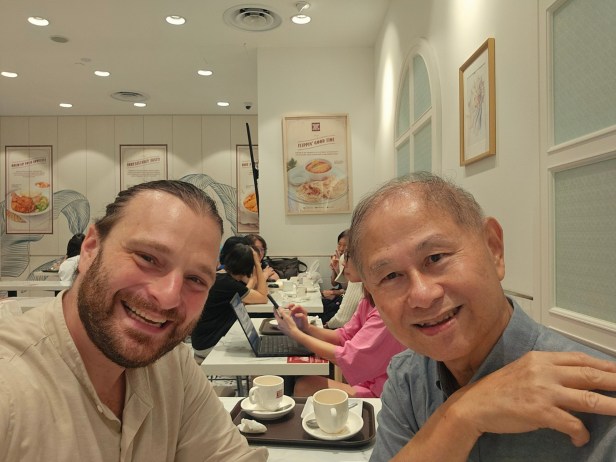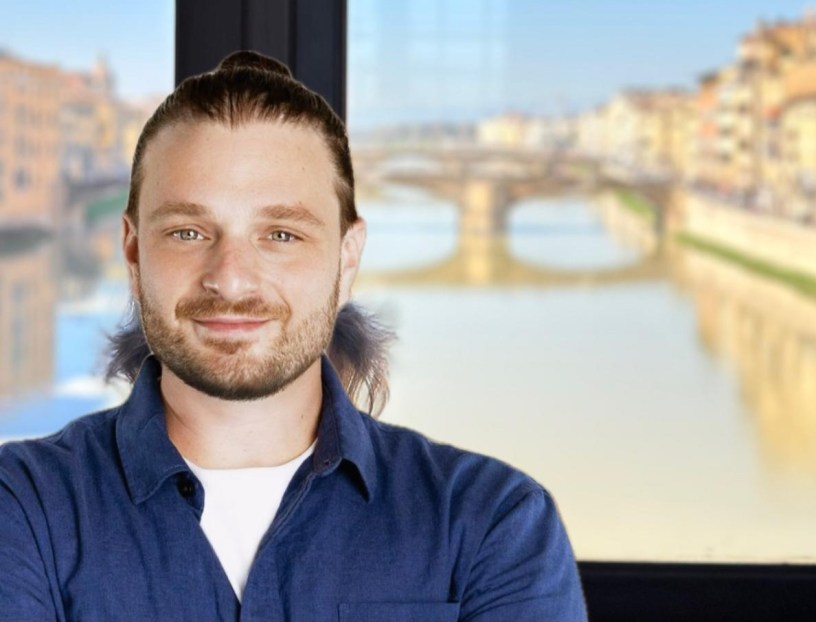
Meet Benjamin, the founder of Mobius, a strategic operations consultancy redefining how SMEs and startups streamline their processes for growth. With experience spanning Fortune 500 companies to lean startups, Benjamin saw a clear gap—smaller businesses lacked the resources and clarity needed to scale efficiently. That realisation sparked the creation of Mobius.
At Mobius, it’s not just about systems—it’s about people. From reducing millions in costs through tool rationalisation to guiding teams through change without overwhelm, Mobius tailors enterprise-level strategies to real-world SME challenges. The goal? To improve not just workflows, but the quality of work life itself. Here is Benjamin’s story.
What inspired you to start Mobius and how did your experience with global organisations influence your approach to helping SMEs and start-ups?
As you can tell from my portfolio, I’ve worked with a wide variety of companies. I’ve worked with Fortune 500s, enterprise-level organisations, and huge corporations, but I’ve also worked with smaller companies, including a Singaporean company.
I’ve worked with start-ups—technical and non-technical—and I’ve even run my own companies, including a board game cafe in Myanmar. What I found is that big companies know what they’re doing. It may not always seem like it, but they have excellent processes and the money to hire top-quality consultants and invest in the best tools and systems.
When you’re working with them, you’re just one cog in the wheel. I’ve made significant changes within them, but ultimately, they can afford to do a lot because of their resources.
What really excites me is going into a place full of chaos and frustration, where the people know they need to improve but aren’t sure what better looks like. They can’t afford expensive consultants or tools—they’re the ones who really need help.
I decided I wanted to work with SMEs because I want to improve the quality of their lives and jobs. Improving lives is part of my business.
When I go in and fix those frustrations, help them work better, they go home more relaxed. That drives me. Even those who don’t realise they need help often do.
Your consultancy has reportedly helped save over $3 million annually for your clients. Can you walk us through one of those high-impact transformations?
Absolutely. This saved the company nearly $1 million. It was an app rationalisation project. A large enterprise had acquired a medium-sized company—Alteryx acquired Trifacta.
When a company makes an acquisition, they also inherit all the tools used by the acquired company: accounting software, ad management tools, project management platforms, and more. Large enterprises often have hundreds of different tools.
Imagine you buy another house—you already have one and now you have two of everything. You don’t need five ladles or two stoves. You have to evaluate which tools work best for you and discard the rest. That was my job.
I had a portfolio of about 50 tools, including a system used to give employees access to tools. It was very central and expensive—over $100,000 per year.
I evaluated the tools, met stakeholders, led decision-making, coordinated migrations, did reporting, and worked with the architecture team to understand how everything was connected. I had to carefully cut away tools without disrupting operations.
I often liken it to disarming a bomb: cut the wrong wire and chaos ensues. This company was worth nearly a billion dollars. Any major disruption would have been unacceptable.
Thanks to our efforts, we eliminated the system a year earlier than expected, saving significant costs. It was projected to be in use for two years; I phased it out in one. That’s what I do—identify problems, devise solutions, and drive them forward.

Most non-entrepreneurs think that entrepreneurship is glamorous. It’s far from the truth. You do everything, every day.
How do you ensure that large-scale enterprise methodologies are scaled appropriately for leaner start-ups without overwhelming them?
My job is to understand what technologies can do, how they can be optimised, and how people and processes can be optimised too. I never assume that a tool or a previously successful process will work everywhere.
I interview stakeholders and team members to understand their pain points and frustrations. Then I evaluate technologies and determine sustainable processes. Everything is custom-designed for each company.
Standard enterprise methodologies can be too large for small businesses, but by right-sizing and gradual rollouts, I ensure smooth transitions. Big-bang deployments—implementing everything at once—don’t work well for process changes.
People push back, forget how to use the systems, and revert to old habits. So I roll out in phases, training and adjusting as needed. It could be two stages or twenty—it depends on the client. I also account for fear and resistance, especially around automation.
People worry about job security. I never recommend removing staff for that reason. Automation allows them to do more, not be replaced.
What are some of the most common pain points you have observed in growing SMEs, and how does Mobius typically address them?
One of the main issues SMEs face is a lack of in-house skills for handling technology. Many think they are unique and that their customised processes can’t be replaced. But these custom setups often require constant maintenance and updates.
By standardising and streamlining, we usually find that 90% of their needs are met more efficiently. The extra 10% they thought they needed often isn’t as valuable as they believed. Once this mindset changes, productivity improves significantly.
With rapid tech advancement and evolving AI adoption, how do you see the role of operations consulting evolving in the near future, especially for SMEs?
AI is a powerful set of tools, and this is an exciting time for operations consultants. AI can’t replace what I do—understanding people, processes, asking the right questions, and implementing change. But it can empower me to deliver more and do better.
I’m not perfect; sometimes I miss things. AI helps me cover those gaps. It allows me to offer better quality, faster and more affordably, but only if I already have the foundational knowledge to use it effectively.
What do you think makes a good entrepreneur?
Dedication, motivation, and flexibility. As an entrepreneur, you’re the driving force behind the business and your team. Clients and team members alike need to see your commitment. It’s not an easy job.
Most non-entrepreneurs think that entrepreneurship is glamorous. It’s far from the truth. You do everything, every day.
But being dedicated isn’t enough—you also need to be flexible. If you’re too rigid, you’ll fail. You need to adapt and pivot like Muhammad Ali—float like a butterfly, sting like a bee. That’s how you lead and take the market.
What’s your vision for Mobius in the next few years?
I want to get more connected in the Singapore market, build a larger team of consultants, and grow our client base. I want Mobius to have a strong reputation as a firm that delivers real institutional change—a firm that respects people and improves businesses.
When we leave a company, we want it to be better than when we arrived.
If you could be a movie villain for one day, who would it be and why?
I thought about this a lot. Thanos might be cool, but his logic is flawed. Killing half the population would devastate markets. I’d go with Lex Luthor. He’s political, brilliant, and his ego is actually based on something real.
He fears what Superman could become if he turned evil. He takes risks to find solutions that could protect humanity. Even if I don’t agree with him, I respect his dedication and intelligence.
Connect with Benjamin: ConsultMobius and LinkedIn.
Benjamin is a member of Rainmaker, a revolutionary movement that rallies like-minded people together based on the values of Love, Authenticity, Respect, Kindness and Youthfulness (LARKY).