
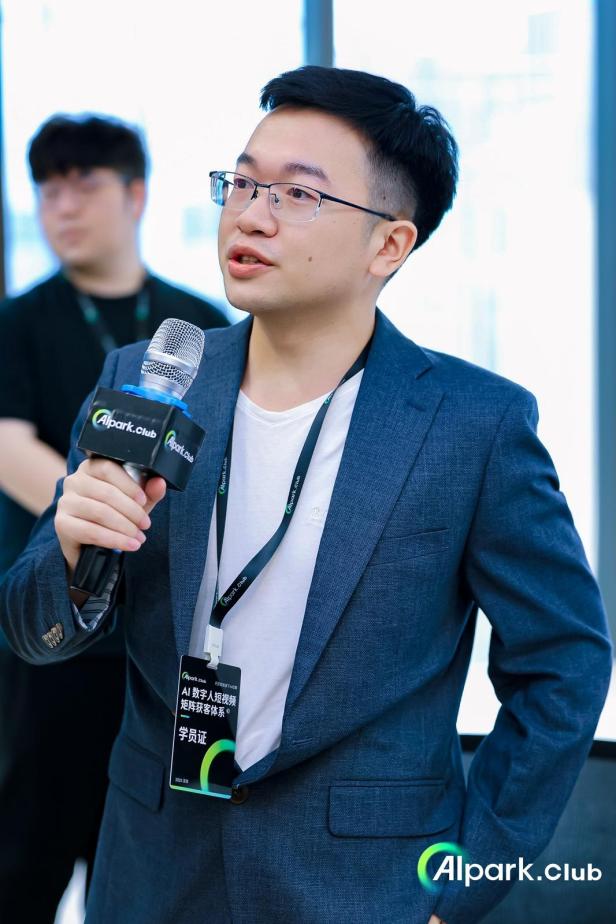
Meet Chenyu, the visionary founder of Evov.ai, a pioneering platform at the intersection of AI and digital marketing. With a background in video analytics and a PhD from NTU, he turned a personal curiosity about large language models into a powerful tool that’s reshaping how brands interpret and act on social media data.
Evov.ai was born out of a real-world marketing challenge—how to make AI truly actionable for everyday marketers and SMEs. By analysing thousands of trending videos and combining big data with predictive analytics, Chenyu empowers brands to uncover viral content patterns, optimise their strategies, and stay ahead in an ever-evolving digital landscape.
What inspired you to start Evov.ai and how did you identify the gap in the social media analytics landscape?
What inspired me was that previously I was working in a food delivery company, handling operations and marketing. Around the end of 2022 and early 2023, ChatGPT came out. I started using ChatGPT in my marketing and found that it could perform even better than my interns.
I saw a huge potential for AI and large language models to revolutionise the industry. From early 2023, I began studying large language models like ChatGPT. This wasn’t my area of expertise during my PhD, but I started learning and built some chatbots and content creation tools.
After some exploration, I decided to start a company. That’s what inspired me—I saw the potential. At the beginning, we weren’t sure about the direction because marketing is such a broad field.
We decided to focus on the social media landscape because it is the most widely used channel by most creators and brands. If we could focus on one point in this area, we could tap into a huge market.
The gap in the current social media analytics space is that traditional tools are expensive and mainly target large enterprises needing to monitor their brands. SMEs and regular marketers don’t have tools to analyse content and generate actionable strategies.
Now with large language models like ChatGPT, the cost becomes lower and it’s possible to provide precise, actionable strategies—not just numbers, but real optimisation suggestions.
That’s the gap we aim to solve: not just analytics, but strategic recommendations.
In a world flooded with short video content, how does Evov determine what truly makes a video go viral?
There are several metrics. First, engagement—likes, shares, and comments. But that alone isn’t precise if you ignore the follower count of the creator.
If a creator has a low number of followers and yet garners high engagement, that indicates the content is strong and has viral potential. We calculate such engagement rates.
Another factor is relevance. A viral video that doesn’t relate to your brand isn’t useful. So when we recommend trends or videos, we look at engagement, relevance to the brand, and recency—how recently the video was published.
If it’s new, performing well, and relevant, we consider it a strong viral candidate in your niche.
How does Evov translate complex social media data into actionable insights for brands?
We have our own IP. I’m a research fellow at NTU and earned my PhD there, specialising in video analytics and big data. Over the years, I’ve studied these areas extensively and developed IP in this field.
Our strategy suggestions are data-supported, not just speculative. We crawl thousands, even tens of thousands of videos online. We filter by your niche, language, and brand profile using keywords.
After initial cleaning of irrelevant content, we rank and filter to recommend highly relevant videos. We also analyse your historical data—both public and private (with permission)—and compare with competitors.
We factor in trends, holidays, and festivals, then use a multi-modal large language model to generate user-friendly, actionable insights instead of mere data visualisations.
Just like people interact in the physical world, these agents can interact in the virtual world. Brands and creators can collaborate through this network to enhance marketing and sales.
What are some of the most surprising video trends you have uncovered recently, and how can brands capitalise on them?
Trends differ across industries and brands. We don’t focus on generic platform-wide trends; we look into brand-specific niches. So, there isn’t a single surprising trend I can name.
But for each brand, there is always something specific to their audience. These trending videos can serve as references—whether it’s the topic, style, or structure—helping content creators and brands produce more engaging marketing content.
How do you ensure that Evov’s analytics data stays relevant in such a rapidly evolving digital ecosystem?
I come from a university and research background, and we have strong research focus and IP. We also collaborate with multiple universities.
Our research covers not only social media analytics but also converting analytics into engaging content. We’re working on an agent that can handle everything from research, planning, and content creation to optimisation for brands.
Clients will simply give our agent an instruction and it will do the rest. Our brand name Evov reflects this evolution. The agent learns and improves continuously, aligning with your brand, studying your data, and boosting engagement.
We also consider outbound marketing—AI can proactively seek target audiences and interact with them. Ultimately, this creates a digital agent network where brands can communicate and collaborate effectively in a virtual ecosystem.
What is your lowest point in your life?
During my PhD, the first two years were tough. I didn’t get a single paper published. My first paper was rejected four or five times. I didn’t understand what was considered a good paper or how to improve mine.
Repeated rejections, combined with the Covid period, made me feel mentally and physically trapped.
What are the plans for the future of Evov, especially as AI and predictive content tools continue to emerge?
Our core strength is predictive analytics—identifying trends and turning them into strategies. But clients want more: a complete solution to gain leads and traffic.
So, our goal is to build an AI agent that handles everything—analytics, research, planning, creation, and optimisation. The agent will learn continuously and align better with each brand.
It can also handle outbound marketing—finding and interacting with target audiences. Eventually, this becomes a digital agent network.
Just like people interact in the physical world, these agents can interact in the virtual world. Brands and creators can collaborate through this network to enhance marketing and sales.
What’s your vision for Singapore in the next five years?
Singapore is already a leader in AI applications. The government, universities, and companies are quick to adopt AI. I believe Singapore will become very competitive in AI, both in research and practical application.
Individuals and companies will benefit greatly, and Singapore will maintain its leadership in the region.
If you could have a superpower for one day, what would it be and why?
I would want the power to read minds. As a startup founder, it’s difficult to know what users truly think about your product.
People are often too nice to give honest feedback. If I could read minds, I could understand exactly what users like or dislike, and improve accordingly.
Connect with Chenyu: LinkedIn and Instagram.

