
Meet a former aspiring lawyer who swapped courtroom dreams for poolside purpose. After years of competitive swimming and a high-stress stint in law, she found her true calling as a private swim instructor—helping students, including those with special needs, overcome fear, build confidence, and grow through water.
Eleanor opens up about the emotional rewards of teaching, her personalised approach for each student, and her vision to build a lifestyle hub where coaches carry forward her proven methods. From healing herself to transforming lives, her journey is a testament to the power of purpose-led work.
What inspired you to become a private swimming instructor?
I find group classes more fun. But for private swimming, I feel that the one-to-one interaction and the conversations I have with my students are very precious to me.
For example, children will come to me and say things like, “I did this well today,” or “I got a sticker today.” The kind of conversations I have with them show that they trust me a lot. I don’t just see things from my perspective anymore; through their eyes, I see the world differently.
I’ve actually been swimming for most of my life. I started swimming at four years old and competed throughout my secondary school days. One day, a friend of mine asked if I’d like to try coaching.
Back then, my goal was to become a lawyer, which was fun in its own way. But I left law to heal myself from all the stress I faced while working at a law firm. Being a teacher has been more rewarding—I see my students smile, and that’s what makes me feel most alive.
How do you handle students who experience anxiety or fear of water, such as using special techniques or psychology-based methods?
I don’t believe in formal psychological methods, but rather in reassurance and step-by-step building. It’s never about overcoming the fear in one day—it takes time and depends on the student’s willingness to push themselves a little further.
Usually, I encounter this more with children, so it also involves working in partnership with the parents. I only see them once a week, so there’s a limit to what I can do.
Parental support at home is very important—when they come to class less afraid, progress is much faster.
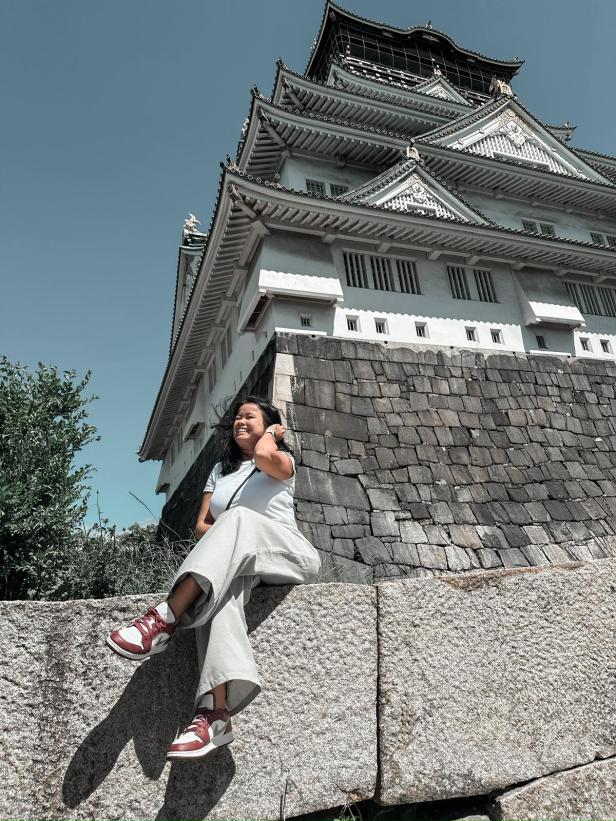
Back then, my goal was to become a lawyer, which was fun in its own way. But I left law to heal myself from all the stress I faced while working at a law firm. Being a teacher has been more rewarding—I see my students smile, and that’s what makes me feel most alive.
What is the most rewarding experience you have had as an instructor?
My most rewarding experience was with my very first student, who was diagnosed with ADHD. I didn’t know about the diagnosis initially—I just taught him like any other student.
On the day of the swim test, his parents told me about his condition, and we were all a little worried about how he would perform. But he did really, really well. In fact, the assessor even commented that he performed the best out of everyone. That was an incredibly rewarding moment for me.
I also had a student who is autistic. When we started, lessons were only 10 minutes long, and gradually we built up to 40–45 minutes. Now, he can swim multiple laps and performs better than many of my students. That kind of progress really moves me.
Which swimmer do you take inspiration from?
Michael Phelps. He’s a legend—truly a real legend. I really admire his determination and discipline. It’s top notch and something I aspire to. One thing he said stuck with me: “Whether I feel like doing it or not, I still do it.” That really resonates with me.
What are some common mistakes beginners make, and how do you help them improve?
A common mistake, especially with front crawl, is the kicking. Beginners often don’t have the muscle development needed unless they train regularly.
Many tend to bend their knees, which makes it easier to kick but less effective. It takes time to build strength and get used to the feel of the water. Improvement really comes down to consistent practice and proper technique.
What is your long-term vision as a swim coach—such as scaling your services or training other coaches?
My vision is to build a lifestyle hub with my friends. Within the next five years, I hope to stop teaching so I can focus on training coaches. I want to ensure that my teaching methods are transferable so we can continue to produce the same kind of results across the board.
What’s your vision for Singapore in the next five years?
This one is tough. I’d say the sports industry in Singapore is still developing. I hope that one day Singapore will recognise lifesaving as a sport—not just something we do to save lives, but also something we can compete in and represent the country.
Right now, we do have some presence, but the support is limited because it’s not very well known.
If you could be a movie villain for one day, who would it be and why?
I would say Maleficent. By default, I’m a very caring and loving person, and Maleficent’s mindset is the opposite of mine. But her story shows that deep down, she’s not evil—she’s misunderstood. It’s interesting to explore that contrast.
Connect with Eleanor: Facebook, LinkedIn and TikTok.
Eleanor is a member of Rainmaker, a revolutionary movement that rallies like-minded people together based on the values of Love, Authenticity, Respect, Kindness and Youthfulness (LARKY).