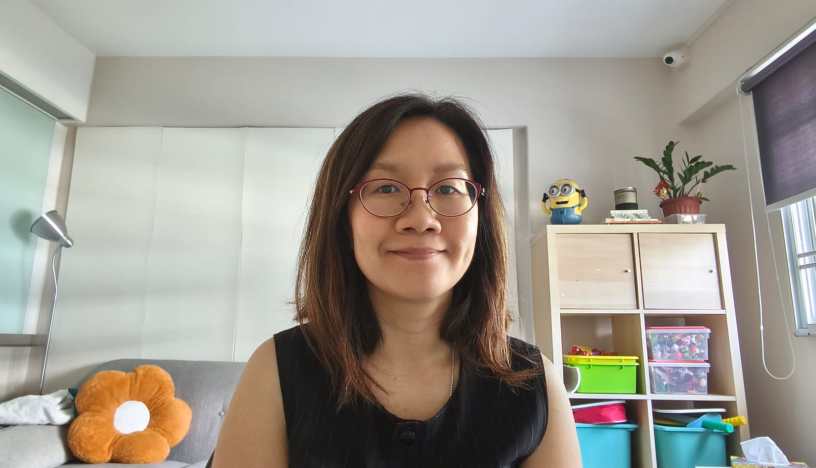
Meet Yuyun, the founder of Inside Out Counselling Psychology Wellness Practice. As a registered counsellor in both Australia and Singapore, Yuyun specialises in helping individuals, couples, and families navigate mental health challenges such as anxiety, depression, OCD, trauma, self-harm, and ADHD.
Her practice supports clients across all life stages—from children and teenagers to adults and multi-generational families—offering personalised counselling in a safe, compassionate space. Whether it’s helping co-parents adjust after divorce, guiding teenagers through emotional distress, or supporting corporate teams with mental well-being strategies, Yuyun brings empathy, clinical expertise, and unwavering commitment to every client she works with.
What inspired you to start Inside Out Counselling and what was the turning point that led you from studying psychology to launching your own wellness practice?
So it’s been a rather interesting journey. I’ve worked in hospitals and also in nonprofit organisations. One of my struggles when working in our local context was that there always seemed to be a limit to what we could do.
When I moved to Australia and began practising there full-time, I realised we could adopt a more holistic way of working with clients. It wasn’t just about trauma—it could include addictions, family and domestic violence, mental health, and more.
Whereas when I used to practise in Singapore, the system only allowed us to work on one issue at a time, which I didn’t feel aligned with my training. I’ve always envisioned setting up my own practice where I could support clients holistically, rather than referring them to other agencies after addressing just one issue.
I don’t think that model is helpful to clients. In my own practice, I feel much more in control of how I work with clients, and everything I do is rooted in evidence-based practice.
When I set up Inside Out, my goal was to gather a team of people who shared the same holistic philosophy—who understand trauma, addictions, and mental health in a well-rounded way—to provide meaningful, integrative support to our clients.
Another pivotal moment came while I was practising in Australia. A young girl, around seven years old, came in extremely anxious. She was biting her hands and trembling. The moment she entered the room, she saw some Inside Out characters and asked, “Is this like the Inside Out movie?”
At that time, the practice wasn’t even named Inside Out, but when I saw her whole body relax and heard her ask, “Can I play here?” I knew in my heart that someday I would name my practice Inside Out.
I wanted to create a space where even the youngest children could feel safe and learn to grow their identity.
Your practice supports a wide range of individuals, from children to couples to corporate teams. How do you tailor your counselling approach for such a diverse group of people?
As one person, I cannot do everything. That’s why I’ve built a team of practitioners—all of whom I’ve worked with personally in hospitals or nonprofit organisations.
Each team member has their own specialisation—some focus on children and families, others on couples, and others on corporate wellness and workplace well-being.
I don’t try to handle every single case myself. I rely on this team to provide expert, targeted support to our diverse client base.
Can you share what reaffirmed your passion for this work?
If I had just one memorable case, I wouldn’t have lasted 16 years in this field. I’ve been consistently inspired by clients who come to us during vulnerable stages and eventually thrive. I don’t view our service as transactional—where clients come in today and are discharged tomorrow.
Our relationship is open-ended. Clients know they can return whenever they need support to move to the next stage of life. I’ve worked in trauma, addictions, mental health, divorce and separation—and in every one of these fields, I’ve seen multiple clients go from surviving to truly thriving.
Early on in my career, I used to tell myself that if I could just help one person in each organisation I worked in, that would be enough. But it has always turned out to be more than one.
As a team, we’ve helped many clients grow into the people they want to become. We’ve supported children through anxiety and seen them go on to JC and university. That keeps me going.

Our relationship is open-ended. Clients know they can return whenever they need support to move to the next stage of life. I’ve seen multiple clients go from surviving to truly thriving.
Mental health is often stigmatised, especially for children and teens. How do you help families open up and create a safe space for healing?
Reflecting on my past roles in Australia, KK Hospital, and nonprofits, I remember when people felt embarrassed to see a therapist, assuming therapy was only for those who were “crazy.” Back then, many people came to therapy involuntarily—pushed by parents, mandated due to addictions, or mental health interventions.
But things have changed. At Inside Out, most people come voluntarily because they want to work on themselves. Even if a child is initially brought in by parents who think they are the problem, we focus on reframing the issue. We help both parents and children understand that it’s not the person who’s the problem—it’s the issue that needs addressing.
That externalisation reduces shame and helps everyone feel safer. In the broader public, some stigma remains, but the government’s push to normalise mental health support—on buses, MRTs, even the media—has helped shift perceptions.
Our job as therapists is to reassure clients: you are not the problem. You’re facing a challenge, and we’ll face it together. We become stepping stones in their healing journey.
You also support divorced couples in co-parenting. What are the most common challenges they face, and how can therapy make a difference?
When I returned to Singapore, I felt that divorce was still seen as very acrimonious, especially where children were concerned. Having practised in Australia, I wanted to bring in the mindset that even after divorce, the child’s voice should remain central.
Parents may no longer be husband and wife, but they’ll always be co-parents. If parents make it to co-parenting therapy, it shows they’re willing to prioritise their children. Of course, some still enter with the hope of gaining access advantages, but we make it clear from the start—that’s not our role.
Our goal is to help both parents see what’s in the best interest of the child and build strategies to support them both individually and collectively.
For example, if one parent was more present and the other more absent during the marriage, that might need to shift after separation. We help parents adjust to their new roles, ensure continuity for the child, and support both parents in being as present and effective as possible. The aim is to get them to work together for one reason: the child.
What do you think makes a good entrepreneur?
I’m not sure I’d call myself a good entrepreneur yet—I still see myself more as a therapist. But perhaps being a good entrepreneur means using what you’re good at—your knowledge, skills, and reputation—to make a difference through your own platform, without relying on government or agency employment.
It requires grit, discipline, and resilience. I still struggle with the business side sometimes, but as the practice stabilises, I can focus more on therapy and less on operations. Many entrepreneurs may disagree, saying you always need to wear the entrepreneur hat.
I’m still working out the right balance. But what I do know is that you cannot procrastinate in business. You need to do what’s necessary—even the tasks you dislike—because that’s what keeps the business afloat.
Being an entrepreneur also means knowing when to upscale or downsize, and making difficult decisions for the long-term sustainability of the practice. It challenges you to think beyond therapy—to think strategically and keep the business sustainable.
My husband once mentioned that many entrepreneurs have business coaches. Maybe one day, if needed, we’ll explore that. For now, we’re content being small but impactful.
Looking ahead, what’s your vision for how Inside Out can continue to grow—especially in supporting corporate mental wellness or expanding access to therapy in Singapore?
The mental health pie is big, and there are many players—nonprofits, private practices. My hope is that Inside Out becomes known not just for managing stress or surface issues, but for going deeper—helping clients grow personally and thrive in their communities.
We may not be able to compete with large private agencies in terms of pricing or size, and we don’t want to become so premium that we’re inaccessible. But we do want to grow steadily and sustainably.
We’re also exploring student-led services to offer more affordable mental health care. This allows us to contribute meaningfully to the field while supporting clients with fewer financial means.
What’s your vision for Singapore in the next five years?
I hope to see stronger regulation in the mental health field. Currently, anyone can call themselves a counsellor or psychologist—even without proper accreditation—which puts clients at risk.
The government has started pushing for better regulation, and I hope this continues. Some postgraduate programmes do not offer proper internships or training required for professional recognition.
We need a system where professionals are clearly certified so that when clients are referred to a psychologist or counsellor, they can trust the qualification is legitimate. That would elevate the credibility of the entire field.
Another area I hope to see grow is corporate wellness. In countries like Australia, employee assistance programmes are well established. In Singapore, it’s still growing slowly. If insurance companies would cover therapy—not just for diagnosed conditions like anxiety disorders but also for everyday life struggles—that would make a significant difference.
Many clients seek help not because they have disorders, but because they’re going through difficult transitions. If they could get insurance support for that, it would go a long way in making therapy more accessible.
Connect with Yuyun: Inside Out Counselling and Instagram.
Yuyun is a member of Rainmaker, a revolutionary movement that rallies like-minded people together based on the values of Love, Authenticity, Respect, Kindness and Youthfulness (LARKY).

