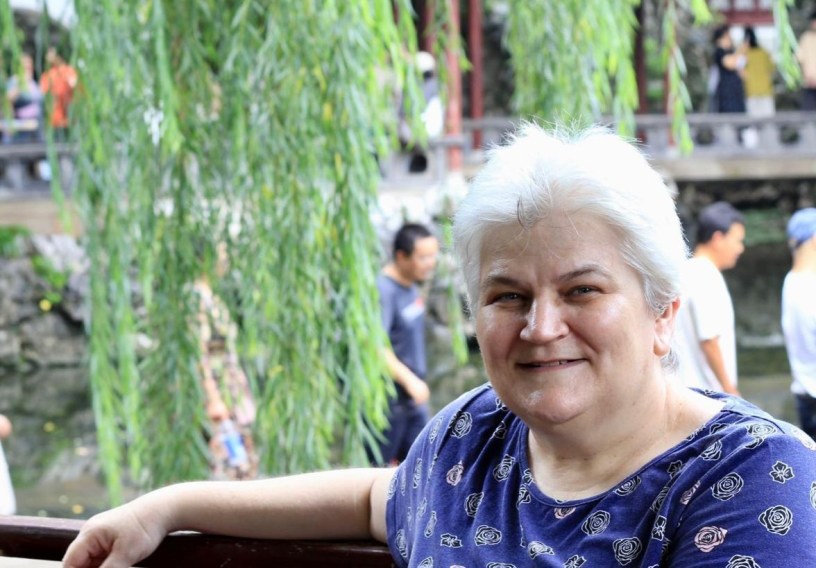
Meet Shelly, who is simply more than a translator—she’s a bridge between cultures, a passionate advocate for diversity, and a trailblazer in cultural intelligence. Based between Singapore and Shanghai, Shelly’s journey began with the written word but evolved into a mission to foster deeper understanding between East and West.
Shelly is a celebrated writer, poet, and cross-cultural consultant. She’s translated dozens of major works from Chinese to English for publishers like Penguin and Amazon Crossing, authored over a dozen books, and founded a consultancy that trains the next generation of translators in both linguistic precision and cultural fluency. Her work continues to inspire global audiences, proving that stories are not just to be read—they are tools for transformation, empathy, and connection.
What initially inspired you to focus on storytelling as a tool for leadership, connection, and growth?
So our background—my company—we come from a translation background and we’ve been doing literary translation. We were always working with stories, whether that’s novels, short stories, or even non-fiction narratives.
We’ve also been working with a lot of poetry. While working on bringing stories from Chinese to English, we realised that crossing borders and using story to connect was something we were very much invested in.
So when we decided to move into working more with corporate groups, we decided to pivot in that direction for several reasons—a lot of it due to political and technological changes, like the growth of AI and how that’s going to shape the industry.
When we made that change, we still wanted to hold on to two things: storytelling and crossing borders. That’s our specialisation—it’s where we really excel. We try to help businesses tell their stories across various types of borders, whether language, geographical or national boundaries, or even transitions between departments, sectors, or generations, as with the younger workforce coming in.
We use stories to help connect across all these borders.
How does cultural intelligence influence the way you approach crafting narratives for a global audience?
I think cultural intelligence has to be the foundation of everything we do as people working in cross-cultural communication.
Cultural intelligence is essentially a set of skills—there are four different metrics you can look at—and they are learnable. It’s not something you’re just born with; you can actually develop these skills to help you communicate more effectively across borders.
That’s really what we’re about: helping people build bridges and navigate the barriers people tend to put up between one another. So yes, cultural intelligence is fundamental.
We also offer training in cultural intelligence. I’m a certified cultural intelligence facilitator, so we help people learn how to do this better, enabling them to tell their stories—not just us crafting stories for them, but equipping them to continue telling their own stories with more cultural awareness.
In your experience, what are some common mistakes businesses make when trying to connect with audiences through storytelling?
There are several. One common mistake is trying to make your product or yourself the hero of the story. If you really want to sell a product, the hero of your story needs to be your customer.
You should be showing how you’re aiding them in their journey, not just highlighting your own journey or success. You’re trying to make your customer the protagonist, not yourself.
Another common mistake when crossing borders with storytelling is assuming that your own perspective is universal. That’s rarely the case. When you cross a border—be it cultural, national, generational, or organisational—you’re entering a new perspective, and you must adapt your story accordingly.

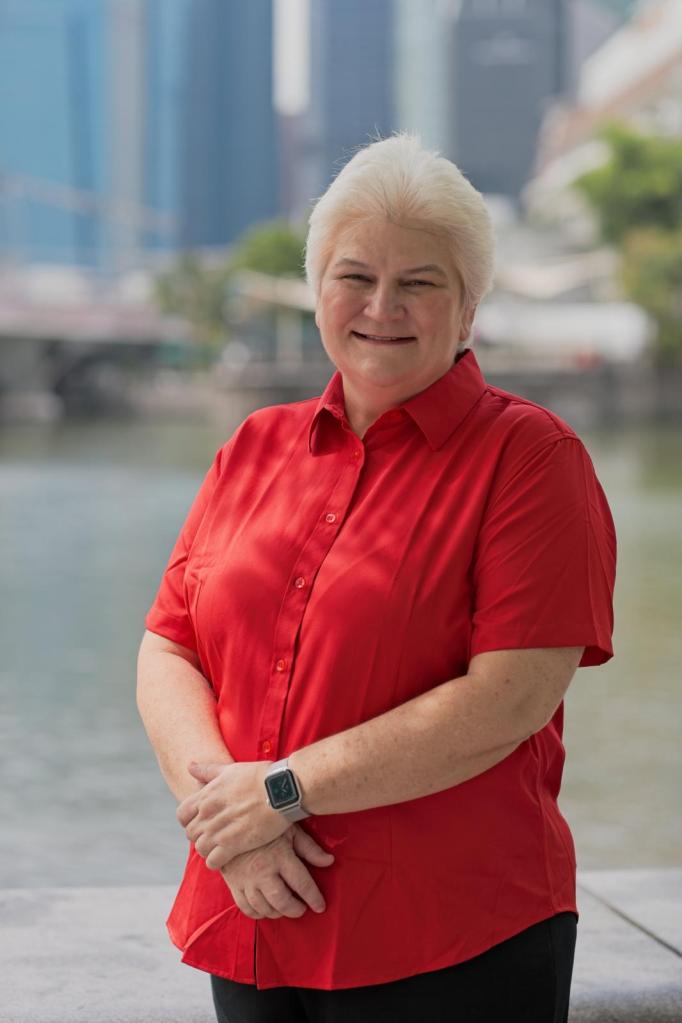
One common mistake is trying to make your product or yourself the hero of the story. If you really want to sell a product, the hero of your story needs to be your customer.
How do you tailor your storytelling coaching differently for business leaders and individual leaders?
For business leaders, we focus heavily on the customer. The story needs to centre on what the customer wants and how the product or service helps them achieve that. It’s about facilitating the customer’s success.
For individual leaders, the storytelling may involve more personal experiences if they are using their stories to inspire others. But even then, I’d say the story should revolve around a vision—what that vision is, how it’s achieved, and how it can make a difference.
So while a business might be more externally focused, individual leadership stories are about vision and the impact of that vision.
Can you share a memorable transformation where storytelling helped a business or leader achieve significant impact?
Yes, one that stands out is an elderly gentleman in the US, who was twice a refugee—first from China to what is now Myanmar, and later from Myanmar to Taiwan, and then to Houston, which is my hometown.
He started Chinese newspapers in Houston and then expanded across the US and eventually globally. Just as he was hitting his stride, the internet began disrupting the industry, particularly in international media.
So he had to adapt—first to new media formats and now, more recently, to AI. His story is a powerful example of resilience, ingenuity, and adaptability. Being a refugee was just chapter one.
What made his story impactful was how he bounced back from technological disruptions and setbacks, constantly innovating. Helping him frame his story in that way allowed him to inspire others—his staff, new immigrants, even non-Chinese communities.
He’s now been named a diplomat for an African nation, despite his newspaper being in Chinese. That’s the power of a story that transcends borders—not just ethnicity, but the qualities of character like resilience and adaptability.
What advice would you give to leaders who want to develop more authentic and powerful personal narratives?
Authenticity is key, which means being vulnerable. You have to be willing to talk about your failures, your fears, your imposter syndrome—whatever it is.
But you can’t stop there. You also need to frame your story around what you’ve done with those struggles. How did you overcome them, or how do you continue to deal with them?
Success isn’t about having no struggles—it’s about how you transform those struggles into something valuable. So be vulnerable, yes, but also be purposeful in how you frame the story.
Looking ahead, how do you see the role of storytelling evolving in leadership and business communication in the near future?
One of the exciting things we’re working on is a programme called “Leadership by Design”, which draws inspiration from Chinese gardens—specifically, Suzhou or Jiangnan scholar gardens.
These were built by urban literati in the Song, Ming, and Qing dynasties, who were tied down to jobs and responsibilities, yet longed for the mountain hermit life. These gardens were their way of expressing that longing.
Interestingly, the gardens were built as narrative spaces—with storylines embedded in the design. We’re using these models to apply to contemporary leadership in Asia.
It’s about embedding story and vision into the leadership journey, where walking through the garden is like walking through the unfolding narrative of who you are and what your business stands for.
And like these gardens, leadership stories must evolve with time—changing with every season, every new challenge. It’s a powerful, culturally grounded way to think about growth and continuity.
What’s your vision for Singapore in the next five years?
I believe Singapore has the capacity to grow as a global hub for communication and connection. We’re naturally multicultural—we grow up interacting across languages, ethnicities, and worldviews. That’s not a weakness; it’s our strength.
While much of the world is retreating into isolationism and building walls, I hope Singapore continues to be a bridge—a place that fosters understanding and collaboration across borders. When others divide, I hope we continue to connect.
Connect with Shelly: TLGlobalInsights, LinkedIn and Xiaohongshu.