
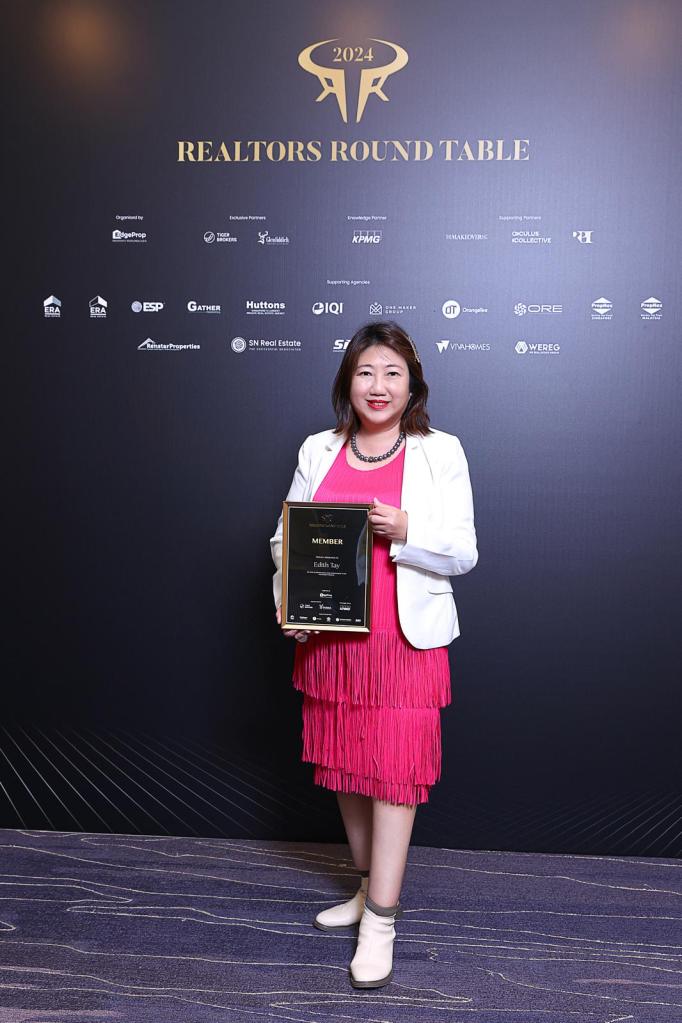
Meet Edith Tay, who believes property is a growth lever that can elevate a company brand, enhance talent retention, and drive operational efficiency. That is why after years at multinational property firms, she struck out on her own and started PropertyBank.
Through her proprietary Property Blueprint framework, YouTube channel, and client-centric approach, she’s helping companies navigate Singapore’s complex property landscape with clarity and purpose.
What inspired you to start your own property firm specialising in commercial and industrial properties?
Traditionally, within property firms, each department is specialised to handle deals based on the transaction type.
However, when I interacted with my clients, I realised that beyond the segment specialisation, clients often need to be supported through each step of their journey. Businesses are always evolving.
A business may start with doing e-commerce and live streaming, but later require a warehouse, and perhaps even build its own factory. Hence, it is important to support them throughout their business lifecycle.
When PropertyBank was set up, we wanted to address the gaps in the market. We believe in being client-centric. Our people, whom we call PropertyBankers, get to learn every property segment by working with peers who specialise in those segments.
How can property be a strategic asset for businesses?
Property is not typically the first thing that comes to mind as a business lever, but it can make a massive difference.
Having helped more than 3,000 companies, I’ve seen how a change in business location can affect many aspects of the business, including staff bonding, cost management and business investments.
In the first chapter of my book Property Blueprint for Businesses, I asked: what is the role of property in your business? That’s how I view property — as a way to help businesses grow strategically.
Take Apple for instance. Their strategy isn’t just product innovation or marketing. The way they curate their Apple flagship stores is part of their brand experience. Google also uses their office space to attract talent. Instead of traditional office layouts, they have pods and other creative spaces.
To learn more, visit my Youtube channel PropertyBankSG, where I share more about the relationship between branding and property space.
On the flip side, I’ve helped oil and gas companies right-size their premises and shift to short-term solutions during challenging periods. One company went from 200 to 30 employees and couldn’t commit to long leases, so I found them a flexible space.
You created Property Blueprint, a tool to help businesses leverage property for their business strategy. Can you explain more?
Property Blueprint is our proprietary method to assess each company’s pain points and encourage them to put on their strategic thinking hats. There are nine building blocks, which mirror the Business Model Canvas by Alexander Osterwalder.
The first letter “B” stands for Business Objective. People often jump into property discussions by asking about preferred location. For us, the first step is always anchoring the discussion on business objectives.
The key point is: we approach property not by asking where you want to be, but why.

Don’t view property simply as an expense. The right property can help you attract top talent, strengthen your brand, and serve as a powerful expression of your business identity.
As the author of Property Blueprint for Businesses and a YouTube content creator, how do you educate and inspire your audience about commercial property?
I created them to fill the gap in serving business and investor needs using property strategies. There is a lot of content on residential property, but not so much for commercial property. Our goal is to close the gap in misinformation.
Regarding our YouTube channel, we’re among the first movers in this space. We started with our signature “Property Tools” and moved into “Talking Shop” videos. These use real stories, case studies and simple frameworks. We’ve had great feedback on them.
We want to be known beyond the inner circle. If businesses don’t know PropertyBank specialises in this niche, they won’t be able to find the help they need.
What are the biggest challenges in establishing your own firm in the competitive commercial property sector and how did you overcome them?
We position ourselves as business and investment consultants, acting as extended arms of the CEO, finance or HR teams and the intermediary between them and the landlord.
Property is more than just bricks and mortar. CEOs, HR professionals, and finance teams each have their own priorities when it comes to property decisions. As consultants, we bring these perspectives together, creating a cohesive ecosystem that addresses everyone’s needs.
Our deep roots in commercial and industrial property and our ability to speak the language of business give us an edge. That’s why clients who work with us keep coming back.
What advice would you give businesses and investors seeking to make property a part of their strategic growth?
Start by asking yourself where you want to be in 5 to 10 years, then choose properties that will serve your future. Treat property as part of your ecosystem.
Take Dyson for example. It acquired the former St James Power Station. It could have leased a Grade A CBD office instead, but it chose a unique space that strategically aligns with its brand and business goals.
Don’t view property simply as an expense. The right property can help you attract top talent, strengthen your brand, and serve as a powerful expression of your business identity.
One of our clients was a business association and used to operate in an old building. Their office premises did not serve their brand image. We moved them to a space in the vibrant Paya Lebar precinct, which was better aligned with their brand.
To this day, their team tells me the period when the organisation was located in Paya Lebar was their golden era.
What makes a good entrepreneur?
A good entrepreneur isn’t defined by what they claim to be, but by their ability to live their ikigai. That means serving a purpose, being professionally rewarded, and enjoying what you do.
Ultimately, it’s about creating value.
It’s also about daring to dream and doing the hard work. Within the first three years of business, I bought my own commercial property. In 2020, I published my book. And in 2022, I launched our YouTube channel.
What’s your vision for Singapore in the next five years?
I believe Singapore will continue to thrive as a global hub. Singapore will continue to embrace innovation, resilience and sustainability. Think green buildings, tech integration, and flexible workspaces.
With developments like Punggol Digital District and shifts in the CBD, I see landlords creating more communal environments—spaces to host events and foster community.
Connect with Edith: PropertyBank and LinkedIn.

