Meet Alex, founder of WebDorks, a trusted name in web design and development. Founded at the height of the pandemic, WebDorks has grown from a solo venture into a dynamic team delivering customised web solutions across the APAC region.
In this interview, Alex shares his journey from side hustle to full-fledged entrepreneur, his design philosophy, and his vision for the future of digital transformation in Singapore and beyond.
What inspired you to start a web design company and how did your journey in this industry begin?
I started building websites during my polytechnic days, around 2012, as a side hustle. I felt a sense of fulfilment when new websites went live and looked good.
Around COVID, in April 2020, I decided to go full-time and started the company WebDorks, and it has been a journey since then. At first, I did everything myself, and we slowly grew from there.
Your company uses tools like Elementor and Figma. How do these tools help you deliver customised solutions for different client needs?
Specifically, Figma helps us to rapidly design, prototype, and refine the UI before we develop or build anything. We use Elementor a lot—it’s on WordPress—so we can do it quickly with a lot of flexibility.
Together, they allow us to build corporate sites with some scalability. However, for more customised solutions, we do custom code and custom builds as well, not just rely on Elementor.
What are the key design principles you follow when creating e-commerce websites that help visitors convert into customers?
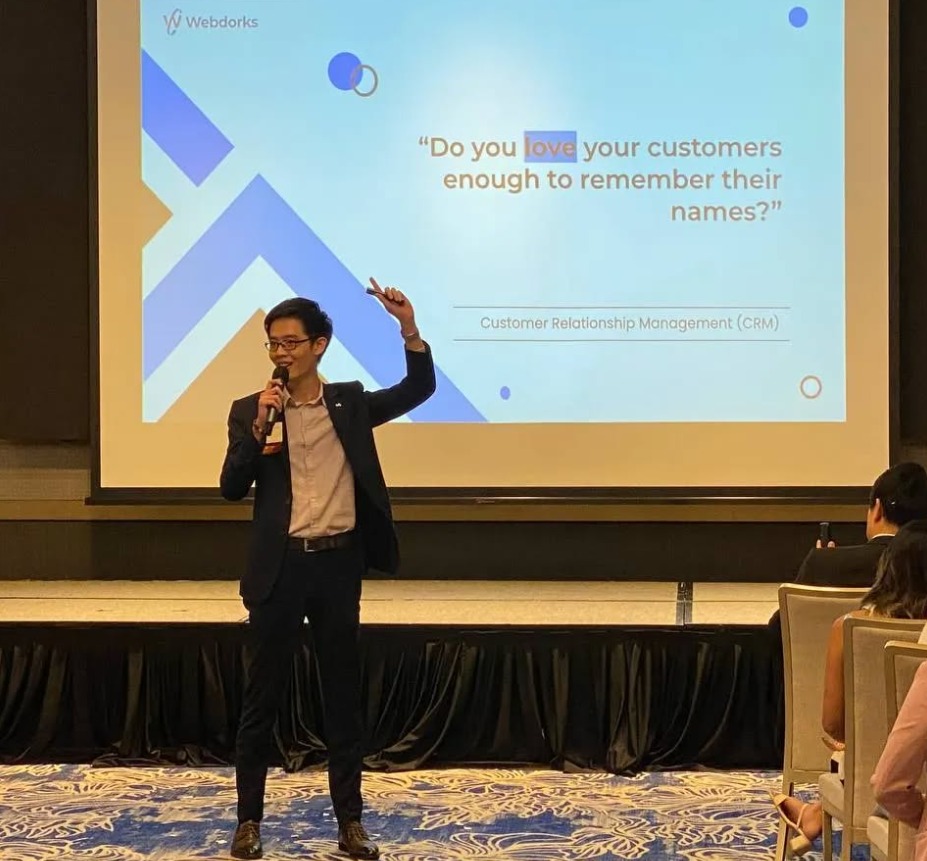
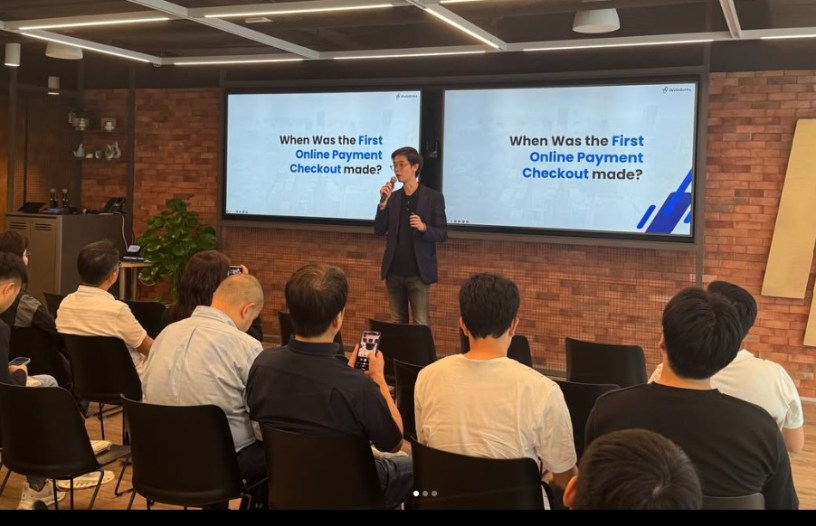
We recently had a presentation on this at a PayPal event. The key points are clarity, speed, and trust. By this, we mean ensuring call-to-actions are intuitive and navigation is clear.
Mobile responsive design is essential, as is having some form of social proof if possible. We always consider the user journey—for example, when a visitor lands on the homepage, what are they going to click on, and how fast can they check out?
We always try to think from the customer’s perspective, although sometimes it also depends on the product or the business owner’s ideas. At the end of the day, they are the decision-makers, and we follow their direction.
For startups and SaaS businesses, what common design mistakes do you see and how does your team help avoid them?
Sometimes there is too much content, or they might want a lot of things crammed onto certain pages or layouts. We usually point out that there is a lack of clarity. We bring them back to thinking from the visitor’s point of view.
Once they start seeing it from that angle, they are usually more receptive. We work to simplify the messaging and streamline the visitor journey, because ultimately, startups and SaaS businesses want contacts and conversions. Our goal is to make it as easy as possible for visitors to reach that point.

I hope to see more SMEs here adopting good design practices and investing in digital transformation and tools. If not, I think we will be easily left behind.
Can you share a recent success story where your design significantly improved a client’s business performance or online visibility?
A recent success would be just this week, where we had two sites go live—one was for a media agency and the other for an architecture firm. We received positive feedback.
For the media agency site, feedback from an SEO agency stated it was “pretty sticky,” meaning users were likely to stay engaged.
For the architecture firm, the feedback was that the site looked very good. These were encouraging comments and felt like small success stories for us.
What do you think makes a good entrepreneur?
I guess you already know it yourself—it can be a very long and tough journey, and you just have to keep going. Recently, I have been doing a lot of one-to-ones with my team, which currently consists of about 10 people.
I usually conduct these sessions at the end of the month. As we scale, the goal is to build people up, training them into potential leaders, because one person alone can only do so much.
What are your future goals for WebDorks, and how do you see the industry evolving in the next five years?
Our mission and vision are to become the vendor people think about when they want to build websites in the APAC region or when they come to Singapore. We are also working on building website service software products, which we are aiming to roll out by the end of the year.
In five years, I believe the industry will be more AI-assisted, but humans will still be essential. We want to lead in blending human creativity with AI assistance, especially across the APAC region.
What’s your vision for Singapore in the next five years?
Recently, with developments like the Punggol Digital District, I think Singapore will strengthen its position as a tech and service startup hub, bridging the US and China markets. We are already receiving enquiries from US and Chinese companies, and Singapore is literally in the middle.
I hope to see more SMEs here adopting good design practices and investing in digital transformation and tools. If not, I think we will be easily left behind.
Connect with Alex: WebDorks, LinkedIn and Instagram.
Alex is a member of Rainmaker, a revolutionary movement that rallies like-minded people together based on the values of Love, Authenticity, Respect, Kindness and Youthfulness (LARKY).