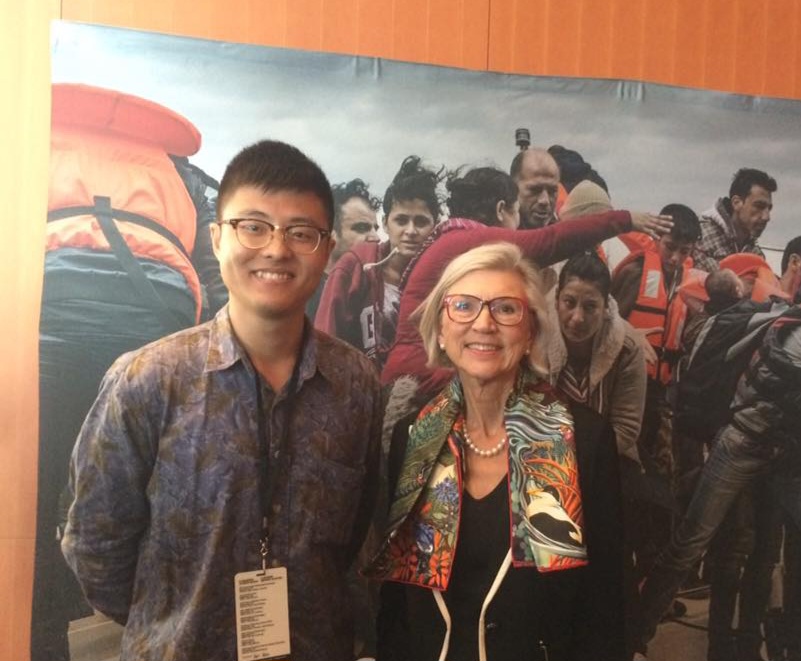
Meet Berns, the founder of WunderWaffen, a cutting-edge AI solutions company redefining how modern businesses operate through intelligent automation. A true innovator at heart, Berns is on a mission to revolutionise customer engagement and business efficiency with AI automation.
From training custom AI models to offering “Plug-&-Play Startups in a Box,” his vision is bold yet practical: equip enterprises with turnkey solutions that dramatically reduce manual work while accelerating growth. WunderWaffen was also recently named one of Top 10 Workflow Solutions Providers in APAC by APAC CIO Outlook.
What inspired you to create your AI business solutions, and how did you decide to offer a comprehensive suite of services?
It was a mix of curiosity, timing, and necessity. I’ve always been drawn to solving complex problems. Growing up, I was a kid with pimples reading encyclopaedias, war history, and Sidney Sheldon novels—constantly trying to make sense of systems and strategies.
That evolved into a career across different industries like marketing, insurance, and NGO project management (EveryChild.sg).
But it wasn’t until I started experimenting with tools like Midjourney, Stable Diffusion, and ChatGPT that I saw just how powerful AI could be.
I realised that most businesses were still stuck in a morass of manual, repetitive work. What they really needed wasn’t just automation, but a full-stack, intelligent approach to scale. That’s how WunderWaffen was born.
We combine Make.com, Zapier, API integrations, large language models, and custom conversational chatbots to help businesses scale operations, cut costs, and transition towards a four-day workweek.
Offering a comprehensive suite wasn’t the original plan, but the problems our clients faced were interconnected. At this point, we’re not just providing tools—we’re helping companies future-proof their operations.
Can you explain how your AI conversational chatbots transform customer engagement and service delivery, and at the same time promise near 100% customer satisfaction?
Yes, definitely. At WunderWaffen, we don’t build just any chatbot—we build custom-trained AI conversational agents designed to behave like digital employees.
Most businesses think of chatbots as glorified FAQ machines that spit out pre-trained answers. We take it much further. We train our bots on your actual business data—things like product catalogues, pricing sheets, SOPs, customer scenarios, tone of voice, and brand personality.
That means the bot doesn’t just answer questions—it can handle objections, follow up like a human would, and solve real problems instantly. It’s like having your best staff on standby 24/7, without burnout.
The real transformation comes from speed, consistency, and intelligence. A customer gets what they need in seconds—no waiting, no back-and-forth emails. And because the bot never gets tired, never forgets a detail, and never goes off-brand, customers feel heard and helped almost every time.
We also continuously retrain and monitor performance so the bot evolves alongside the business. That’s why our clients see near-100% satisfaction on key metrics like response accuracy and resolution speed.
How do your AI workflow automation tools help businesses streamline operations without the need for additional staffing?
We design AI workflow automation like we’re building a digital army for your business—quiet, precise, and relentless. At WunderWaffen, our tools don’t just automate tasks—they automate mini-decisions that everyday employees make from 9am to 6pm.
We connect your systems—emails, spreadsheets, CRMs, payment platforms—so data moves seamlessly without a single click. That means no more manual entry, no more chasing approvals, no more repetitive work that drains your team’s energy.
Let’s say you run a preschool chain or a law firm. When a new lead comes in, our system can instantly qualify them, send personalised emails or WhatsApp messages, book a Zoom call, notify your team, and update your CRM—all without hiring an extra person. We’ve helped clients go from needing a big posse of admin staff to just one, simply by replacing routine processes with reliable, rule-based automation.
What used to take days now happens in minutes. Instead of scaling costs with headcount, businesses scale with systems. That’s how we help companies grow leaner, faster, and more profitably—without compromising quality.

One big misconception I think a lot of policymakers and the public have is that AI automation will replace everyone and leave the rest of us jobless. That’s not true—at least, not the way we do it.
Integrating AI into business processes can be challenging. How do you guide organisations to set up custom AI workflows that meet their specific needs?
Basically, AI integration can get messy fast if you don’t know what you’re doing. That’s why we don’t sell “AI in a box”, even though we offer automation workflows you can plug into your company systems. We co-design workflows with the client from day one.
Our first step is always listening. We sit with the business owner or department lead and map out how things currently work—where time is wasted, where errors happen, where humans are acting like robots. That becomes our battlefield map.
Then, we reverse-engineer the ideal flow: what should be automatic, what should stay human, and what systems need to talk to each other.
Whether it’s syncing a CRM with WhatsApp for personalised sales, or automating a legal intake form to produce full contracts, we tailor every automation to the actual business need—not hype.
Most importantly, we stay in the loop after launch. If something breaks, or if the client’s process evolves, we adapt the AI.
Our goal is long-term impact—not one-off installations. So we’re not just dropping AI into your business—we’re embedding intelligence into your workflow, with you in the driver’s seat.
What are some misconceptions people have about AI automation that you’d like to debunk?
One big misconception I think a lot of policymakers and the public have is that AI automation will replace everyone and leave the rest of us jobless. That’s not true—at least, not the way we do it. What we see on the ground is this: AI doesn’t kill jobs; it kills bad jobs.
Repetitive, soul-draining, error-prone work—these are things humans were never meant to do. AI frees up time so your best people can actually focus on creative, strategic, high-trust work that moves the needle.
Another myth is that automation has to be a massive, all-or-nothing digital transformation project. It doesn’t. You can start small. Automate one painful process, get that quick win, and then build from there. That’s how we help most clients get results fast—without needing a million-dollar IT budget.
Finally, many business owners think AI = chatbot and nothing more. The truth is, chat is just the tip of the iceberg. AI can rewrite your SOPs, qualify leads, generate legal documents, reconcile accounts, analyse performance, and scan your documents—if you know how to connect the right tools together in an efficient workflow.
What do you think makes a good entrepreneur?
A good entrepreneur sees patterns before others do—and takes action before things are obvious. But that’s just the starting point. What really makes a great entrepreneur is the ability to stay calm when things break, pivot without ego, and keep the team moving even without a playbook.
Because most of the time—especially in AI and tech—you’re building the plane while flying it. A good entrepreneur must run the business like a robot with SOPs, but also think like a CEO with critical judgment, ready to pivot when necessary.
You also need range. One day you’re immersed in automation logic. The next day? You’re fixing a sales funnel or pitching a client who doesn’t understand half of what you do, but still wants results.
And lastly—resourcefulness beats resources. I didn’t grow up rich, and that turned out to be a huge asset (actually, not that huge lah; if I had more money, I wouldn’t have bootstrapped at all).
But it taught me to do more with less, fight harder, and stretch creativity when money isn’t an option. That mindset still powers how we build WunderWaffen today. Good entrepreneurs solve problems. Great ones see what’s coming—and build what people don’t even know they need yet.
As technology continues to evolve rapidly, what strategies do you employ to ensure your platform remains flexible and scalable?
The WunderWaffen strategy has heft and purpose: we design everything to be modular, API-first, and platform-agnostic. Instead of locking ourselves—or our clients—into a rigid system, we build with flexibility from the start.
That means using tools that can talk to one another, no matter the tech stack, and designing workflows that are easy to adapt as business needs shift. It’s like building with LEGO blocks instead of cement. Scalability isn’t just about tech—it’s about mindset.
Also, I stay close to what’s happening on the ground. I’m still the one testing new tools, reading changelogs, prototyping in Make, and talking to clients. That direct line to what’s working (and what’s not) keeps us sharp and future-ready.
What’s your vision for Singapore in the next five years?
I envision Singapore solidifying its position as a global leader in AI and digital innovation. With initiatives like Smart Nation and the Singapore Green Plan 2030, the country is poised to integrate technology deeply into urban living, sustainability, and economic growth.
I see a future where AI-driven solutions enhance public services, drive sustainable practices, and create new opportunities for businesses and individuals alike.
Connect with Berns: WunderWaffen.co, LinkedIn and Facebook.

