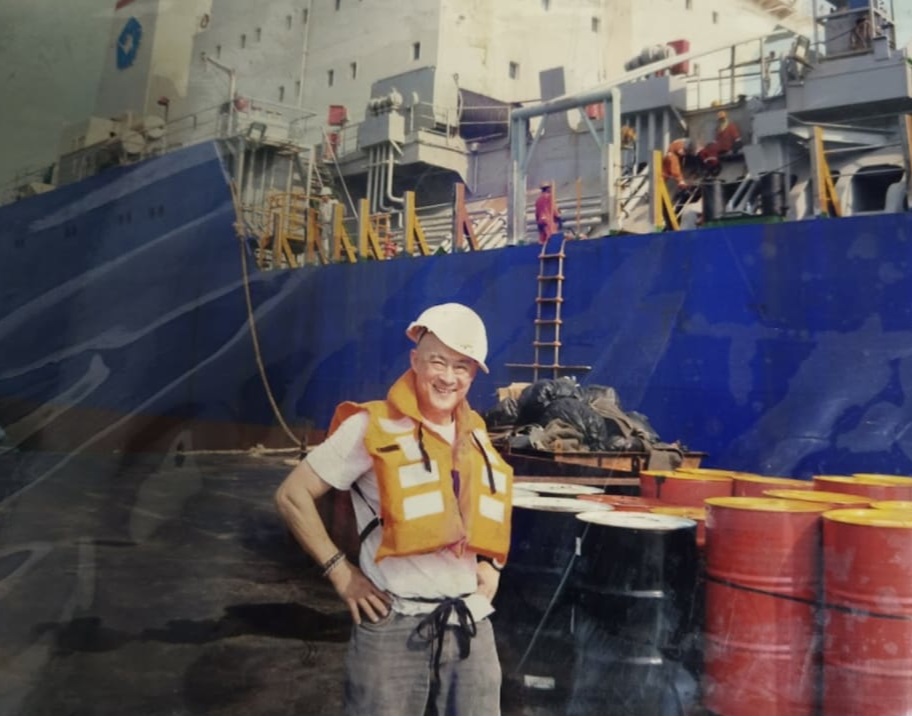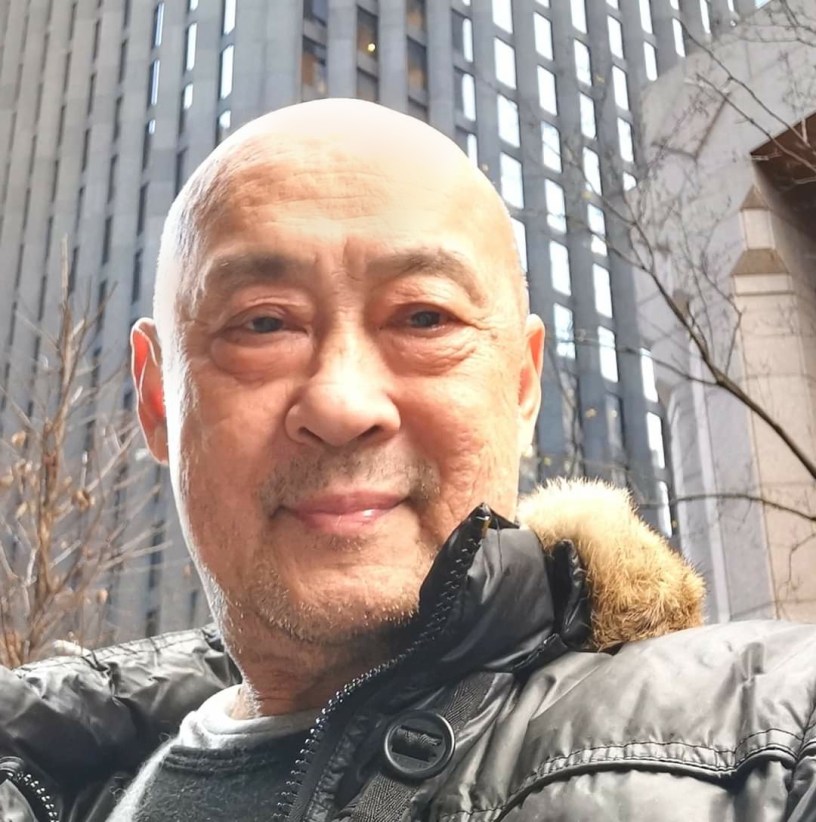
Meet Charlie, a Singapore-based photographer whose illustrious career spans over 40 years across multiple creative fields. As an accomplished art director, commercial photographer, and fine art innovator, Charlie has captured everything from celebrities and politicians to family portraits, product shoots, and aerial visuals.
His artistic journey is marked by a relentless drive to evolve his craft, resulting in signature innovations like “Talking Walls” and “illuminography,” his iconic light-painting technique that transforms photographs into painterly masterpieces reminiscent of a Rembrandt. With a shelf full of international awards and prestigious showcases from Singapore to London and Shanghai, Charlie continues to leave an indelible mark on the world of photography through his artistic vision and trailblazing techniques.
With over four decades in photography, how has your creative vision evolved over the years?
I started my photography in Baharuddin, which is now Temasek Poly. I did it part-time, and then I did two years full-time in advertising art. That was my starting point—including six months of oil painting.
This journey is important to understand how I eventually arrived at where I am today. Things have changed, and my vision has also changed. The technology, of course, has changed. I’ve spent more than half a million on computers and camera equipment alone—confirmed by my accountant.
To cut a long story short, I’ve moved from using tungsten lights and flash, whatever light I could get 40 years ago, to now using LED and even torchlights. That’s how much the technique and equipment have evolved.
You’ve worked with a wide range of clients, from celebrities to politicians to families. How do you tailor your approach to suit each subject?
First of all, it depends on who the celebrity is. I like to do some research beforehand so I know who they are. That way, I won’t say the wrong things. I never ask personal questions—that’s my principle.
As for families, I like to learn more about them—their lifestyle, hobbies, how close they are. These details help me approach and talk to them in a way that makes them comfortable during the shoot. Whether it’s the President of an organisation or a layman, I treat everyone the same.
I’m grateful that in my advertising and photography career, I’ve met all kinds of people—from Mr Lee Kuan Yew in his office (when I was an assistant to a commercial photographer from Australia) to writers from New York. I had to watch how they reacted, behave accordingly, and address them respectfully. That’s how I approach people differently based on who they are.
Can you tell us more about your innovative concept, “Talking Walls” and what inspired its creation?
As I said, I was trained in advertising art and commercial photography. Around 20 years ago, while flipping through interior magazines, I realised that interior designers didn’t focus on walls or customised images. They were more concerned with 3D aspects like colour, layout, and materials.
But I realised that whether it’s a house, office or factory—there are always walls. So I thought, why not use my experience in advertising, design, and my stock library to support interior designers? Even though designers today may not need me as much because of technology, I still offer customisation—like portraits or family pictures that no one else in the world can do.
I spent seven years developing my technique. I can turn the images I create with torchlight into actual oil paintings—not done in China or Singapore. Over the last 12 to 15 years, I’ve transformed, innovated, and adapted to client needs—be it homeowners, interior designers, or wedding planners. That’s how I work.
Look around and find the gap—find a niche that nobody else is doing. Then focus and go deep into it.
You’ve received numerous awards, including the 9th Rotary Club Artisan Award and the Singapore Design Golden Jubilee Award. How does it feel to be recognised for your work?
I feel very honoured. I feel recognised by the government. I’m also featured in the SG100, supported by Singapore, and only nine Singaporeans made it into the book. The greatest honour is the Singapore Design Golden Jubilee Award, where 70 creatives were selected to be featured in a book that captures 50 years of Singapore’s design evolution.
That recognition by the government means a lot to me. It encourages me to keep innovating and transforming. And, of course, my dream is to take my work worldwide—not just stay in Singapore.
Your signature style, illuminography, is incredibly unique. How did this art form come about, and what goes into creating one of these works?
This started about 20 to 22 years ago. I was doing a commercial shoot for the Attorney-General’s annual report. While waiting at the High Court for the Chief Judge, I saw two paintings on the wall—Mr. Wee Chong Jin, first Asian to be appointed Chief Justice of Singapore, and one of a British judge.
I thought, wow, I can’t paint like that—but maybe I can simulate it with a photography technique. I was already using a light brush, not torchlight back then.
I spent about $27,000 on two machines—one of them was $10,000 back in the 80s. I was the first in Southeast Asia to buy it. LED didn’t exist yet, and torchlight wasn’t strong enough. But I wanted to maximise the value of that equipment. So I used the light brush to simulate oil painting. That’s how my light painting—paintography—was born.
Now I call it illuminography: “illuminate” with light and “graph” meaning photography. It’s 100% photography, done with a simple torchlight. That’s the contrast.
What challenges have you faced in constantly innovating your craft, especially in an industry that’s always changing with technology?
The biggest challenge is that if people don’t experience what I do—if they haven’t seen me paint them in the dark with a torchlight in 30 seconds—they may not appreciate what I’m doing.
They may think it’s just long exposure. But it’s not. I’ve performed and showcased my work in 10 to 14 countries—New York, Beijing, Shanghai, and across Southeast Asia. Once they see me paint and witness the result in 30 seconds—live on stage—they start to appreciate it.
That’s my biggest challenge: helping people understand what they’re actually seeing.
What advice would you give to young photographers looking to develop a distinct artistic style like yours?
Try everything—just like Picasso or Rembrandt, who painted everything from products to scenery to nude bodies. Try every type of equipment and technique. With today’s technology, your phone can show you what the world is doing.
Look around and find the gap—find a niche that nobody else is doing. Then focus and go deep into it. Yes, it’s getting tougher. The road is narrower now because everyone is looking for their own way.
But I believe there’s still a breakthrough somewhere. I like the word “fusion.” What I’m doing—paintography or illuminography—is a fusion of oil painting and photography using two cameras. That’s my secret formula.
What’s your vision for Singapore in the next five years?
Difficult answer. But since we’re talking about Singapore—before I forget, I’m working on SG60. I’m creating 60 portraits of people in my paintography style, capturing what they do in my innovative graphic technique.
My vision is to encourage and give opportunities to photographers—or aspiring photographers—a new road, a new avenue to explore. I want to give them hope. Let them dream. Let them survive in this industry.
With what I’m doing, you don’t need a studio or assistants. That saves a lot of money and time. My dream in the next five years is to become a grandmaster in my technique.
Connect with Charlie: Facebook, TikTok and YouTube.