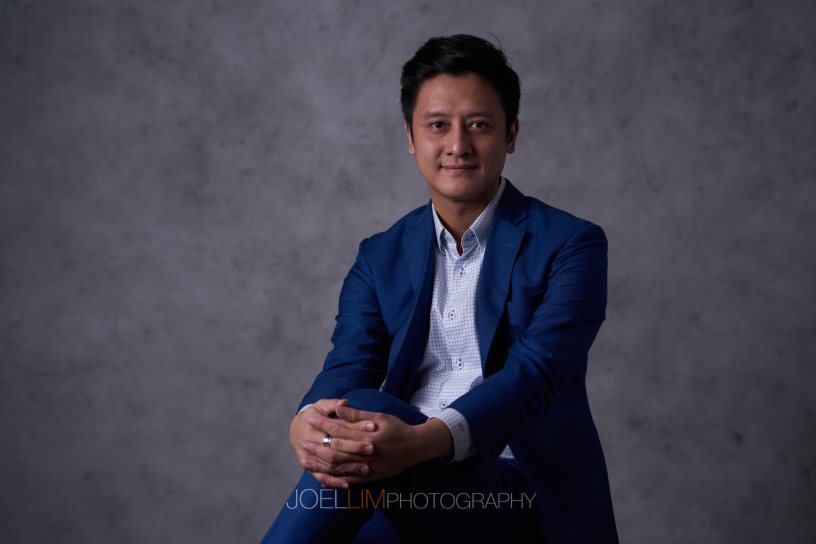
Meet Gabriel, who founded a design and construction business One Pit Stop and has since poured his heart into building it into a thriving enterprise. Even as he battles stage 4 cancer, he continues to approach life with an unwavering positive mindset.
Today, he focuses on spending meaningful time with his family while still lending his expertise to the business whenever possible. His journey stands as a testament to remarkable resilience, unwavering dedication, and a steadfast belief in living with purpose even amid adversity.
What inspired you to enter the design and construction field and how did your journey as a founder begin?
That happened about 15 or 16 years ago. At that juncture, I was running both as a Managing Director for a country club and as a partner in a travel agency. Back then, there were many political issues, and tourists stopped coming in.
I gathered a few friends and asked, “What should I do next?” They said, “Why not go into construction? You already know a lot of people.” When I was managing the country club, we handled all the renovation works ourselves—we liaised with contractors, managed repairs, everything. So I said, “Why not?”
I joined an ID company—I won’t mention the name—but after three months, I couldn’t agree with how they operated. So I resigned and started my own firm. A couple of years later, OPS was born.
How do you balance creative design vision with the practical challenges of construction, and what has been your biggest learning curve in the process?
I’m still learning. Balancing clients’ expectations with their budgets is a constant challenge, and the outcomes we aim to achieve are often difficult. Every single client presents a new challenge.
Right now, one of the biggest learning curves is handling three startup F&B outlets opening soon at *Scape. Their budgets are tight, but I want to create something meaningful. For example, one of them wants a medieval tavern concept. Their total budget is under $100k, including rent.
It’s a huge challenge, but I’m committed to helping them create an inviting space to attract customers, so they can grow—and in turn, we grow too.
What major trends are currently shaping the design and construction industry, and how is your company adapting to these changes?
The biggest factor now is the economy. It’s affecting the whole industry. There are generally two types of clients: Firstly, the big players who can buy in bulk from overseas and achieve nice results at a lower cost. For example, we’ve done four outlets for a popular household items chain over the last six months. They have the buying power to bring in their own lights and flooring; we just handle the construction.
Secondly, the smaller startups or businesses with two to three outlets who can’t afford bulk purchases, so their costs are higher. A small local retailer selling similar products can’t afford that, so their cost per project is much higher.
Another trend is clients trying to DIY by ordering from Taobao or overseas sources. But they forget that while materials may be cheaper, logistics and labour costs in Singapore are high. So in the end, they don’t save much. It’s a challenge for us to educate them on this.

To me, being a good entrepreneur means having integrity. You can earn money doing shady things, but doing it right—even when things don’t go your way—requires integrity and perseverance. That’s what I believe defines a good entrepreneur, even if it doesn’t always make you the most profitable businessman.
Can you share a project you are particularly proud of, and explain what makes it stand out?
There are two. One is a restaurant at People’s Park Complex—the one trending on TikTok. I flew to Shenyang to meet the client and his father. It was a great pleasure to work with them on their first Singapore outlet, adapting their design to local materials and conditions.
The other is at Anson Road (M Hotel). The client moved from Bugis to this second outlet. We took over the space, hacked, rebuilt, and completed everything in under three weeks—just in time for their Christmas Eve opening. It was hectic, but we did it.
What are some of the most significant challenges you’ve faced in your business, and how have you overcome them?
The first challenge is always balancing sales and costs. As your business grows, you need more manpower to manage client expectations, but sales fluctuate. Sometimes you take a hit just to maintain service quality.
The second challenge is people management—choosing between talent and those who align with your company’s culture and values. It’s an ongoing struggle for me and my partners.
In your opinion, what makes a good entrepreneur?
There’s a difference between an entrepreneur, a businessman, and an investor. Some people are entrepreneurs and investors; others are businessmen and investors. To me, being a good entrepreneur means having integrity.
You can earn money doing shady things, but doing it right—even when things don’t go your way—requires integrity and perseverance.
That’s what I believe defines a good entrepreneur, even if it doesn’t always make you the most profitable businessman.
What advice would you give to aspiring entrepreneurs looking to start a venture in the design and construction industry?
Honestly, if you’re not already in this industry—don’t come in. It’s not about avoiding competition, but the reality is this line of work is very tough. If you enjoy design or building, it’s better to draw a salary and do what you love, rather than run the whole business.
Managing a company involves payroll, marketing, accounting, lead generation—and a lot of stress. You might make more money eventually, but you might also lose time with your family and friends. Talk to industry seniors first before jumping in. The first three to five years can be rough.
What are your plans for your company?
Something a little more personal—since November 2023, I’ve been diagnosed with stage four stomach cancer. It’s a ticking time bomb. I don’t know if I have 25 years or five years.
But I’ve chosen not to give up. In the last year alone, I’ve brought six partners on board. I want OPS to grow 15 times bigger in the next five years—not just in profit, but in capital expenditure, so we don’t cut corners. I want us to maintain a client-centric approach and uphold our culture and integrity as we scale.
You mentioned you have stage four cancer. How do you stay rooted and positive?
Honestly, it’s not just about positivity—it’s about purpose. I’m grateful for two things: my faith and my family. Without my faith, I don’t think I could stay grounded. And without my family, especially my two young kids aged seven and four, I wouldn’t have the strength to keep going.
Some people in my position might quit work, travel, or chase their bucket list. But I’ve chosen to continue what I’m doing, and to do it even better. I want to be a good example for my kids and my team, and to keep building something meaningful while I still can.
What’s your vision for Singapore in the next five years?
For Singapore, I believe the economy will continue to struggle over the next five years. The government is trying to cushion the impact and avoid a hard crash. Globally, we’re already seeing signs of instability.
As Singaporeans, we need to do our part by supporting our own economy. I always choose to support local businesses—even when it’s more expensive—because we need to help local companies stay strong. This helps preserve jobs and builds a stronger foundation for our future.
Connect with Gabriel: OnePitStop, Facebook and TikTok.

