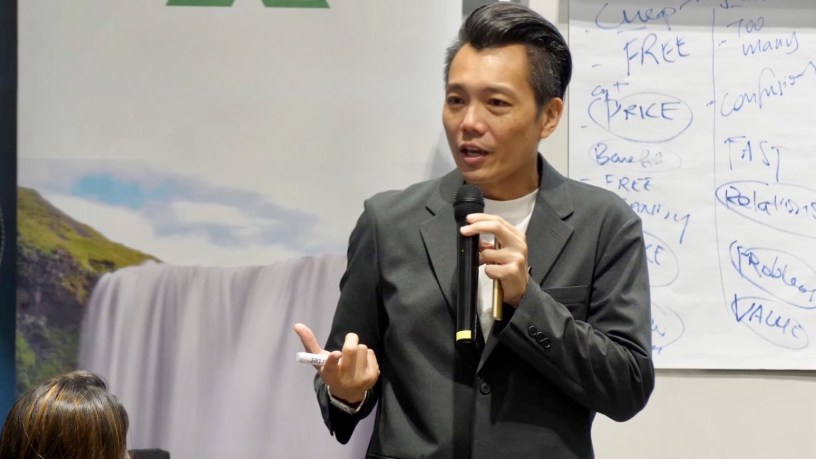
Meet Peter Lee, a seasoned sales expert with over 20 years of experience and a forward-thinking approach that blends cutting-edge technology with timeless human connection. Known for helping ambitious professionals turn rejections into opportunities, Peter specialises in AI-driven sales strategies and revenue-boosting frameworks that transform the way teams close deals.
Whether you’re a sales professional, leader, or organisation ready to embrace smarter selling, Peter’s mission is clear: close smarter, not harder—while keeping empathy and authenticity at the heart of every pitch.
You have built a career around turning rejections into wins. What was one turning point in your own journey that shaped this mindset?
I think in my early days, especially doing direct sales, the number one thing is rejections. Back-to-back rejections are a very common thing. When you’re starting out as a direct sales professional—be it in sales, property, or insurance—the number one thing is that rejections give you a lot of bad feelings.
It almost made me quit in the beginning. But there was one moment that really came to mind, which was this particular prospect. For months, I had been following up, and he said “no” all the while. But I found that he was still genuine and I didn’t give up. I kept showing up with value, and in the end, the transaction happened.
That really taught me not only resilience, but also that rejection is not the end of a conversation. I see it as feedback—like another step to get to the “yes” faster. That one simple mindset, by reframing how I think of rejection from prospects, really shifted everything for me.
How do you incorporate AI-driven strategies into sales without losing the human connection that is very crucial in closing sales?
As AI becomes more and more prolific, everybody starts using it. The very first thing people celebrate is that things can be done very easily. But now, with every content you see—on social media, on your messaging—it could be AI-generated.
People start to question whether they are actually talking to a human being or a robot. The key here is that I still firmly believe people are human beings. People still yearn for human interaction. But we have to use AI the right way—which is to enhance and not replace a human being.
At the most basic level, it helps with efficiency by freeing up time, automating research, qualifying leads—even giving you suggestions to handle objections. When you do the heavy lifting of all the noisy stuff, you find clarity. That clarity allows you to dive straight into real human conversations.
This blend of AI tools together with human empathy creates trust, which is really the key to successfully closing deals.
What is one common mistake sales professionals make when handling objections and how can they flip it into an opportunity?
Very often, when given an objection, every sales professional—especially when they don’t know the technique—will go into defence mode. They start giving a lot of answers, data, to clarify and back up that objection.
But I like to do things a little differently. Instead of doing that, I pause and listen. Doing that allows the prospect to know and sense that you’re actually internalising their problem. The only reason why they object is because there’s still a problem—they haven’t had their pain resolved.
But if you just pause, stop and listen, they’ll feel you’re genuinely trying to understand. That doesn’t mean you close the deal immediately, but at least it breaks down the barrier—they now see you not as being salesy, but as being trustworthy.
Then ask yourself: what’s actually behind that objection or concern? I see objections as a good sign because it means the customer is showing a true buying signal—it’s a buying signal in disguise. If you handle it right, every objection builds trust. And like I said, trust is the true currency that moves the sale forward.
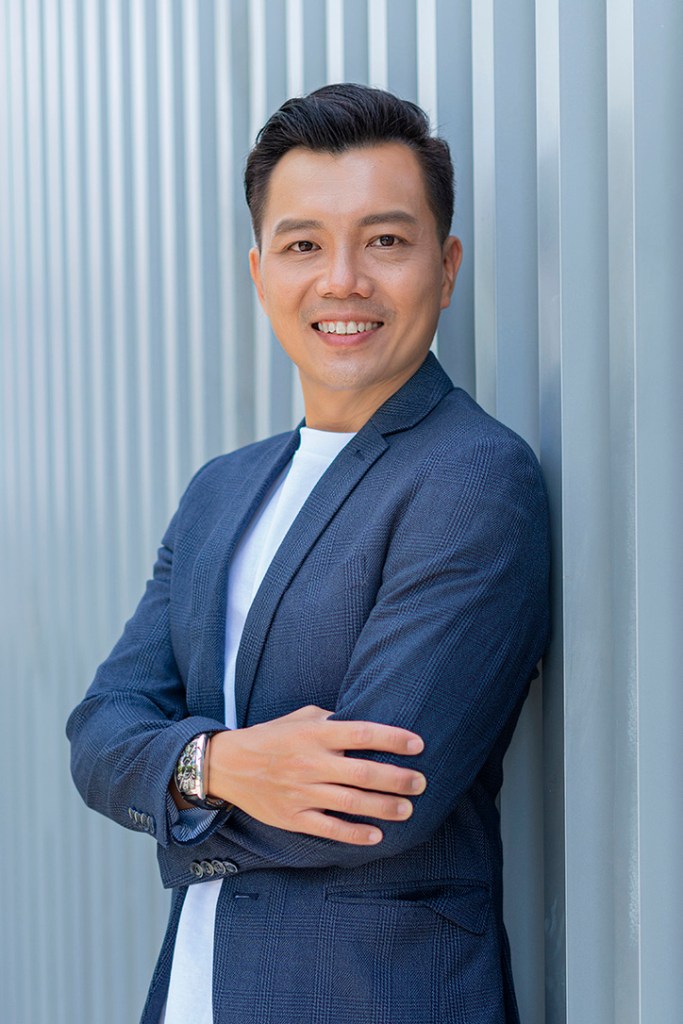
I want to reframe it: rejection is never personal. It’s not about you. They are not rejecting you as a person. It’s actually a request—they are begging you for more value.
What are some common misconceptions that people have about AI-driven sales strategies that you would like to debunk?
The number one misconception is people think AI is a bot. A myth is that AI makes sales impersonal. But it’s the opposite. AI actually gives you the opportunity to personalise your conversation at scale.
Another misconception is that you need to be super tech-savvy to use AI. The truth is, today’s tools are really simple and easy to use. ChatGPT, for example—the UI/UX is very user-friendly. Any salesperson can really get started using it immediately.
The only problem I see is what I call SOS—Shiny Object Syndrome. Now, every other day, a new AI tool pops up. In my opinion, simple is best. Stick to just one tool—for example, ChatGPT. Use it to 2x or 3x your sales.
Then decide what else to do next. Personally, I do a lot of heavy lifting simply using ChatGPT alone. I don’t use many fancy multi-tool setups. That’s one message I like to share: sales professionals should really avoid shiny object syndrome. Stick to one tool, scale with it, then move on.
What is one message you would like your audience to walk away with as a keynote speaker?
The number one thing I see affecting many sales professionals—even my own team—is that they get disheartened and want to leave the profession, often due to rejection. I feel rejection is never personal. A lot of sales trainers or leaders say rejection is part of the game—but that doesn’t help.
I want to reframe it: rejection is never personal. It’s not about you. They are not rejecting you as a person. It’s actually a request—they are begging you for more value. The only reason a prospect doesn’t choose you is because they have not yet seen the value you can provide.
The key is “not yet”. Once you figure out that value, the treasure is in how you position it. When you present value in the right way, non-salesy, buying becomes automatic. In my speeches, I always say: buying is automatic, but value is hard. Position yourself as someone with value first.
With the right mindset and with AI tools helping you do the heavy lifting, anyone can figure out what I call the value gap—the gap from low value to high value. That’s what helps you bounce forward faster and close more deals.
What advice would you give to sales leaders who want to future-proof their teams using AI as a tool?
As I mentioned earlier, avoid SOS—Shiny Object Syndrome. Take baby steps. Many sales leaders drown their teams with too many tools and too much training. What I suggest is: take one step at a time.
For example, just start using ChatGPT to plan out your day. Make it a habit—use it every morning. Ask: “Here are my prospects, what should I do first today?” And ChatGPT will tell you who to call first. Do just that. Once you see your conversion rate go up, move on to the next thing. Don’t drown your people. One step at a time and your sales will improve.
Looking ahead, how do you see the sales landscape evolving and how should professionals adapt to stay ahead of the curve?
Sadly, especially in Singapore, I still see sales being trained with hard-push tactics. It’s more about quantity than quality. To stay ahead of the curve, sales professionals need to shift to quality and move away from hard push tactics.
You have to hyper-personalise the experience, especially when selling to millennials, Gen Zs, and in the future, Gen Alphas. They won’t accept pushy tactics anymore. If your tactics are wrong, it’s like fishing in an empty pond—you won’t catch anything. But if you use AI to find a pond that has fish, you’re much more likely to succeed.
And with AI, you can 2x or 3x those results. So to stay ahead of the curve, use AI to cut through the noise. Move away from outdated sales tactics. The successful sales professionals of the future will know how to balance their human empathy with smart AI implementation.
What is your vision for Singapore in the next five years?
I’m not a politician, so I can’t talk about policies. But as a learner and practitioner of AI, I know Singapore has been proactive in pushing AI into the nation since around 2019, when the National AI Strategy was introduced. I think by this year they are moving into Phase 2, focusing on healthcare, education, finance—part of the Smart Nation initiative.
The National AI Strategy is also pushing for people to upskill via SkillsFuture and similar platforms. With my small contribution—helping to craft the future of careers and businesses using AI—I hope to help move this vision forward.
Singapore is a small nation, but we’re agile and fast in adoption. That’s our edge. Those who embrace AI will move their careers and businesses forward.
Connect with Peter: Linktr.ee

love this Peter. Some might think feedback/rejections as personal attacks. Thank you for such beautiful sharing on how to turn Rejection into Let’s talk as we r all sales person
LikeLike
wow the thoughts towards AI are absolutely valid! As AI can be helpful towards our career especially in sales, it’s important to use it effectively and still maintain human connection. Another point being rejection isn’t the end of the road. It’s just that we “not yet” found our desired goal. Which we would eventually reach. We definitely should be positive in life, so we can live a more fulfilling life than yesterday. Thanks Peter for the very insightful and inspirational article 🙂 I learnt lots from your experiences and reflections.
LikeLike
Awesome sharing of personal experience. I have learnt a lot from your open and honest sharing!!
LikeLike
This is such an important topic as we are ‘always selling’.
We easily picture in our mind the idea of two persons exchanging goods and services ina traditional sales scenario but think about it, what are we really doing when we tell our kid to go to bed? Or ask a person if they would like to have a meal together? Even this response is me selling an idea 🙂
The two lessons I am reminded with this interview is:
1) The Power of Pause, or as Peter puts it…stop and listen. In today’s modern society, we are so wired to send out messages (talk, write, make a video) that we seem to have lost the art of take in messages (listen, see).
2) Rejection is never personal. It sure feels personal. But when it does, go back to lesson 1. Listen. Listen with curiosity. And perhaps we can uncover the intent behind the rejection.
And with AI becoming ingrained into our daily life, stop, listen and listen again may just be the most human thing for all of us. Let’s al connect!
LikeLike
Absolutely powerful, Peter!
Your perspective on turning rejections into opportunities truly resonates. The idea that objections are “buying signals in disguise” is a mindset shift every sales professional needs to hear especially in today’s fast-moving, AI-powered world. What stood out to me most was your emphasis on human connection and how pausing, listening, and leading with empathy creates the kind of trust no tech can replicate.
Your journey from near burnout to building a philosophy around value-first selling is deeply inspiring. It reminds us all that success in sales isn’t about the hard push. It’s about purposeful presence, emotional intelligence, and smart, strategic tools that elevate and not replace our humanity.
Thank you for sharing such grounded wisdom. Sales needs more leaders like you who combine heart and innovation.
LikeLike