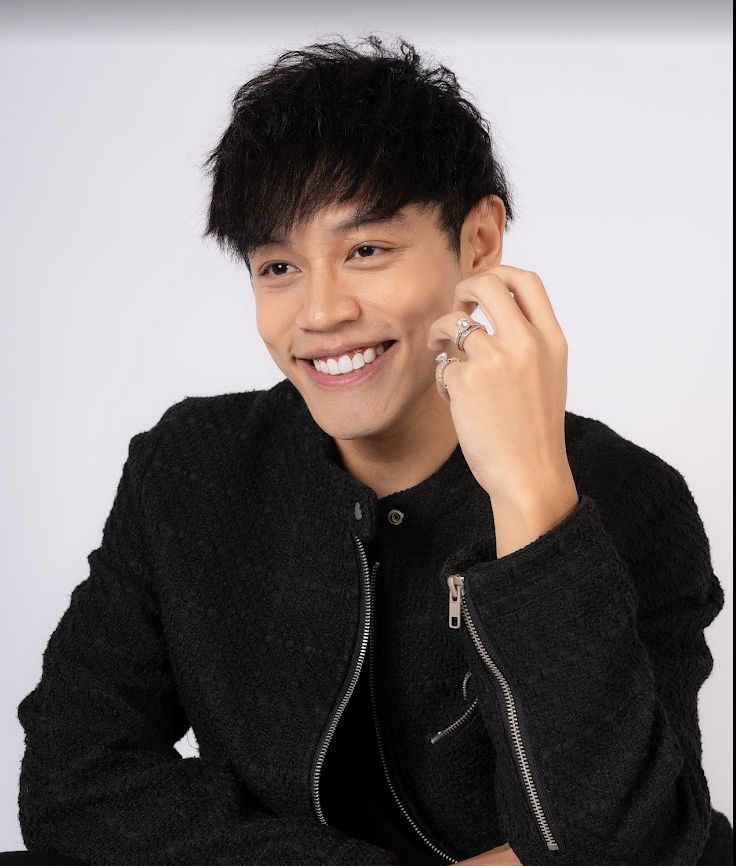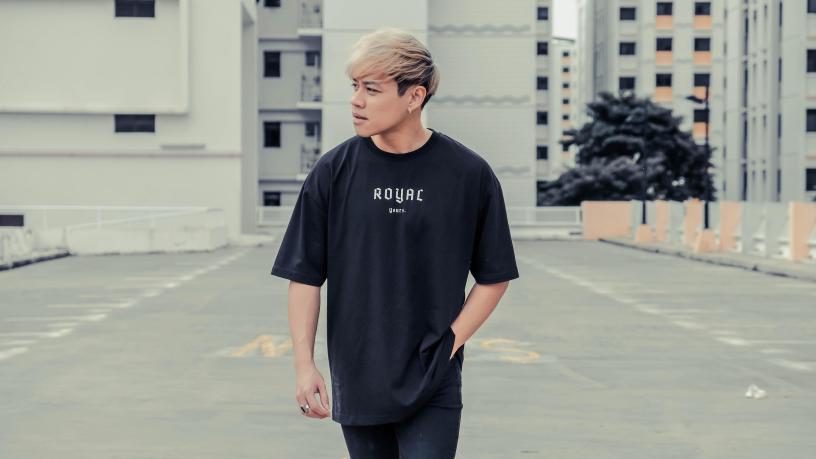
Meet Royal, a content creator who has built a loyal following with his relatable, talking head videos delivered in Mandarin. Known for his honest takes on everyday life, relationships, and social observations, his content resonates deeply with Mandarin-speaking audiences who find comfort and laughter in his down-to-earth delivery and sharp insights.
Whether he’s sharing a funny anecdote or tackling meaningful topics, Royal connects with viewers through authenticity, humour, and cultural nuance, making him a rising voice in the digital content scene.
What inspired you to start creating Talking Head videos that are relatable?
When I first started, I tried a lot of things. Talking Head was one of the styles I had chosen that sort of created that instant connection and felt a little bit more real.
I like doing Talking Head videos because I feel the platform gives me the chance to communicate directly. What really inspired me to continue creating Talking Head videos is because they had the highest engagement.
So I thought, hey, people like this style of me. I think all content needs to be relatable; if not, it really becomes just about the creator themselves. I focus on relatable content so that you get to know me a bit better, and then we build trust and a relationship through this content.
I do believe that once you reach a certain status, or some sort of proof that you’re really good at something, or society has placed you on a pedestal—like “hey, you’re really good at this”—then that’s when you might be able to do non-relatable content.
Where do you usually get your inspiration for your video topics?
I’m focusing more on relationship stuff, but also about self-confidence and growth. My inspiration comes from daily conversations—with my friends, my partner, my bosses, my clients—just to see what the common pain points are.
When I see a pain point, I determine whether it’s something important to people. Is it a funny thing, or is it a real issue people don’t talk about?
So when I hear conversations or hear someone bring something up, I’ll think, “That’s one of the pain points.” Inspiration for my video topics really comes from daily conversations and things that people don’t vocalise because of taboo, practices, or culture. Then I’ll want to make a video about it.
Talking Head videos usually rely heavily on authenticity. How do you ensure that your content stays genuine and connects with your viewers?
I think the most important thing is that you must really believe in what you’re saying. Even if you’re taking sides or just communicating your point of view, it shouldn’t be like, “Oh, the social media crowd is taking this side, so I’ll follow.” That might come out very wrong or not authentic.
So one key thing is: if I choose to talk about something, it has to be something I really adhere to and believe in. That ensures that the content stays genuine.
Also be open to the other side of the argument. When you truly believe in it, you speak with passion, evidence, and conviction. Viewers can feel that you really mean what you’re saying, and that’s what connects you with them.
They feel your sincerity, your authenticity, and they think, “Oh, this person is real.”
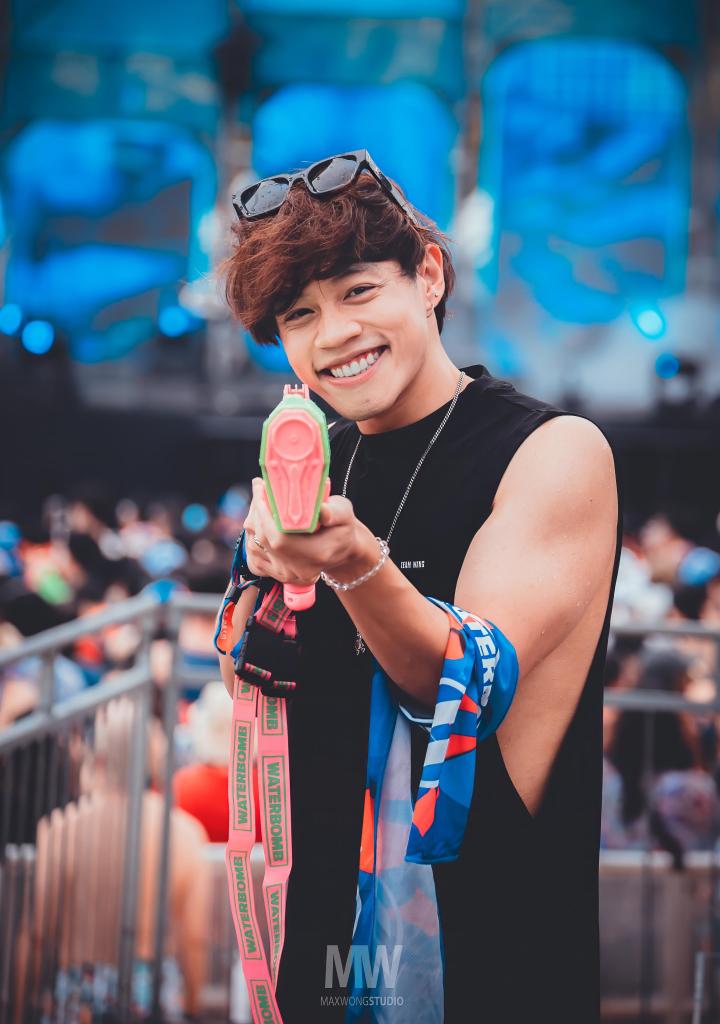

I think firstly, a lot of people don’t give enough credit to people who create content, create films, or are in the arts industry. They think we are not serious. But I treat content creation very seriously.
What has been the most viral or memorable video you have posted, and what kind of feedback did you receive?
I wouldn’t say it was viral, but the most memorable video was one where I talked about Google Maps. I usually drive, so I don’t walk a lot.
But once, I was trying to navigate using Google Maps and it led me onto a highway. It was a genuine mistake, but also because I don’t have much experience navigating by walking, so I might have made a wrong turn. I ended up on the expressway and thought, “Whoa, this is dangerous.” I made a video about it.
The feedback, obviously, was that you cannot walk on the highway—it’s illegal. But because it was a genuine mistake, I wanted people to know that Google Maps is not 100% reliable. A lot of people could relate because, at some point, Google Maps has led everyone somewhere unintended.
I received a lot of feedback: “It’s illegal,” “It’s dangerous to take a video on the highway,” “You’re so stupid to follow blindly.” I do a mix of comedy, so my video had a bit of exaggeration.
As a content creator, what challenges do you face when producing Mandarin content in a largely English-speaking market like Singapore?
Yes, I speak Mandarin from young, so it has been my mother tongue for the longest time. I am very comfortable with speaking Mandarin. But yes, Singapore—in fact, I will agree that it is largely English-speaking. But I think that gives me an edge to produce different kind of content.
I face a smaller target audience because some people just don’t like to consume Mandarin content as we are so westernised. We are actually competing for attention with creators from all over the world, and English is obviously the one that can connect with most people.
The other challenge is because I am also Singaporean, I don’t speak 100% Mandarin all the time. My vocabulary for Mandarin is not amazing either. Recently, we have the rise of Xiaohongshu and other platforms that emphasise Mandarin. If I brand myself as a Mandarin content creator, I really need to work on my Mandarin on these platforms.
What are some misconceptions that people have about you as a content creator?
They think that content creation is very easy. I think firstly, a lot of people don’t give enough credit to people who create content, create films, or are in the arts industry. They think we are not serious. But I treat content creation very seriously. I don’t treat it just as a business. I treat it as a passion. I treat it as a job.
As content creators, even though we are creating funny content, there is actually a huge responsibility on us. When people are watching you, you do have an influence on their life. I believe a good content creator will take that into consideration, not just go for views or likes, but rather send a message or add value to people.
Another misconception is that they think a lot of things are very fake. Like, “Oh, everything is curated.” But I think most creators today, if they really want to make it, have to be very open.
What are your goals for the next stage of your content creation journey and any plans to expand to other formats or platforms?
The key for any content creator is to stay relevant and to stay on as many platforms as possible. I’m recently going back to trying long-form content, so I created another YouTube channel called Daydreaming.
Long-form content is very important because you can improve the quality of production, improve your skills as a creator—scripting, directing, shooting, everything. That’s one of my goals for the next stage.
I also want to target schools because I feel like youngsters should really give content creation a chance as a potential job or career.
I believe there is a vital structure that hasn’t yet been formatted or recognised by the government or school bodies. I love teaching and I think this can really be one of the lowest barriers to entry to monetise and get a job. It requires a totally different set of skillsets and I want to teach that and share that.
The key message to them will be: you don’t have to quit school to do this. I didn’t start doing it full-time. Do it part-time to see whether you like it, to see if you can actually monetise the content you are making.
What is your vision for Singapore in the next five years?
I think Singapore in five years will be very different. We are going to continue to do well as a country, and that means inflation will continue. The cost of living is going to be much higher, so people will need to work harder to thrive, if not survive, in this highly competitive nation.
Singapore will be even more tech-savvy. On the road, we might see more EV cars, more high-tech stuff, and AI entering most workplaces. It is already disrupting jobs, but in five years’ time, the disruption will be much more apparent and evident. That means we need to change how we work.
Bringing it back to the media industry, I think attention span will not get any shorter. I just don’t see how it can get even shorter than what it is today. I think it might reach a balance or even go up, which means long-form content, and perhaps even movies might make a comeback.
As we successfully keep up with this nation, our focus on mental health will continue to rise. In five years’ time, mental health will no longer be a weird thing to talk about. People will be happier, and that will bring about a lot of new opportunities.
Connect with Royal: TikTok and Instagram.