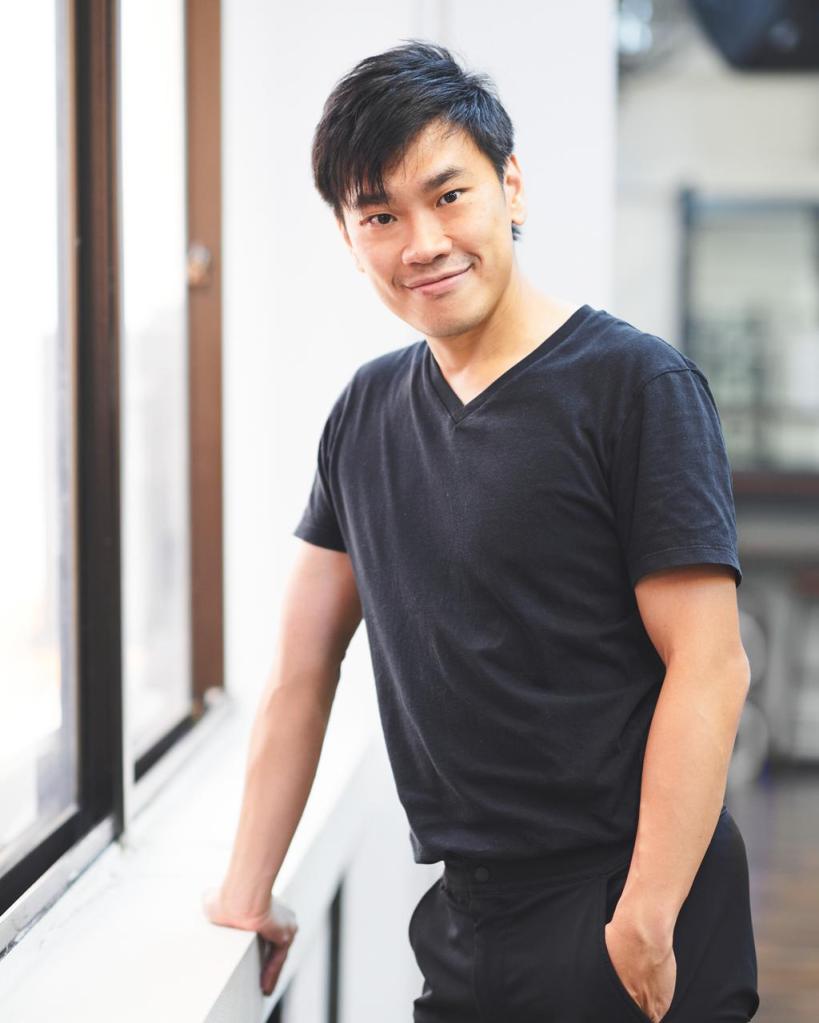
Meet Vincent Yong, a remarkable survivor of a congenital heart condition who has transformed his personal journey of pain, restriction, and resilience into a powerful method of healing for others. From enduring childhood loneliness, family violence, and physical limitations to pioneering a unique therapeutic approach, Vincent’s life work is rooted in the belief that true transformation happens not by force, but through flow.
As Singapore’s first and only Registered Somatic Movement Educator, Therapist, and Certified Movement Analyst, Vincent integrates a blend of somatic movement, dance therapy, NLP, coaching, and deep behavioural analysis to guide clients through trauma and emotional blockages.
You overcame a congenital heart condition and many emotional challenges growing up. How did these experiences shape your passion for healing through movement?
I think when you have an experience that forbids you from doing a lot of things—whether strenuous or not—it has an impact. It takes a toll on your life. Because if the world is telling you, “No, you cannot do this,” your parents tell you, “You can’t do that,” a lot of no’s equal either feeling stuck or feeling like this is the end.
But for me, I’ve always been very curious. When it’s a ‘no’, how do I find a ‘yes’ amidst that ‘no’? How do I overcome whatever is current and just find a new way out of that situation?
And I guess having that notion and that creativity to create things helped me to engage with dance more creatively. I find arts and performing arts very interesting because it’s not about boundaries; it’s about how you assist people in experiencing boundaries, and then they can make a decision to expand them or, if necessary, to narrow them.
Helping people understand where they are now and what they’re truly feeling is about getting authentic with yourself, and being true to yourself. When you can be true to yourself, then you can extend this truth and authenticity to others. Otherwise, you have to put up a front—and that can be really tiring.
So what exactly is Dance Flow Therapy and how does it differ from traditional dance or movement therapies?
Through Dance Flow Therapy (DFT™), you’re actually connecting your brain and body, which makes it therapeutic. I would say Dance Flow Therapy is using dance as a medium to explore where the disconnects are within your brain and body, and then helping you connect those areas in a very natural and organic process.
By engaging with that flow, you know where, how and why you are stuck. Dance Flow Therapy is about how you connect with your body and flow in a continuous manner. When the body is able to execute, it means the brain is also functioning in a very fluid manner. It is something you can train.
As Singapore’s first and only registered somatic movement educator, how do you help clients approach trauma and recurring emotional issues differently?
Traditional settings are usually talk-based or prescription-based. You get to be on medication. Sometimes I feel like a lot of my clients who come to me do not have certain things that are ironed out for them.
Certain people find it very hard to do this because their systems are not wired that way. They have been wired in a very peculiar way because of the trauma. So when I work with trauma patients, or people dealing with mental health challenges, I would always say: come back to the body. I’ll get them to do a few things—shaking their hands—then suddenly they feel tingling sensations, or the heart rate starts to increase.
Sometimes when you ask some people about past stories, they don’t recollect because it’s so traumatic. It’s like selective amnesia. But when they move, when they do certain movements with me, you start to see tears flowing. And this is where the healing is already being initiated.

Sometimes when you ask some people about past stories, they don’t recollect because it’s so traumatic. It’s like selective amnesia. But when they move, when they do certain movements with me, you start to see tears flowing.
Can you share some insights into your book Flow – The Art of Creating AbunDance, and how does it tie into your work with dance?
Flow and then AbunDance, which is dance. When I first wrote it, I realised not everybody dances, right? Not everybody moves in that way. They probably do exercise, but they don’t move in a very nuanced manner. How else can I access these people? Maybe I should write a book.
So Flow really is written for the very fact that I think not everybody moves and dances, so they probably would have to read certain things first before they get engaged. And I find that this is a very important way of accessing people—not just in movement-based, but also in intellectual—because some people need to read things first before they can do something.
You have a multidisciplinary background, from engineering to NLP to professional dance. How have these diverse fields contributed to your success?
I think rather than be stuck in one way, I have multi ways of thinking, multi ways of accessing myself and also other people. I think maybe I would say the number one thing is to empathise with people and yourself. If you are in this space of education, training and therapy, you need to access the clients in a way where they feel like, “I think this person understands.”
Because if you do not have that kind of resonance, which is the empathy, then I find it very hard to just teach people. Success, to me, is a very process-based thing. It helps me to think, to connect, to feel, to sense and to navigate.
Can you share more about the Kindness Academy—the project that you have right now?
So Kindness Academy stems from doing the work that Steven has done, which is to help hoarders to declutter. When I first met him, I said, “Wow, this is pretty amazing work that you’re doing. I don’t think I’m a cockroach warrior. I don’t know how I can help, but you can call me anytime—as long as it’s not killing cockroaches.”
Then, not long after, he said, “There’s this initiative I want to do. It’s kind of like an educational academy, where people can provide training to raise funds to help Helping Joy—to raise funds to help hoarders, especially seniors and elders.”
Having written two programmes for Nanyang Academy of Fine Arts, and programmes for LASALLE, and also doing for my own company, I said, “That I can do—helping you set up this educational arm.” It’s an academy where I find people who are interested in showing their craft—they can come to this space and share their work. They pay a small fee, and that fee can go into Helping Joy’s processes.
I think it’s good for everyone. Kindness Academy stems from helping people learn something about themselves. And at the same time, it supports Helping Joy in that process—because it’s a charitable arm.
What are your plans for Dance Flow Therapy in the years to come, and how do you hope it will impact lives both locally and globally?
I’ve always wanted to expand the work of Dance Flow Therapy. Not just in my own class, but at national level. I hope the different ministries can come in to support this as well. I think Dance Flow Therapy is so important in the work of self-healing, self-knowing and self-development.
Last year, I shared a little bit of my work at a conference in Italy. This coming April, I’ll be in Taiwan to share this work and to present at the symposium. It’s going to be exciting sharing this with a new audience. And these are all people who are trained professionals in the work of therapy, counselling and massage.
What’s your vision for Singapore in the next five years?
I came back to Singapore from the States for a very clear reason—that I want to be someone who can contribute to this national progress, in the aspects of happiness and of health. I feel like instead of waiting for people to do it, I should be the one that’s contributing and starting something.
I hope that each and every one of us Singaporeans, or even foreigners who are living here can feel their body. And I believe by having honest engagement with your own body, and understanding it without disconnecting from it, it would have a great impact on our own health.
Can you imagine if each and every one of us in Singapore is healthy? That means the nation is healthy, right? If everyone is caring for one another, we have a very caring country. So we want to really understand as a nation as well—it’s like a body.
Connect with Vincent: Danspire, Instagram and LinkedIn.