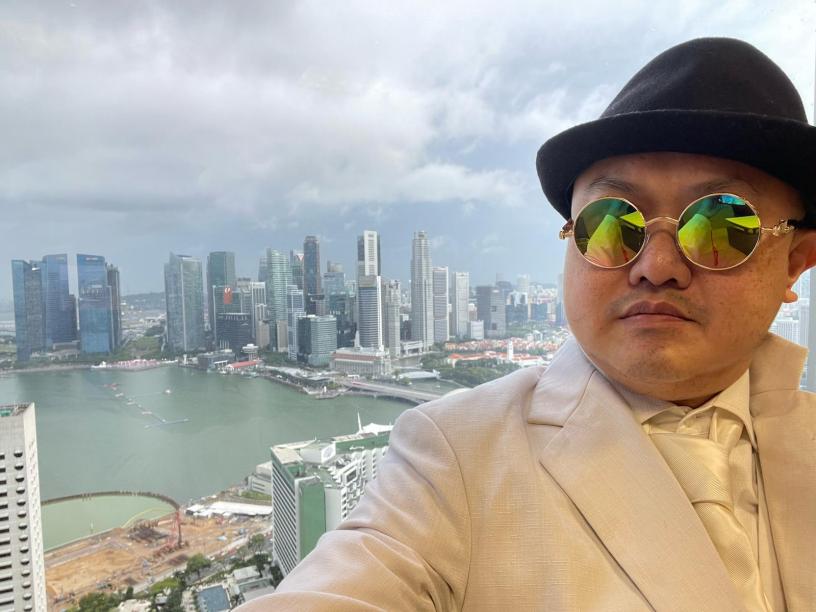
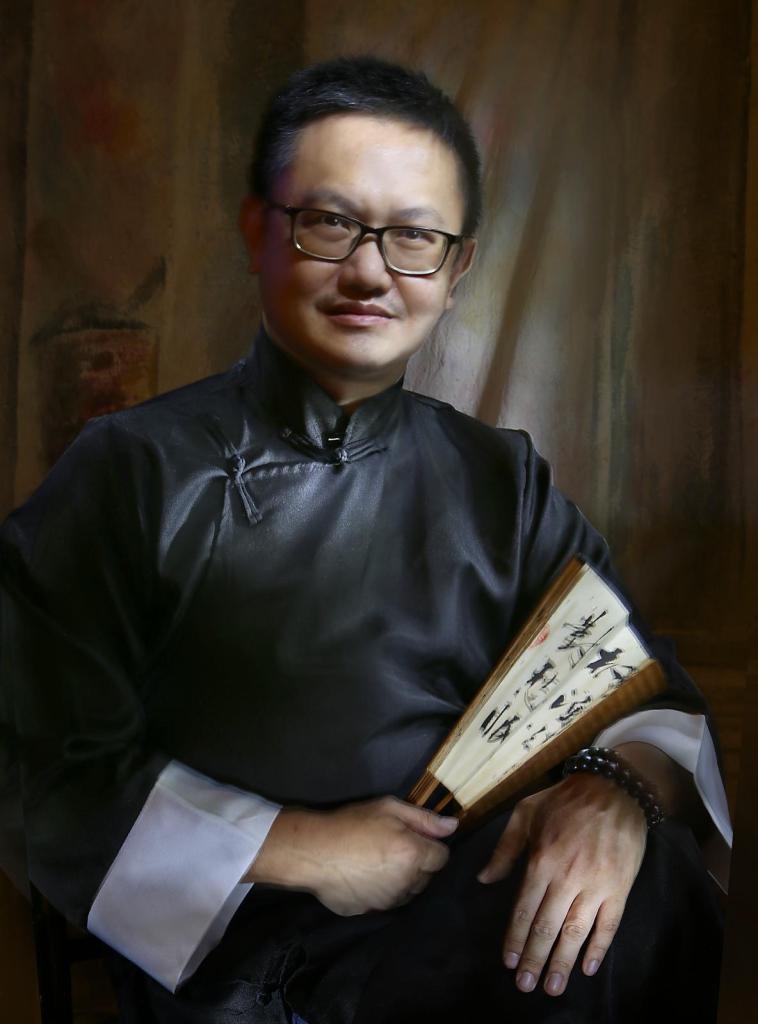
Meet Master Rowen Ong, Chairperson of the Tarot and Cartomancy Association (Singapore) and a passionate advocate for the mystical arts. As a seasoned practitioner in tarot card reading, cartomancy, and tarot design, Rowen has dedicated his life to promoting authenticity, openness, and honesty in the Tarot community.
He is the visionary behind the Southeast Asian Tarot Project, a unique collaboration involving 42 artists from across the region, and the creator of the I Ching Oracle deck (易经八卦). An author of books like Tarot in an Hour and How to Read Tarot, Rowen actively seeks event collaborators and fellow enthusiasts to further expand the reach of cartomancy.
What inspired you to delve into Tarot and Cartomancy and how did you come to establish the Tarot and Cartomancy Association of Singapore?
I started doing Tarot and Cartomancy when I was a teenager. I progressed from reading for people to charging them for my services, and people were willing to pay.
In 2008, I decided to start a Tarot meetup where people could come together and share the love of Tarot, and for me to share Tarot with many others. The meetup group in 2008 was quite big—at one point, there were about 60 people gathering at a three-storey café to share the art and love of Tarot.
During this period, a core group of members stayed together for a few years. Eventually, we decided to register the association under ROS, which is the Registry of Societies in Singapore. So it’s a government-approved entity. In 2021, we set up the association under the rules and governance of Singapore.
The purpose of having an association is to show people that we are serious about Tarot and Cartomancy, and to shift perceptions away from it being about ghosts or spirits. It is actually an art, supported by historical evidence, and has been around since the 14th century.
You developed the Southeast Asian Tarot Project, collaborating with 42 artists. Can you share the journey behind this project and its significance?
The Southeast Asian Tarot Project was created in 2021, during the height of COVID. Everyone wanted to do something that promoted unity. Myself and several leaders of Tarot in Southeast Asia—from Vietnam, Indonesia, the Philippines and Thailand—decided to come together and develop a community Tarot.
We created this deck to promote culture, especially since many young people today are overly focused on iPads and Western culture. There are many stories from Southeast Asia that are not commonly taught, so we turned these stories into Tarot cards to showcase myths and places of significance in Southeast Asia.
For example, I created a card based on Loyang Tua Pek Kong, a temple in Singapore known for its multicultural representation—it houses Tua Pek Kong, Datuk Kong, and Ganesha and other Hindu gods, all in one temple. This represents Singapore’s multicultural society and tolerance.
Through this deck, we wanted to highlight places with cultural significance that reflect Southeast Asia’s diversity. The entire project was coordinated via Facebook and Zoom, as we couldn’t meet in person due to COVID. From January to May 2021, we collaborated to create the artwork and stories for the deck.
Recognising its cultural value, the Asian Civilisations Museum (ACM) invited us in June 2023 to conduct Tarot readings using this deck to showcase the multicultural aspect of the cards, aligning with the museum’s mission to celebrate Asian culture.
Tarot reading has both sceptics and believers. How do you approach people who may not fully understand or trust Tarot and Cartomancy?
I usually start by asking if they believe in mind mapping or problem solving. In problem solving, we use charts and diagrams—like fishbone diagrams or Pareto charts—to find solutions.
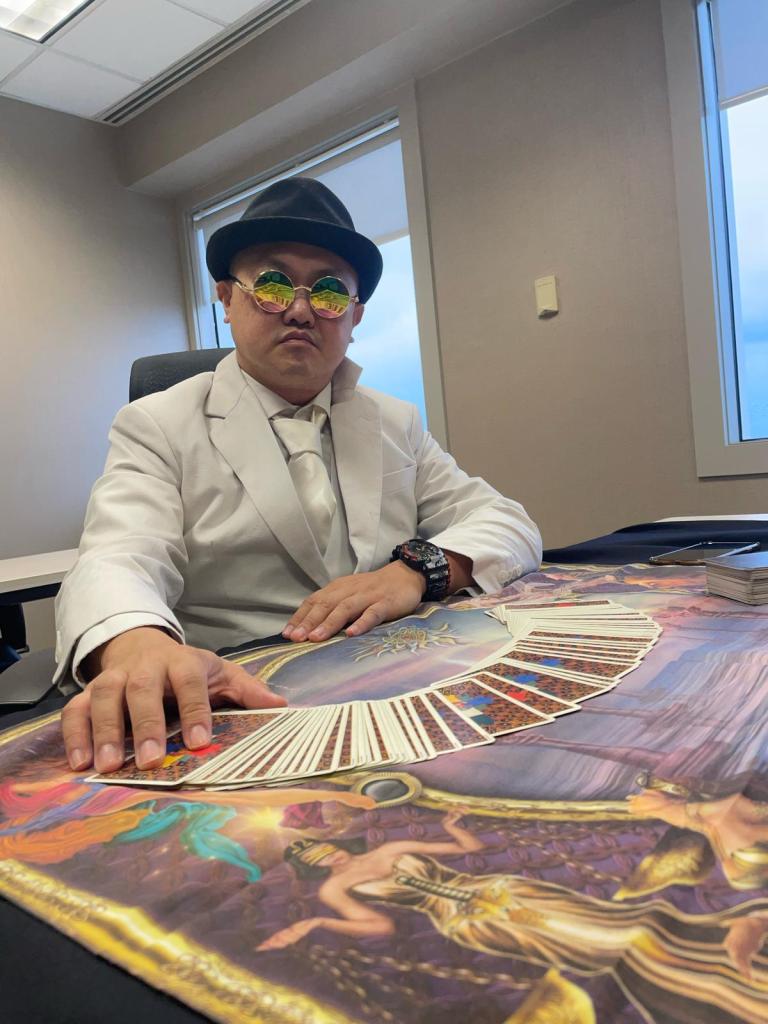
In Tarot, we use cards arranged in specific layouts to provide insights and options for solving problems. I explain that Tarot is not just about fortune-telling—it’s a form of ancient problem solving.
In the past, there was no therapy or coaching, so Tarot served as a method for reflection and guidance. Once sceptics see this approach, they begin to understand that I don’t just treat Tarot as something mystical or baseless—it’s a practical tool.
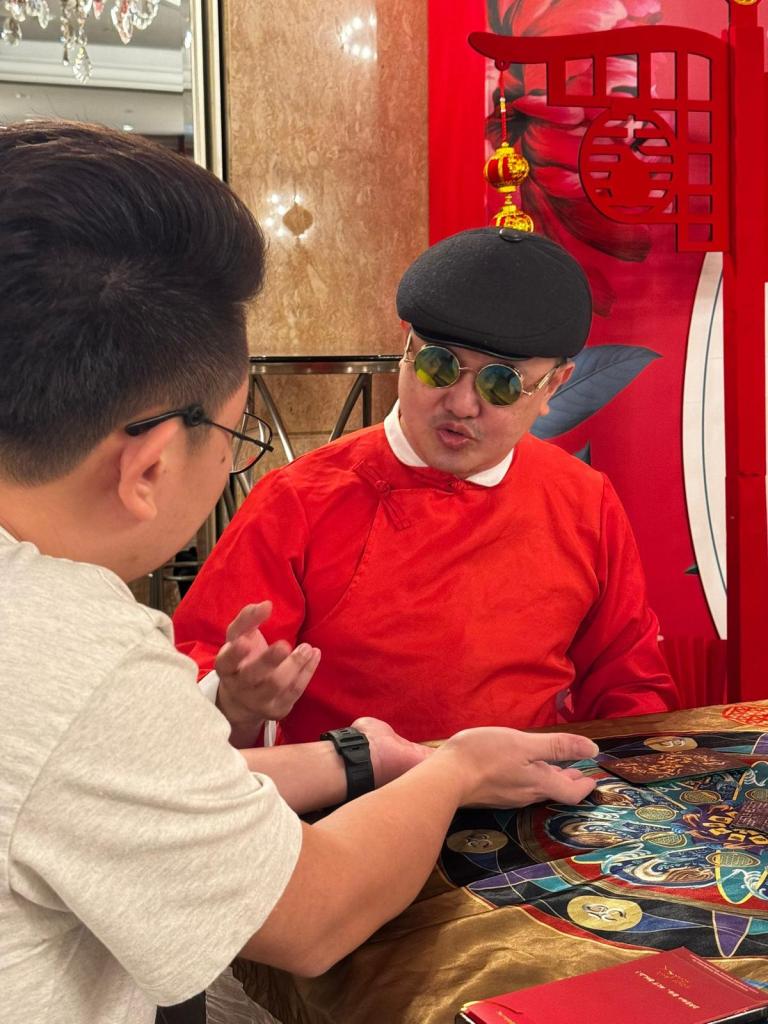
In Tarot, we use cards arranged in specific layouts to provide insights and options for solving problems. I explain that Tarot is not just about fortune-telling—it’s a form of ancient problem solving.
Aside from Tarot reading, you also design and distribute Tarot decks. What makes a Tarot deck truly unique and meaningful to you?
These days, with the rise of AI, many Tarot decks are flooding the market—hundreds of them. But what makes a deck meaningful is the story and theme behind it. For example, a Marvel-themed deck might appeal to Marvel fans. If you like Winnie the Pooh, a Pooh-themed deck will resonate with you.
The images must connect with the user. The story behind the deck is crucial—some decks, like the Marseille Tarot from 16th-century France, are valued for their historical significance. Others, like the Rider-Waite deck (published in the US), are classic and widely used. So, it depends on your target audience and theme.
Additionally, the quality of printing, the paper used, and the packaging also contribute to a deck’s uniqueness.
You have written books like Tarot in an Hour and How to Read Tarot. What do you hope readers take away from these books?
These two books are for beginners. Tarot in an Hour is designed to give beginners confidence—they can read Tarot within a short time, just like how there are “For Dummies” books for various topics. It’s like a crash course.
How to Read Tarot is more comprehensive, building on the first book and providing a more detailed guide. So they complement each other: one is for a quick start, and the other for basic foundational learning.
In future, I may develop more in-depth books for those wanting advanced Tarot knowledge. My goal is to gradually encourage more people to learn the art of Tarot.
What are some applications of Tarot readings in real life?
Let me give two examples. First, a young man around 23 or 24 came to me after finishing university. He didn’t know what career path to take. I used Tarot to help him understand himself better and to identify job options. I also guided him on how to handle interviews.
Another example is someone asking whether they should invest in China—like open a shop there. I used Tarot to give insights on the approach to take, the people he might work with, and how to manage relationships for a better outcome.
What are your future plans for the Tarot and Cartomancy Association, and how do you hope to grow the community of Tarot enthusiasts in Singapore and beyond?
Currently, I observe two groups of people. One group wants deeper study into Tarot—understanding the cards and Tarot culture, and possibly using it professionally. The other group is younger and more experimental, wanting to explore and see where Tarot can take them.
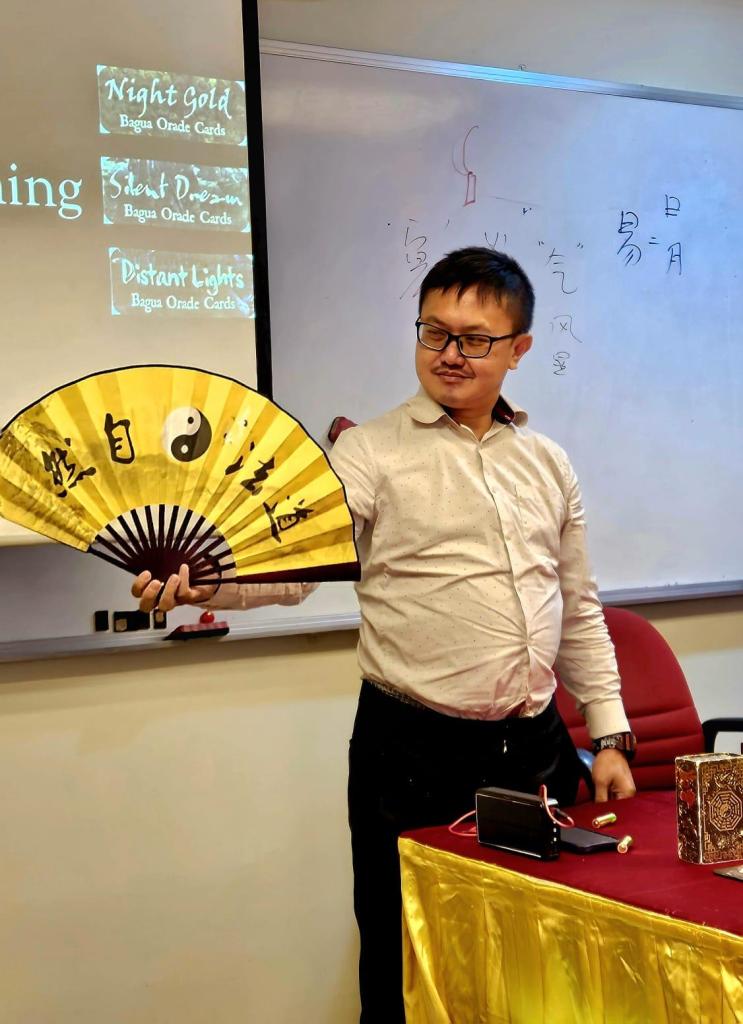
For the association to grow, financial sustainability is essential. Going international is one strategy. For example, I recently attended the Western Australia Tarot Conference in Perth (15–16 March). I gave a talk on the Southeast Asian Myths and Stories Tarot deck, as well as on I Ching.
I gained experience and recognition there. Now, people in Perth know that Singapore has a professional-level Tarot association. When they visit Singapore, they may want to collaborate with us. This kind of international recognition helps us attract more members and funding.
It also assures the public that readings from our members are professional, trustworthy, and not fraudulent. We aim to build a strong group of professional readers to uphold the reputation of Tarot.
What is your vision for Singapore in the next five years?
In an increasingly complex global environment, Singapore serves as a gateway between East and West. Today, only two truly neutral, trusted places remain: Singapore and Dubai. These places are not firmly aligned with either the East or West and can act as confluence centres for dialogue and trade.
Like the Southeast Asian Myths and Stories Tarot deck, Singapore should embrace multiculturalism, neutrality, and openness. My vision is for Singapore to remain that neutral hub—a place where people of different cultures, beliefs and nationalities can meet, trade, and communicate. This role will help Singapore grow in ways other countries may not be able to.
Connect with Rowen: Facebook.