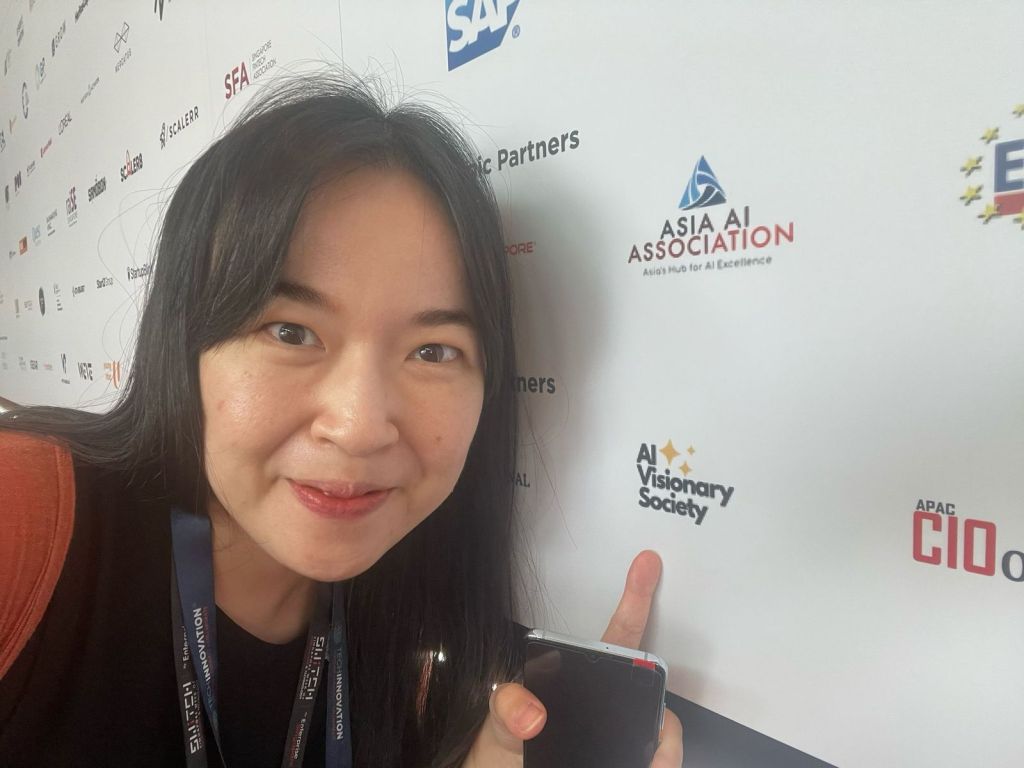
Meet Wan Wei, the visionary founder of AI Visionary Society, a dynamic global community based in Singapore that brings together business leaders, AI professionals, and tech innovators from around the world.
With members spanning across industries and continents, AI Visionary Society empowers its network to stay ahead of trends, explore ethical innovation, and unlock the transformative potential of AI in today’s rapidly evolving digital landscape.
What inspired you to create AI Visionary Society? And what gap were you aiming to fill in the AI and business landscape?
I went to Japan last year in April. There was this conference called the AI and Web3 Conference. I met a Japanese director. We did a very spontaneous project together using AI and generative AI tools.
We turned him into an anime character and sent it out to the media. He ended up getting media coverage based on that. Traditionally, it’s very difficult to get media coverage because there are still certain curations and barriers to entry.
I was quite surprised by how easy it was when we used generative AI to spotlight an entrepreneur’s story and get it picked up by media. After that, he received many partnership requests. As a Japanese person who doesn’t speak English, he got two overseas film director partnerships, which was a big deal—the contracts could be six to seven figures.
So I thought, why not bring this to Singapore and help Singaporean entrepreneurs get into the media and gain visibility to open more doors of opportunity? That’s how AI Visionary Society started.
One of our core values at AI Visionary Society is inclusivity, diversity, and equity. That’s also why AI is so powerful—people who feel they are in the minority or disadvantaged can use AI as an ally to equalise the playing field.
So diversity, equity, and inclusion are very important in our brand values.
With members from around the world, how does AI Visionary Society foster meaningful collaboration and knowledge sharing across different industries?
We are actually a global network. We have members from Switzerland, China, Malaysia, and predominantly Singapore. When it comes to discussions on AI, it’s important to have different global perspectives.
Having a global mindset and using AI to add value to other people’s lives is crucial. AI Visionary Society provides that.
On Mondays, we have networking sessions with members. We also have our own community where members can connect. We actively help them get media coverage when we feel visibility can benefit them. That’s one of the ways we foster collaboration.
What are some of the biggest trends or breakthroughs you believe will shape the future of AI in business?
The first is AI agents. AI agents are different from ChatGPT. With ChatGPT, you ask a question, and it responds. But an AI agent can respond and also take decisions on your behalf. For example, Salesforce is going big into AI agents. They recently let go of a group of employees so they could use that budget to hire AI specialists focused on agents.
Another example—imagine a manual contract approval process. If it has criteria A, B, and C, a human has to review each contract and decide what to do. But an AI agent can process it based on code and logic. Logic and critical thinking are essential when working with AI agents because you need to understand what they can and cannot do.
The second trend is AI influencers and digital twins. In future interviews, I might not be speaking to you, the human being—I might be speaking to your digital twin. If there’s a standard set of questions, my digital twin can reply while I’m resting on a beach somewhere.
That’s not hypothetical. In September last year, I gave a keynote speech at Cyborg in front of 5,000 bankers using my digital twin. So now, my digital twin can make speeches on my behalf.
The third trend to watch is how politics will evolve. AI is now political. If I wanted to win the AI war, I would target the hardware—without hardware, AI can’t even run. So these are the three big trends.
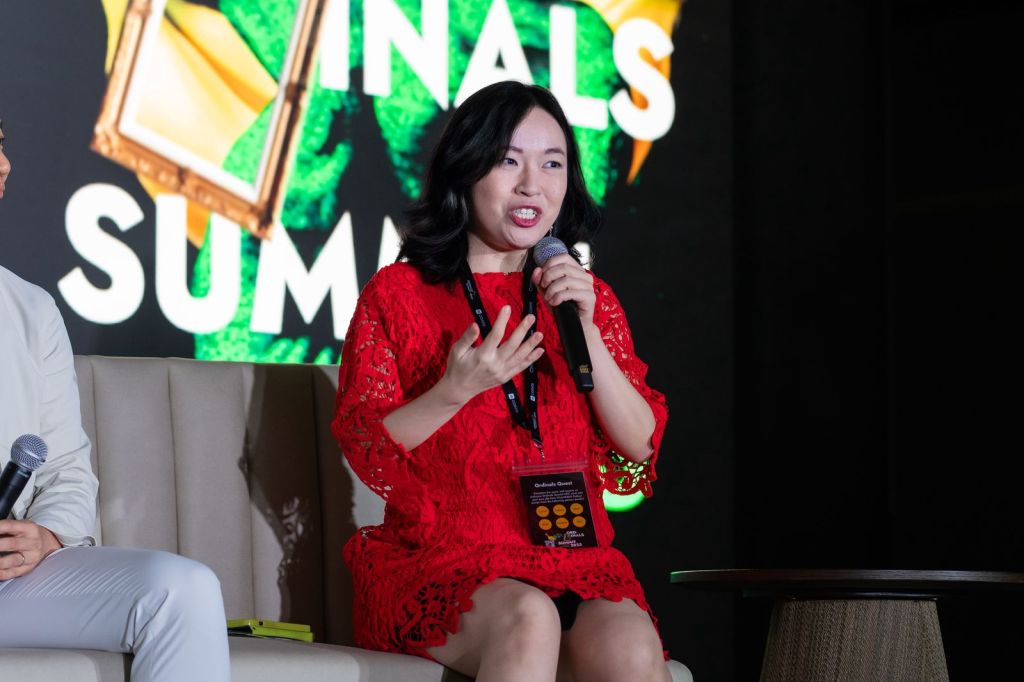
One of our core values at AI Visionary Society is inclusivity, diversity, and equity. That’s also why AI is so powerful—people who feel they are in the minority or disadvantaged can use AI as an ally to equalise the playing field.
How does AI Visionary Society support business leaders in integrating AI solutions into their companies?
We offer consulting, but fundamentally, we start with education. We educate our leaders on workflows. For example, in PR pitching, the workflow might be: determine what’s unique about the company, decide what story to pitch, identify suitable reporters, track trending topics, write the pitch, deal with rejection, follow up, and then take next steps after acceptance.
Once you have that workflow, you can decide which parts should be done by humans, which by AI agents, and which can be automated. That’s how we help—by educating people on what can or cannot be done by AI.
What are some misconceptions about AI that you aim to clarify through your community and discussions?
One common misconception is that AI cannot be used in media, publicity, and visibility. Many business owners believe AI is complicated and that they need to know how to code.
I say no—you just need to understand your trade and use AI to amplify it. So if you know how to ask the right and better questions, AI is not difficult to use.
The magic of AI is not in the AI itself. The magic is in your superpower—your unique skill set. If you have a strong skill set, AI can amplify your results. So it’s not AI alone that’s powerful—it’s your talent combined with AI that becomes powerful.
A final myth I keep encountering is the fear that AI will replace humans. And people often think, as long as they learn AI, they won’t be replaced. I personally don’t believe this is true. I believe AI may replace even those who know how to use it—unless they’re asking better questions and using AI to generate practical results.
In your opinion, what do you think makes a good entrepreneur?
A good entrepreneur must have grit and must be able to stay focused without being easily distracted. As AI becomes easier to use, there will be more competitors. One of the most convenient ways to get something done is to copy someone else’s idea.
End users mostly care about results, not about who originated the idea. So the entrepreneur needs to act quickly, have grit, and focus on their goals without deviating. That’s what makes a good entrepreneur.
Looking ahead, what are your long-term goals for AI Visionary Society and how do you see its role evolving in the global AI ecosystem?
Currently, we’re plugged into various networks including AI communities in Silicon Valley, Singapore, Europe, and China. I wish to expand more into China, but we face many challenges.
Our main goal is to be global and help our members gain visibility using generative AI tooling in a global setting. We want the conversation to be international, not just local—we aim to add value to people around the world. The second goal is for people to stop seeing AI as a tool and start seeing it as an ally.
For example, I’m ADHD and also on the spectrum. I’ve had multiple conversations with neuroscientists and experts who’ve told me that I likely am. Last year in Beijing, after a keynote, a lovely lady with a PhD in autism (who is autistic herself) came up to me and congratulated me for being on the spectrum.
I felt very accepted. As someone who is neurodiverse, I see AI as another species in the forest—not as a shovel. AI is not just a tool—it’s a growing organism. We should see it like another plant in the ecosystem.
To be allies with AI, we need to talk to it, understand it, and see how we can grow together. I hope to share this concept with more business owners so that they stop fearing AI and start treating it like a friend.
Where do you see yourself and what’s your vision for Singapore in the next five years?
For myself, I really hope that one day my digital twin can execute 80% of my business activities, leaving me to focus on just 20%—the human-to-human interactions. That’s the dream. Currently, I think my workflow is about 20% automated, with a significant portion done by my digital twin. I believe it’s achievable within three years.
I hope Singapore can become the Southeast Asian hub for AI. Currently, Vietnam has a thriving AI scene. But I still hope Singapore can lead in this space—with more AI conferences and open knowledge-sharing.
I hope to see more of our members speaking at conferences, appearing in global media, and I hope Singapore’s brand remains strong as a conduit of knowledge in the AI space.
Connect with Wan Wei: LinkedIn, TikTok and X.com.