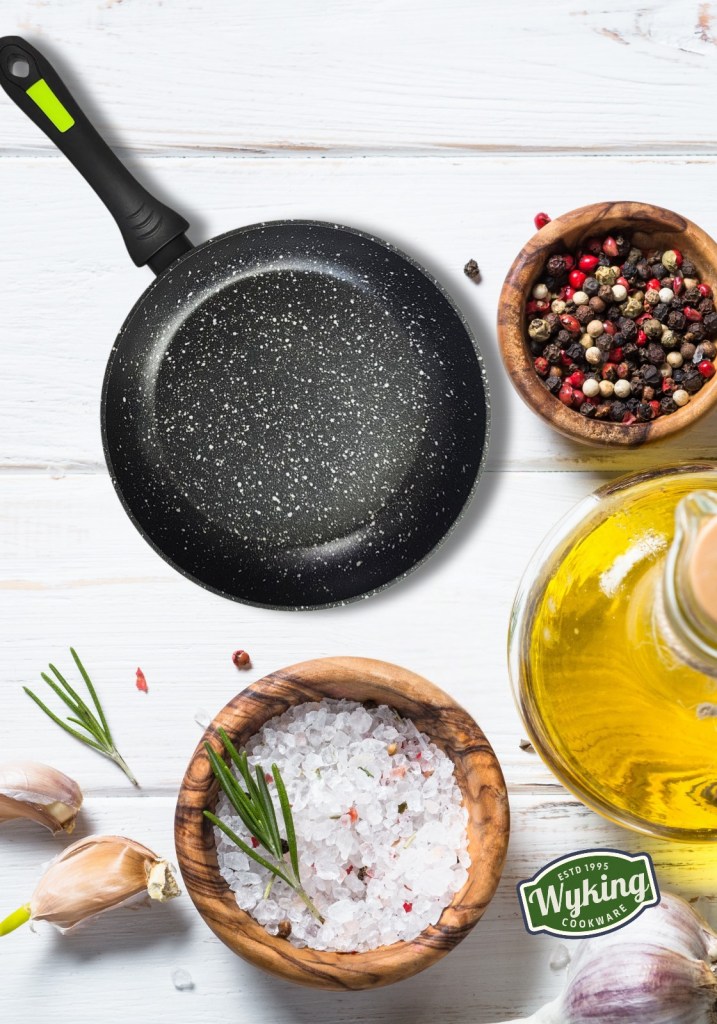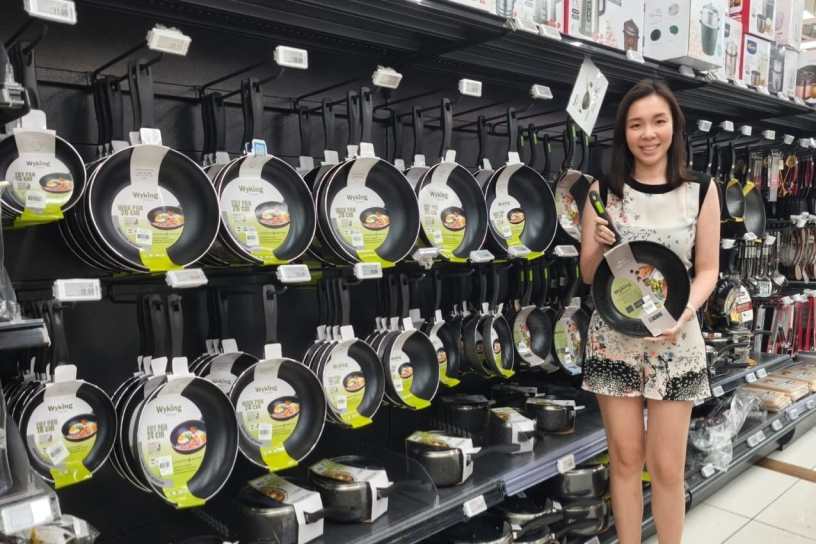
Meet Shunyi, the trailblazer behind Ablepack Pte Ltd, a leading household distributor specialising in quality cookware, including the well-known Singapore brand Wyking. Originally a fashion designer in New York, Shunyi took a bold leap into entrepreneurship after inheriting the family business at just 24 years old.
Determined to modernise operations, she implemented a fully automated “ERP system”, streamlining processes and positioning Ablepack for sustained growth. With a strong vision for the future, Shunyi is committed to promoting healthier living through eco-friendly, time-saving cookware solutions.
You started your career as a fashion designer in New York before taking over Ablepack at the age of 24. What was the biggest challenge in transitioning from fashion to running a household distribution business?
I think the biggest challenge was letting go of my passion for fashion and starting from scratch in an entirely different industry. When my aunt passed away, the company was really in a mess. The cash box was missing, and the warehouse was nearly empty because no one had been ordering stocks.
But operations were still ongoing. I went into the office and they were still using Pentium computers and typewriters—very extreme from what I was used to. I liked technology, and this setup was really manual to an unimaginable extent.
I didn’t want my aunt’s lifetime of hard work to go to waste. It was actually the toughest decision to take over the business. Coming from a fashion background, I was used to creating things that were original and beautiful, leaning towards haute couture designs.
Another challenge I faced was gaining trust from the employees. The average age of the people I worked with was about 50 to 55. So it was like, why would they want to listen to a young woman with no experience in this industry?
It was really about learning from the ground up and starting everything from scratch. Just to clarify, Ablepack is not 100% a family business. The complexity lies in the fact that it is one-third owned by an outsider and two-thirds owned by family.
One-third is from my mum, and the remaining one-third is split between my sister and me after my aunt passed away. So, holding a very minority share, I decided to rely on my sincerity to change the company for the better and prove myself from a young age.
Ablepack has been in the industry for 28 years. What do you think is the key to its longevity and success?
I believe the key to success lies in our commitment to our customers and to society. We were one of the pioneers who introduced non-stick cookware to the local market, and we have continued to improve our products to be PFOA-free, cadmium-free and lead-free.
Even though non-stick cookware sometimes has a negative perception—people often think “oh, it’s toxic”—we improved our quality standards and made our cookware induction-friendly, ergonomic, handy, lightweight and quick to heat up.
It’s very efficient and makes cooking easier and more accessible for the modern household.
You modernised Ablepack by implementing a fully automated “ERP system”. How did this transformation impact the efficiency and scalability of the business?
When I took over, we couldn’t track inventory and often ran out of stock. To grow with the supermarkets, we needed a system to track sales of each product and to know when we were running low on stock.
For example, we supply to major retailers and supermarkets like Sheng Siong, NTUC and Prime. With strong inventory management integrated with our accounts, we are ready to scale, even into other countries.
It’s a very automated software. When supermarkets make an order, it integrates with our system to generate the invoice.
So our warehouse can print barcode stickers based on the order quantities. With this control, we experience less stock loss and higher efficiency.

You’re going to work your whole life—so you must enjoy it and find satisfaction and purpose in it. Don’t be afraid to make decisions and take calculated risks.
You mentioned that you have expanded into a few countries. What are some of the challenges you faced entering overseas markets, and how did you overcome them?
Currently, we are in Indonesia and Brunei. The challenges we face include differing market regulations and understanding local consumer preferences. For example, in some countries, spending power is not as high as in Singapore.
So we sometimes have to market our products as premium or higher-tier products, targeted at the affluent or those who are willing to spend more for quality. We also have to manage cross-border logistics, including taxes, tariffs and freight charges. There are also import requirements and pricing expectations.
To adapt, we engage local influencers—like Indonesian ‘live’ streamers—to promote our products. With that kind of market testing and brand building, we are better positioned to enter modern retail chains in those markets.
Your focus is now on promoting healthier, eco-friendly and time-saving cookware. Can you share more about your vision for the future of Ablepack and any upcoming innovations?
This year, we are launching ceramic non-stick cookware that is fully recyclable. It’s not only ergonomic but also a healthier and safer choice for cooking.
Additionally, we offer customisable cookware that allows customers to create meaningful gifts. For example, the handle can be engraved with words of appreciation—perhaps from a child to a mother who cooks every day.
It’s also oven-friendly, so it’s multipurpose and space-saving. The cookware can go from stove to oven to table. This multipurpose cookware reduces the need to own many types of pots and pans.
Internationally, we’re exploring entry into Vietnam and India. As mentioned, cross-border logistics are complex and require time and effort to establish our presence.
We’re committed to innovation and sustainability, aiming to provide cookware that enhances convenience while promoting a healthier, eco-friendlier lifestyle.
What advice would you give to young business owners, especially those looking to take over a family business?
The key point is that everyone tends to shy away from family businesses, assuming there will be political struggles or family problems. However, I believe there are successful examples that challenge this stereotype—like Sheng Siong, where all the brothers work together.
The key to sustaining any business, family-owned or not, is a common shared vision and alignment of goals among the leadership. The bosses must have the same objectives, which builds a strong foundation for success.
For the younger generation just starting out, I feel it’s important to carve out their own path and not solely rely on the family business legacy. The family business can be a strong foundation, but it’s also a platform for personal growth and realising one’s dreams and ambitions.
You’re going to work your whole life—so you must enjoy it and find satisfaction and purpose in it. Don’t be afraid to make decisions and take calculated risks. Having a unique identity is very important in driving your vision forward.
Given the choice again, would you go back to the fashion industry?
While I haven’t pursued a career in fashion, I still love it. I really admire fashion, and I still enjoy designing dresses. Now, it’s more of a hobby where I sketch and design my own clothes.
But as time goes by and I focus more on designing products, I’ve found a new passion in creating better products and reaching out to a larger community. That’s where I find purpose now.
Where do you see yourself, and what’s your vision for Singapore in the next five years?
I see myself working towards making Wyking the number one cookware brand in Asia. This brand is from Singapore, and I will continue to drive innovation and uphold quality standards in the household industry.
I focus on customer needs and hope to contribute to Singapore’s reputation as a leader in quality and innovation. People often associate Singapore with business, aerospace, and finance. But what if something as simple as cookware from Singapore could make a difference in every home across Asia? That’s the direction I want to take over the next five years.
My vision for Singapore is to bring our brand overseas. If we grow our international markets, I believe we can also create more jobs for Singaporeans abroad.
Connect with Shunyi: AblePack, Facebook and TikTok.