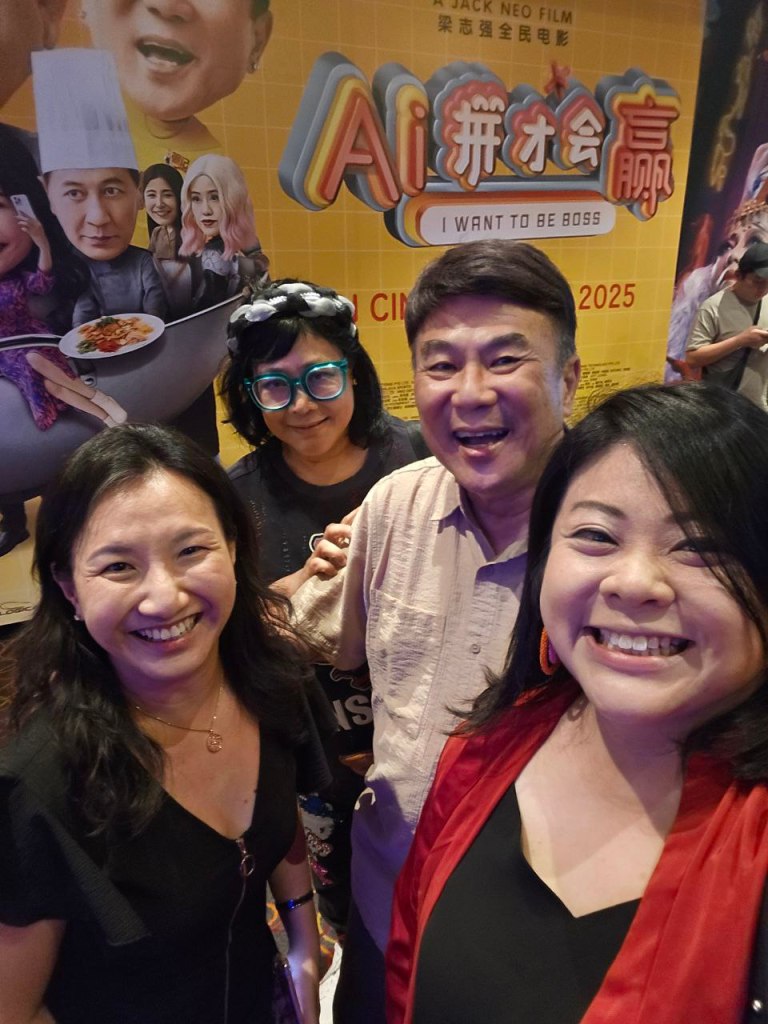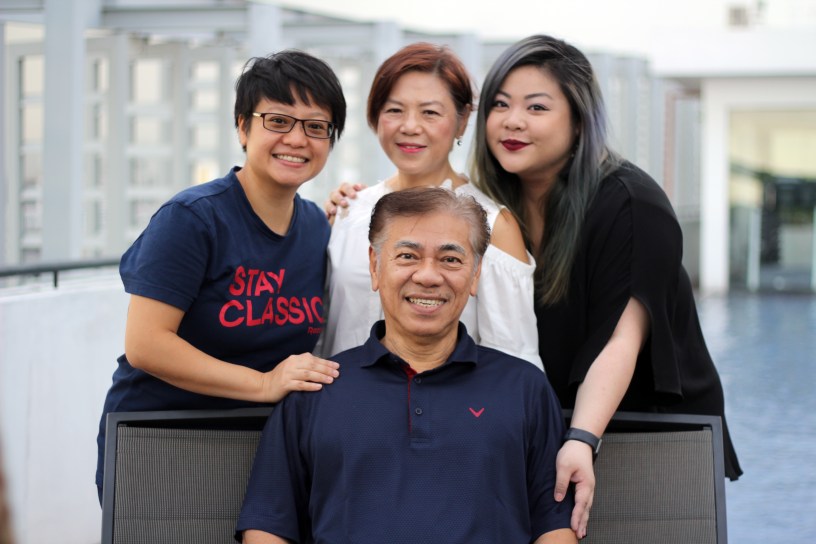
Meet Esther, the visionary entrepreneur behind FERVANT, a company dedicated to helping brands and individuals build thriving, engaged communities. With a deep passion for community-driven growth strategies, Esther specialises in working with creative agencies and digital marketing teams to design impactful engagement strategies that strengthen brand loyalty and create lasting connections.
Through digital media and innovative consultation, FERVANT supports community builders in amplifying their stories, ensuring their passion resonates with the audiences they serve. Whether it’s transforming ideas into impact or unlocking the full potential of a network, Esther is committed to helping brands foster loyalty, drive engagement, and build sustainable value.
What inspired you to start FERVANT, and how did your journey in community building begin?
I was an accidental entrepreneur, really. I started helping out at my mum and dad’s food stall in the CBD area. During the lunch crowd, I would be roped in to scoop food, tend to the cashier, and help with cleanup—things like that.
I started to pick up small pieces of what it meant to run a business. Of course, at that age, you don’t fully understand what you’re learning, but you know you’re learning something.
Fast forward to later years, I went into the corporate world. I worked at Ogilvy, Mindef, NUHS, and various local and overseas firms. All these experiences culminated in a desire to do something that aligned with my passion, personality, and the skill sets I had accumulated over the years.
At a certain point, I thought, “OK, maybe I should review what I’m doing next.” That’s when I started FERVANT. In a sense, I would call it accidental because, from a young age, the entrepreneurial bug had already bitten me.
Many brands struggle to build authentic communities. What does being ‘authentic’ mean to you?
I think we first need to break down the word authentic because what it means to you or me today, in 2025, could be very different in 2035. Authenticity is an ongoing journey—it’s not something with a definite endpoint.
The reason for this is that everything changes—the market, the economy, people, and their needs. If you think about building a business, your founding team members shape the culture.
When you grow to 100 employees, the culture evolves. At 1,000 or 2,000 employees, it looks completely different. If you apply that analogy to a community, authenticity is something that must be continuously figured out.
Many brands struggle because they don’t fully understand what authenticity means in a community. For some brands, authenticity is reduced to business goals and monetisation strategies.
There’s nothing wrong with wanting to monetise a community, but there also needs to be genuine care for people. The key question for founders and community leaders is: Do you care for and care about people? That’s the foundation of an authentic community.
How do you measure the success of a community-driven strategy, and what key indicators do you look out for?
One of the key indicators is when members proactively contribute within the framework set by the founder and their team. The framework must be robust, value-driven, and guided by clear principles.
When members actively contribute without expecting anything in return—whether financially or otherwise—it’s a sign of a healthy and thriving community. However, contribution must be within the intended framework.
A sign of an unhealthy community is when divisions start forming—when people break away, form subgroups, or go against the community’s founding principles.
In contrast, a successful community is one where members instinctively want to contribute and engage, while still aligning with the values and structure set by the founders.

Community building has always been—and will always be—about accountability. In a healthy community, members hold each other accountable—not just in actions but also in character, credibility, and relationships.
Can you share a success story where FERVANT helped a brand or individual transform their community engagement?
One notable success story involved transforming a transactional relationship-based business into a community-driven one. Initially, the business had a very transactional dynamic—customers and vendors simply interacted to complete a sale, with no real connection.
We helped the brand shift towards a community-centric model, where they started solving common pain points together. This change turned them into a rallying point for their vendors, employees, and customers.
With digital media evolving rapidly, how do you see the role of community building changing in the next few years?
Community building has always been—and will always be—about accountability. In a healthy community, members hold each other accountable—not just in actions but also in character, credibility, and relationships. Do people support each other? Do they gossip behind each other’s backs?
These are signs of an unhealthy community. A thriving community, on the other hand, fosters an environment where members encourage each other to grow and become better versions of themselves. If you look at e-commerce and social media today, the power to speak is democratised.
Anyone can create an Instagram account, share their views, and rally people around them. But we also see community policing, where users call out misinformation or bad behaviour in comment sections. These small interactions are micro-examples of community accountability. If you scale that concept into an entire community, you get a self-regulating, thriving ecosystem.
What advice would you give to someone looking to start or grow their own online community?
I have a question about this question—because I always view communities as hybrid, meaning both online and offline. Existence is at the heart of every community, no matter its purpose or size. And to truly exist, a community must be both physical and digital. It’s like media production.
When creating sound effects, you can use canned sounds—like pre-recorded bird chirps or running water. But over time, these feel lifeless and repetitive. On the other hand, a real running river has an energy to it—it constantly changes and evolves. That’s the difference between an artificial, static online community and a vibrant, hybrid one with real human interactions.
So my advice? Don’t build an online community in isolation. Build a hybrid one.
Beyond business growth, what impact do you hope FERVANT will have on the communities you work with?
For me, this is simple: values-driven change management. Our company’s tagline is “Transforming ideas into impact.” A community must be values-driven, but it must also ride the waves of change. Societal, political, and economic changes are happening all the time, and people are searching for trust.
Many traditional trust pillars have collapsed over the last 5 to 10 years. So where do people turn? They turn to friends, family, and local communities—both online and offline.
Where do you see yourself, and what’s your vision for Singapore in the next five years?
This is a tall order, but my dream is to see society built on kindness and care. To me, that ultimately speaks of love—because when you love something or someone, you care for them and treat them with kindness. An inclusive society doesn’t just use people as building blocks—it genuinely cares for them.
On a macro level, how you view others will determine your actions when no one is watching. That’s the beauty of community. It lives out values. For example, if a community values authenticity, it encourages people to be their true selves. That value then carries over into events, interactions, and shared experiences—making the entire community stronger and more meaningful.
Connect with Esther: FERVANT.co, Instagram and LinkedIn.