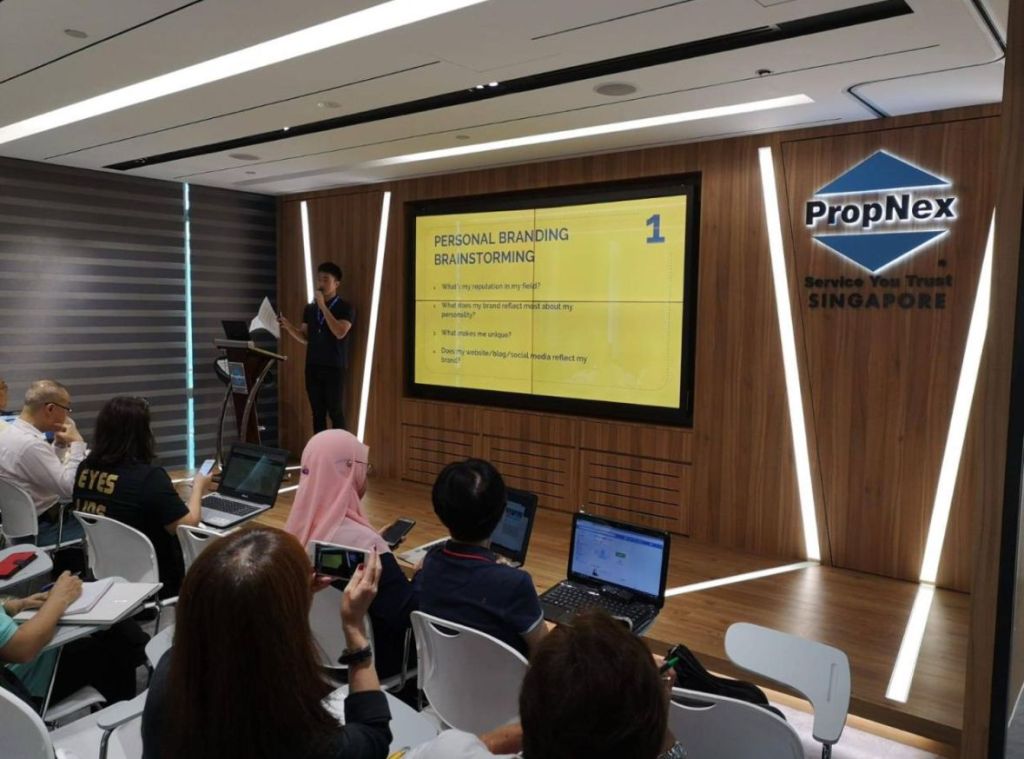
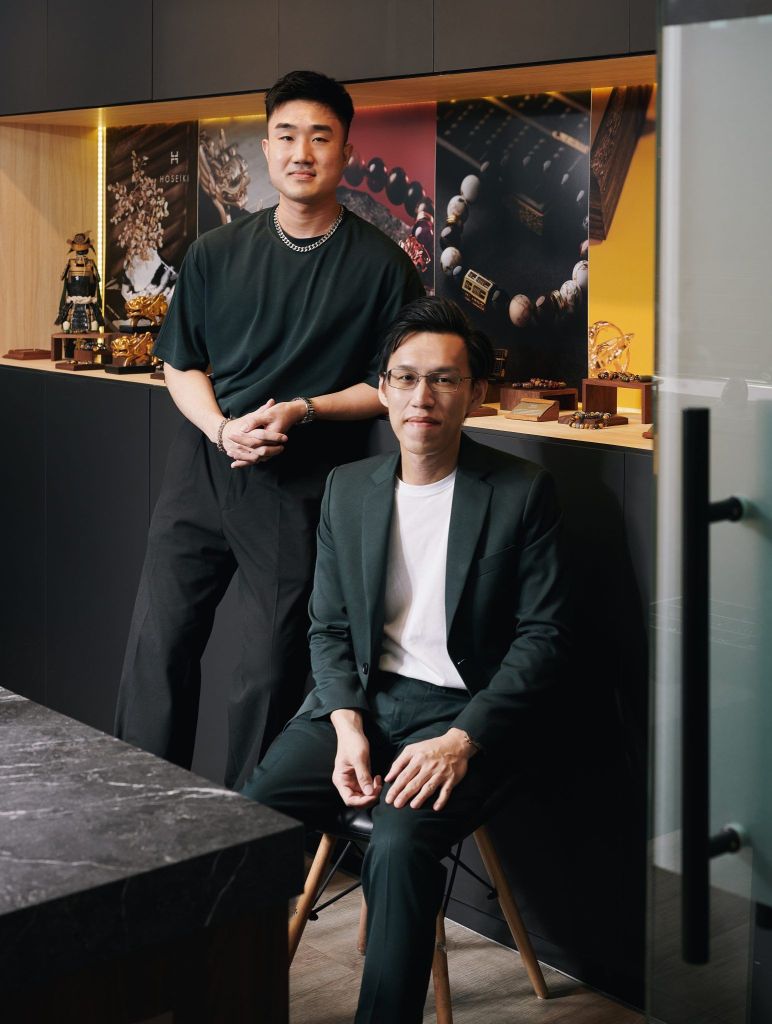
Meet Daryl, the director of Re:noun & Hoseiki, who leads both businesses in digital advertising and eCommerce growth. With a sharp focus on scaling online revenue to seven figures and beyond, Daryl specialises in transforming brands through high-performance ad strategies and creative marketing solutions.
By leveraging data-driven insights and repurposing brand assets into compelling new creatives, he helps businesses maximise top-line revenue while keeping costs low. Daryl’s expertise empowers brands to achieve exponential growth in the competitive online marketplace.
What inspired you to co-found Re:Noun and Hoseiki, and what gap in the market were you aiming to fill?
My journey into entrepreneurship began in 2017 or 2018 when I first ventured into e-commerce. After an initial business setback, I focused on mastering Facebook ads through self-learning. Even though I was still refining my skills, many property agents and business owners started approaching me for help with digital marketing.
It became clear that while I was learning, there was a significant gap—many professionals struggled to navigate Facebook ads effectively. As demand for my expertise grew, I started charging for my services and realised that businesses were willing to invest in effective digital advertising.
This led to the formation of Re:Noun, a company built to bridge the knowledge gap and provide high-performance ad solutions. Over time, my focus naturally shifted back to e-commerce, where I could deliver even stronger results, leveraging both my experience and data-driven strategies.
Hoseiki came into the picture after working closely with one of Re:Noun’s long-term clients. We had achieved great success together, and through our partnership, he presented me with an opportunity to co-found Hoseiki.
The vision behind Hoseiki was to create a brand that blends modern luxury with Feng Shui principles—an area that was underserved in the market. We saw an opportunity to redefine this space by offering meticulously crafted, meaningful jewellery that resonates with both aesthetics and symbolism.
Many brands struggle to scale their online revenue beyond a certain point. What are the key factors that differentiate a brand that successfully hits 7 figures from those that don’t?
The most critical one is adaptability. Successful entrepreneurs don’t just stick to what they think should work—they pivot quickly based on real market feedback. For example, when we launched Hoseiki, we initially positioned our ads around a highly specialised approach to Feng Shui that went beyond generic zodiac-based solutions.
While we believed this was a strong differentiator, our audience wasn’t familiar enough with the concept to see its value immediately. As a result, our first month’s performance was underwhelming. Instead of forcing the strategy, we adapted. By our second month, we simplified our messaging, repositioned our ads around zodiac-based insights (which had broader market awareness), and optimised our website.
This shift scaled our revenue from $1,500 to $10,000 in just one month. Another major factor is being data-driven over emotionally driven. Many brand owners become too attached to their vision, aesthetics, or personal preferences, which can cloud judgment. I’ve learned to prioritise performance over perfection—even if an ad doesn’t match my ideal brand image, I’ll let it run if the numbers show it works.
The ability to detach from personal bias and focus on conversion metrics, audience response, and iterative testing is what allows a brand to sustain and scale. Of course, there are many other elements at play—strong unit economics, retention strategies, and a scalable supply chain all matter—but adaptability and a data-driven mindset are non-negotiable for brands looking to hit 7 figures and beyond.
The key to this turnaround was rethinking audience segmentation at a deeper, more human level. Instead of treating watches as just products, we treated them as expressions of identity.
Can you share a case study example of how you helped a brand revamp its social media marketing strategy for significant growth?
One of the most impactful transformations I’ve led was for H2Hub, a watch retailer that had struggled with multiple agencies—close to seven, if I recall correctly—before working with us. When we took over their account, they were averaging a 0.9 x Return on Advertising Spend (ROAS). They were essentially losing money on ads.
Within two years, we scaled their returns to a 7-8x ROAS, driving their revenue from $200K to nearly $900K annually. The key to this turnaround was rethinking audience segmentation at a deeper, more human level. Instead of treating watches as just products, we treated them as expressions of identity. It’s a reflection of the wearer’s lifestyle, profession, and personal aesthetic.
We built our strategy around lifestyle personas. For example, dress watches such as Daniel Wellington appeal to professionals such as bankers, consultants and entrepreneurs. They are usually dressed in tailored suits, carry leather bags, and frequent high-end gyms or healthy dining spots in the CBD. G-Shock and rugged watches attract creatives, streetwear enthusiasts, outdoor adventurers, and fitness trainers.
With this persona-driven approach, we redefined our ad targeting by aligning placements, interests, and messaging with the specific lifestyles of each watch’s ideal customer. We then created highly contextual ad creatives targeted at this audience.
This shift from generic product marketing to aspirational lifestyle marketing allowed us to reach the right audiences with precision, drastically improving engagement, conversions, and long-term brand loyalty.
With digital advertising becoming increasingly competitive, how do you craft fresh high-performing creatives that stand out and convert?
Creating fresh, high-performing creatives starts with brand positioning. If you simply mimic competitors—whether as another mass-market brand, another high-end brand, or just another premium label without a distinct identity—you won’t stand out.
A strong brand story and unique positioning are the foundation for fresh creatives. Beyond branding, the effectiveness of any creative depends on your audience and industry. Many marketers swear by UGC (user-generated content), video ads, or animations, but in reality, there is no one-size-fits-all approach.
However, a critical insight I’ve developed is that you can’t rely solely on one creative format. Even if, for example, 60-80% of my audience prefers static image ads, there’s still a valuable 10-20% who engage with video, UGC, or animations—and neglecting those formats means leaving potential customers on the table.
The key is to balance efficiency with expansion: Double down on the highest-performing format. For example, if images work best, allocate 60-80% of the budget there. Continue testing other creative types—UGC, animations, high-end photography—to capture new audiences and prevent ad fatigue.
Once a brand scales to a certain level, creative becomes the single biggest factor in sustained growth. A winning creative today won’t work forever, so constantly testing new angles, formats, and storytelling methods is crucial to staying ahead in an increasingly competitive landscape.
Where do you see yourself, and what’s your vision for Singapore in the next five years?
For myself, I see the next five years as a period of expansion beyond Singapore, building brands that can compete on a global stage. My goal is to create something that not only scales but also helps put Singaporean-founded e-commerce businesses on the international map.
That could mean scaling my existing ventures, or potentially selling them and moving on to an even larger opportunity—one with an even broader target audience and a higher level of impact. Regardless of the exact path, my focus will always be on building, scaling, and innovating in the digital commerce space, pushing the boundaries of what’s possible for e-commerce brands worldwide.
For Singapore as a whole, it’s hard to say exactly where things will go, but I believe the country will continue to strengthen its position as a global hub for technology, innovation, and digital commerce. The challenge for local entrepreneurs, however, is that Singapore is a relatively small market, which means real scale often requires looking beyond its borders.
Connect with Daryl: Re:noun, Facebook and LinkedIn.