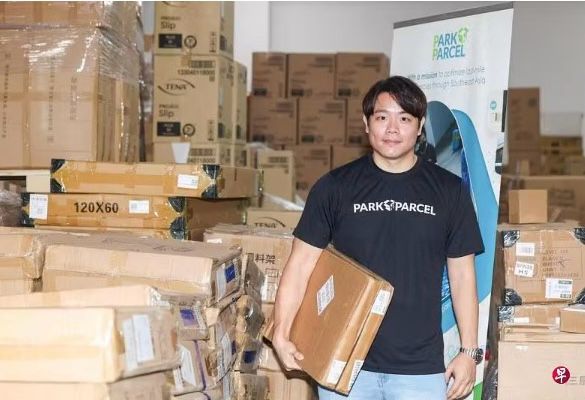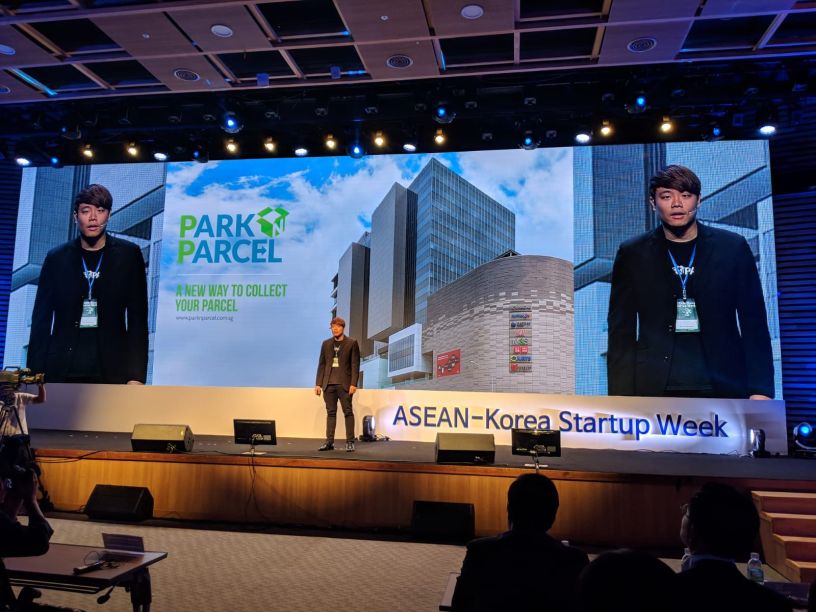
Meet Gan Hong, the visionary entrepreneur and co-founder behind Park N Parcel, one of Singapore’s fastest-growing logistics networks, revolutionising last-mile eCommerce fulfillment. Under his leadership, Park N Parcel has become a trusted provider for major players in the market, offering customised delivery solutions with full IT-enabled integration support for businesses of all sizes.
Recognised for his entrepreneurial excellence, he has been honoured with the Singapore Entrepreneur 100 Award (2022/2023) and the SME500 Singapore Award (2022). Additionally, Park N Parcel achieved recognition as one of Singapore’s Fastest Growing Companies in 2024 and 2025 and was listed among the Top 500 High-Growth Asia-Pacific Companies in 2024 and 2025.
What inspired you and your co-founders to start Park N Parcel, and how did you identify the gap in Singapore’s logistics market?
We started with three co-founders. At that time, we noticed a gap in the market due to numerous failed deliveries in Singapore. We thought, why not leverage neighbours—such as homemakers who are at home—to receive parcels on behalf of their neighbours who were not at home and earn money in the process?
When we first started, we paid them $1.00 per parcel, allowing them to earn money while also building connections with their neighbours. It was a social commerce concept that we introduced to the market. Our idea gained significant media attention because it was the first in the world to use neighbours as collection points. We aimed to address the issue of failed deliveries.
When a customer isn’t home, the parcel is returned to the warehouse and then sent out for another delivery attempt. This results in additional costs and inefficient use of resources. With our model, we not only help neighbours earn money but also help logistics companies reduce costs.
Last-mile fulfillment is a highly competitive space. What sets Park N Parcel apart from other logistics providers?
We operate as a neutral party. Instead of competing with logistics companies, we partner with them to provide this service. This has laid the foundation for our business today. Because of this, companies view us as a partner rather than a competitor, which differentiates us in the logistics industry.
We also place a strong emphasis on service. We’ve realised that fast and accurate responses to customers are crucial. Many customers get frustrated when they cannot get timely answers, and customer service officers in other companies often take days to respond.
For us, we focus on addressing inquiries and urgent requests as quickly as possible, which gives customers confidence in our service. This level of service is one of the key reasons customers choose us.
Handling returns is one of the core services you provide. What made you want to enter this niche industry?
After years in the industry providing collection points and deliveries, we noticed increasing competition, which led to price declines. To stay ahead, we focused on a niche that not many competitors wanted to enter: returns. Returns account for only about 10% to 20% of total deliveries, but they are an essential service for merchants.
Online shoppers are more likely to purchase when free returns are offered because they know they can return items if they don’t meet expectations. Merchants are also willing to pay a premium for reliable return services. Three years ago, we started investing in the returns market. Today, we have around 50 to 60 drivers dedicated solely to handling returns. Many companies do not focus on returns because it’s not a significant part of their business.
For us, handling returns aligns with our core business because we already have collection points. These collection points serve as convenient drop-off locations for customers who don’t want to wait at home for a driver to pick up their return. This seamless process adds value to both customers and merchants.

Don’t enter an industry just because you think it’s special or because no one else is doing it. You must first determine whether there is a genuine need in the market and whether anyone is already serving that need.
What are some of the biggest challenges in scaling Park N Parcel, and how have you overcome them?
One of the biggest challenges, not just for Park N Parcel but for all startups, is cash flow. In our industry, managing cash flow is critical because we need to pay our drivers on time. Drivers rely on timely payments for essentials like fuel and daily expenses.
However, customers typically have credit terms of up to 90 days. This means that, at times, we have to pay out $1 million to $2 million to drivers and contractors before collecting payments from customers.
To manage this challenge, we utilise financial tools such as factoring services and term loans. During COVID-19, we also took advantage of the Temporary Bridging Loan Program (TBLP), which offered low-interest loans guaranteed by the government. These financial facilities helped us stabilise cash flow, although we had to pay interest. Careful financial planning is crucial to avoid cash flow problems that could disrupt operations.
Another significant challenge was gaining credibility in the early years. When we first started, many larger companies were hesitant to work with us because we were not well-known. Now, after eight years in the market and serving major brands, we have built a solid reputation.
Scaling has its challenges, but by continuously innovating and expanding our services, we aim to strengthen our market position and grow further in the logistics industry.
The logistics industry is evolving rapidly with technology. How is Park N Parcel leveraging innovation and IT integration to stay ahead?
For Park N Parcel, our IT system is built in-house. When we first started, we didn’t know anything about IT, so we outsourced the development of our software to a Singapore firm. At that time, we paid almost $50,000 for the initial software.
Later, we hired a CTO in Singapore, who helped us refine our system. Over the years, as our requirements and industry trends evolved, we continuously updated our app and platform to adapt to the changing landscape.
We implemented route optimisation to assist new drivers who may not know how to plan their routes efficiently. Additionally, we introduced more features in our app, such as notifying drivers about special client requirements. Previously, we had to contact or message drivers manually, but now we can do it directly through the app, creating an all-in-one communication solution.
We are also working on expanding our technology to support new functions, such as warehousing software, which will be essential for our future operations. From time to time, we come up with new ideas and try to implement them.
As an award-winning entrepreneur, what advice would you give to startups looking to disrupt traditional industries like logistics?
I think the main thing is to identify the gap in the market. Don’t enter an industry just because you think it’s special or because no one else is doing it. You must first determine whether there is a genuine need in the market and whether anyone is already serving that need.
Then, you need to assess whether the demand is significant enough to sustain your company. For example, when we first started, we focused solely on collection points.
Over time, we expanded into other services because we realised that while collection points addressed a need, the market size was too small to sustain a company. Our expansion into additional services came from talking to customers who used our collection points.
By understanding what customers hated about the current system, we could create services that truly met their needs. Disruption is not just about creating something different—it’s about solving a real problem for a significant number of people.
Are there any exciting developments or expansion plans in the pipeline for Park N Parcel?
Last year, based on our internal reports—although the official report hasn’t been released yet—we should be making a profit. We operated at a loss for the first six to seven years, but after some restructuring and refining our customer base, we managed to turn the company around and achieve profitability. That’s very exciting for us.
This year, we’re introducing more services, such as using bigger trucks and expanding into warehousing. We are also collaborating with larger companies to upscale our logistics operations. On the sidelines, we have also been in discussions with major companies regarding Mergers and Acquisitions (M&A).
Park N Parcel is in a unique position within the Singapore logistics industry. For companies looking for an affordable yet first-tier logistics provider with in-house tech and reputable clients, we fit the bill.
This puts us in a sweet spot for foreign companies looking to expand into Singapore. Many logistics companies want to partner with us to expand their operations or leverage our expertise. We have been in talks with multiple players. By forming an M&A deal with a larger company, we can scale further, expand our operations, or even venture overseas.
I’ve also been exploring industries beyond logistics. For example, I’ve been in discussions with companies in the renewable e-waste sector. Since we already have assets like a network of drivers, trucks, warehouses, and an operational team, we could extend our capabilities beyond just parcel delivery.
Where do you see yourself and what’s your vision for Singapore in the next five years?
For myself, the focus is on continuous growth. My role is to work hard, connect with the right people, and identify more market needs. Many of our resources can be shared with industries that require similar logistical support. Every day, I think about how to break traditional industry cycles and create new opportunities.
For Singapore’s startup ecosystem, I believe companies will become stronger in the coming years. Venture capital (VC) funding is no longer as easy to secure, and bank loans now require businesses to show profitability and positive margins. Many startups with weak fundamentals have started shutting down or downsising over the past one to two years.
As a result, startups will begin focusing on essential services and building sustainable businesses with lean, efficient teams. In the next five years, I believe that the companies that survive this phase will emerge stronger—both financially and operationally.
Connect with Gan Hong: ParkNParcel, LinkedIn and Instagram.