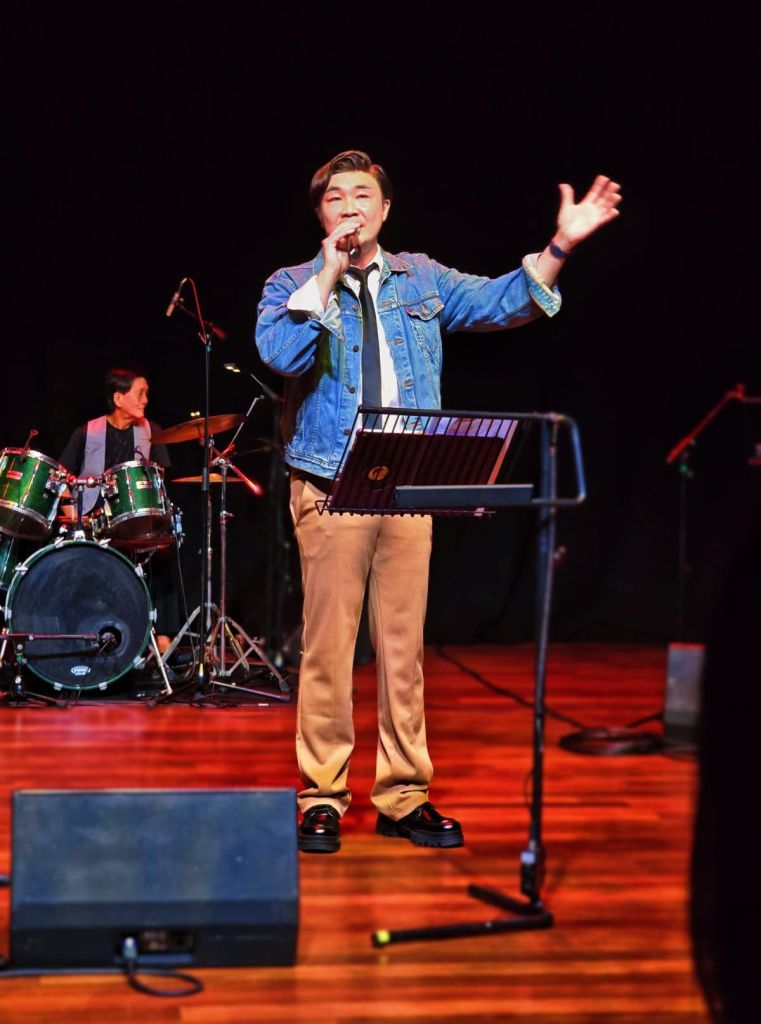
Meet Leon, a talented singer-songwriter known for infusing modern twists into classic Chinese songs. A regular performer at Singapore’s iconic Esplanade, as well as various bistros and cafés, he captivates audiences with his fresh takes on timeless melodies.
With heartfelt vocals and a dynamic stage presence, Leon continues to breathe new life into beloved tunes, earning a loyal following in the local music scene.
What initially inspired you to pursue a career in music, and how did your journey as a singer begin?
I was an MOE-trained Chinese primary school teacher for eight years. Even before I joined the teaching force, I had already started performing regularly at Min Ge Can Ting (民歌餐厅).
I taught myself to play the keyboard using YouTube videos. Initially, I was very amateurish, but the lady boss allowed me to perform, and over time, I improved. Now, after more than 20 years, I can play decently.
The pay from Min Ge Can Ting performances was very low, barely covering transportation costs. It was impossible to survive on that income alone. But for me, I was just happy to keep performing. While in NIE, I took part in a songwriting competition and won the Best Performer Award.
All finalists were also offered a songwriting contract with Warner Chappell Taiwan. I submitted many songs, and one was shortlisted for a Hong Kong superstar. At the time, they didn’t tell me who it was. I found out later it was Andy Lau.
Unfortunately, my song wasn’t chosen in the end, and I felt very discouraged. Since I considered myself more of a performer than a songwriter, I decided to focus on performing rather than writing songs for others.
How do you inject modern elements into classic Chinese songs?
I have been playing on an arranger keyboard, which allows me to add modern elements to classic Chinese songs. These keyboards offer a variety of musical styles—rock, pop, Latin, jazz—and generate full-band sounds based on how you play, making it useful when you don’t have a full band.
When people cover songs, they usually follow the original arrangement—a ballad remains a ballad, and a rock song remains a rock song. I wanted to do something different for my audience.
During COVID, I was ‘live’-streaming three to four times a week, sometimes for up to four hours straight. I knew I had to keep things fresh. Instead of changing the lyrics or melody, I changed the song’s genre. Some of my rearrangements made old songs sound more modern.
Can you share a defining moment in your career that made you feel like you were on the right track as an artist?
While I’ve always considered myself more of a performer than a recording artist, performing at Esplanade has been a highlight of my career. I’ve been invited to perform at Esplanade since 2005, usually at the outdoor stage.
Every two to three years, they would invite me back. However, last year was a major milestone—I was invited to do a solo concert as part of Esplanade’s Coffee Morning & Afternoon Tea series. This series, which has been running for over 20 years, features performances once a month on a Monday—one session in the morning and another in the afternoon.
The target audience is mostly older listeners, so my setlist focused on classic songs. For this concert, I hired my own band. Esplanade provided a performance fee, but everything else was up to me. It was my first-ever ticketed solo show at Esplanade’s Recital Studio, a major upgrade from my previous performances at the outdoor stage.
In Singapore’s entertainment scene, opportunities often depend on social media following rather than pure talent. However, Esplanade truly supports local musicians, regardless of their fame. They give independent artists a platform, and I deeply appreciate that. To perform regularly at Esplanade is already an achievement.
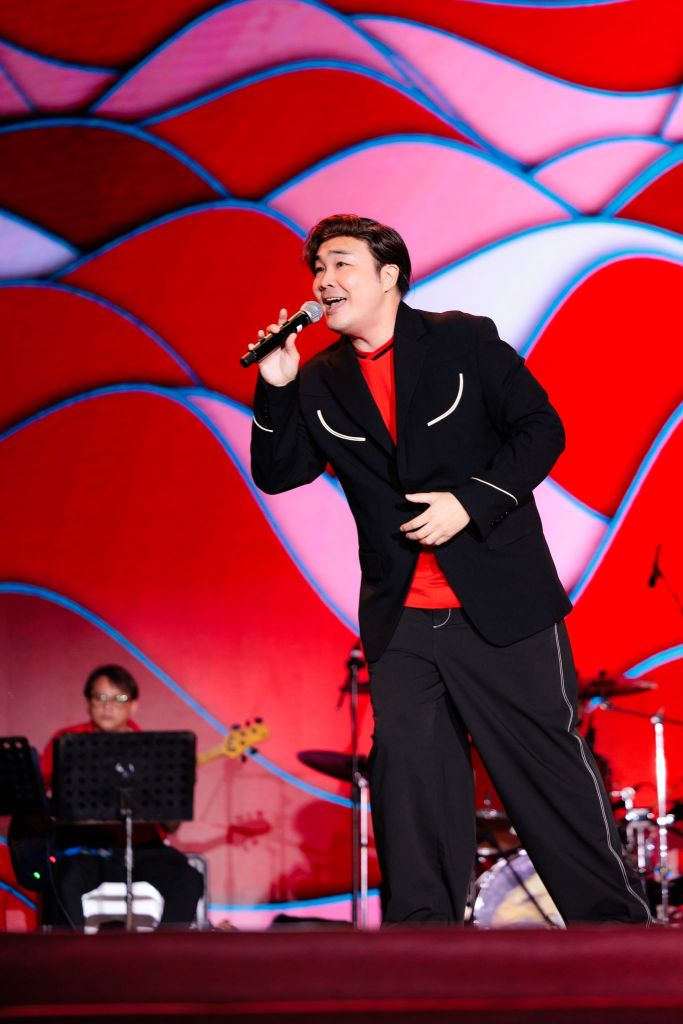
I almost had a song sold to Andy Lau, which would have been a dream collaboration. Having one of my idols sing my song would have been an incredible experience.
How do you prepare for a ‘live’ show?
For ‘live’ shows, I play the keyboard and sing, and I also accompany other singers. Usually, you need lyrics, chords, and maybe the score, so I have to get all these ready.
We have to prepare songs that people will request, but for me, I always make sure to include songs that I enjoy singing as well. I practiced a lot to make sure I was ready for my performances.
If you could collaborate with any artist, past or present, who would it be and why?
When I first started listening to music, it was mainly Chinese pop. I was born in the 80s, so during my teenage years in the 90s, I listened to songs from the Four Heavenly Kings era. I love all four of them, but my favourites are Leon Lai and Aaron Kwok.
If I had the chance to collaborate, I would be happy to work with any of them. I almost had a song sold to Andy Lau, which would have been a dream collaboration. Having one of my idols sing my song would have been an incredible experience.
Are there any upcoming projects, new music releases, or big dreams you’re working towards?
To be honest, for last year’s Esplanade show, they approached me almost a year before the actual performance. Esplanade always prepares early—they invited me a year in advance, and we worked on many arrangements.
Right now, I don’t have any show invitations yet, but I think it’s time to start planning something new. I currently have three songs on streaming platforms, so I think it’s time to release another single this year.
The last song I wrote was three years ago. I think it’s time to write new music. Some of my friends, like Aaron, are very disciplined about releasing new songs regularly. But I haven’t been as disciplined—I’ve been busy making a living.
Where do you see yourself, and what’s your vision for Singapore in the next five years?
I’ve been singing for 24 years—this is my 25th year. My first passion is music, but my second passion is acting. Four years ago, I met Jack Neo, and I hoped for a chance to act. I ended up with cameo roles in five of his movies, though only four made it to the final cut. It was a great experience. I hope to get more acting opportunities in the future.
In Singapore, doing music is quite challenging. Streaming platforms have made things easier, but if you want your music to be heard, you still need to invest in music videos. Simply releasing a song on Spotify or YouTube isn’t enough—you need visual content to reach a wider audience. That’s why most artists release songs along with a music video.
More people might turn to AI for music creation. Personally, I’ve tried using AI to generate songs, but sometimes the results don’t make sense. In five years, AI will be even more advanced. It could take away jobs from musicians and arrangers since AI can generate complete songs with vocals that sound as good as professional singers.
Connect with Leon: Facebook, Instagram and TikTok.