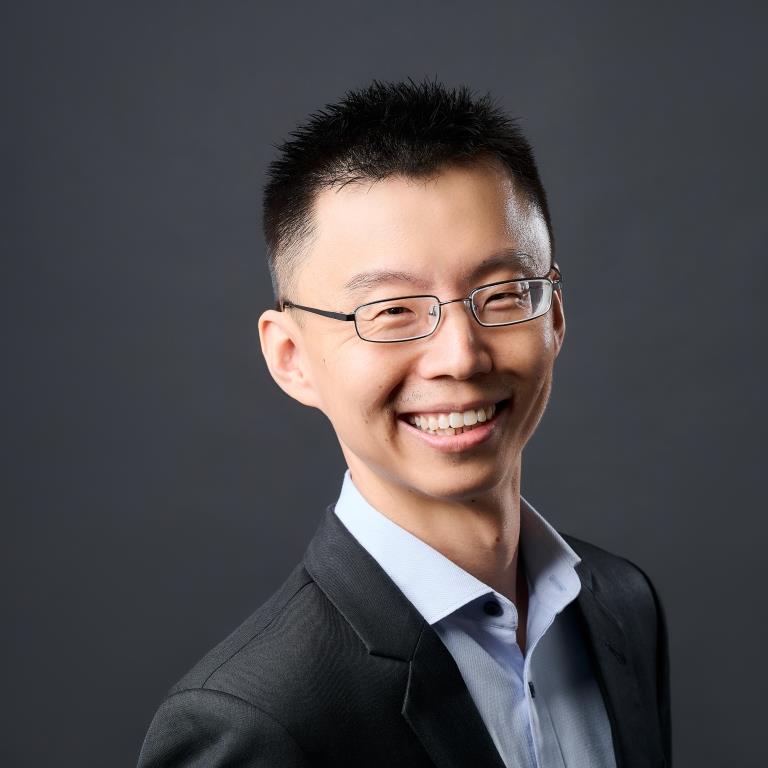
Meet Tianhao, who is a visionary entrepreneur, franchise expert, and strategic business advisor with a track record of scaling ventures into market leaders. As the founder of Theco Consulting, he leverages his deep expertise in entrepreneurship and consulting to help businesses achieve sustainable growth.
Tianhao played a key role in expanding a Myanmar-based F&B group to over 40 outlets across multiple brands, overcoming economic and political challenges. A TEDx speaker and having taught MBA courses on entrepreneurship, Tianhao’s insights have inspired aspiring entrepreneurs at esteemed institutions like NTU and SMU.
What inspired you to start Theco Consulting to help other businesses?
It all started because of my own experiences in Myanmar. Despite the challenging conditions, we managed to grow the business successfully. When I returned, I had friends asking me how I did it and how I could help their companies.
Over time, I realised that I was really keen to share my own business principles. I found these insights to be highly beneficial for Singapore businesses, which is why, over the last one and a half years, I’ve been focusing more on what I actually did myself.
That’s why I specialise in franchising— because that’s how I grew my own business. Having worked in a franchise, I gained both the franchiser’s perspective and insights into international expansion. My overseas experience has allowed me to offer valuable guidance to Singapore businesses looking to expand abroad.
Additionally, the past few years have been quite challenging for many businesses, and many are now looking to sell. That’s why I’ve also been focusing on mergers and acquisitions, helping companies that are ready to sell maximise their value.
You successfully expanded a Myanmar-based F&B group to five brands with 40 outlets. What were the key challenges you faced, particularly during COVID and the political instability, and how did you overcome them?
With the political and economic situation in Myanmar, one of the biggest challenges was the lockdowns, which affected every country. However, Myanmar also faced unique issues, such as currency depreciation and frequent electricity cuts.
We had to keep finding solutions to navigate these problems. For example, over time, we stopped leasing standalone shops that required us to run our own generators. Instead, we shifted to spaces within shopping centres, even if it meant paying higher service fees.
We also explored alternative ingredients that would allow us to lower our cost of goods sold (COGS) while maintaining quality. Over time, we also noticed that COGS would keep increasing. To address this, we introduced a Mookata buffet concept. While buffets have high COGS, they also generate higher average spending per customer.
Another strategy was diversification. We realised that we had been neglecting food options despite customer demand. That’s why we ventured into pizza kiosks, specifically choosing kiosks over full-scale restaurants to minimise rental expenses.
How did your experience at Michael Porter’s Monitor Group shape your approach to scaling businesses and creating strategic growth?
One of the key lessons I learned was the importance of adopting a structured framework and staying organised. Entrepreneurs often have a whirlwind of thoughts running through their minds, which can lead to disorganised decision-making.
In consulting, however, we always apply a framework to analyse situations. We compartmentalise problems, use structured criteria for analysis, and make decisions based on clear principles. Michael Porter’s firm is well-known for customer segmentation strategies.
When entering a new business, it’s tempting to try and sell to everyone. However, segmentation analysis helps us stay focused by identifying the right target audience. Once we pinpoint the right segment, we can craft precise marketing messages and select the best channels to reach them.

When entering a new business, it’s tempting to try and sell to everyone. However, segmentation analysis helps us stay focused by identifying the right target audience.
As a co-founder of Quantum HR, what strategies did you implement to build a strong presence across six ASEAN countries?
Beyond the strategies I’ve mentioned earlier, one additional key principle we applied was the 80/20 rule. The 80/20 rule states that 80% of revenue typically comes from 20% of customers. Quantum HR started in Myanmar before relocating its headquarters to Singapore.
While we treated all our clients equally, we focused more on those with potential for international expansion. We cultivated strong relationships with these clients, adapting our services to meet their evolving needs. We positioned ourselves to grow alongside them as they expanded beyond Myanmar.
How was the experience of being invited as a TEDx speaker, and what insights did you gain from it?
It was an amazing experience. Myanmar is currently facing many challenges, and many young people are uncertain about their future. The theme of my TEDx talk was “Building a Better Tomorrow,” and I was honoured to share my perspective on how entrepreneurship can play a role in shaping a better future.
I was grateful for the opportunity to share practical strategies for overcoming these obstacles. What made the experience truly special was the response afterward. Many people approached me, saying my talk inspired them or helped them refine their business approach.
What are the most critical factors for businesses looking to scale and expand internationally, especially in challenging markets?
In Singapore, everything is well-structured and transparent. You can easily find information on setting up a company, applying for licenses, or conducting due diligence on potential business partners. However, overseas expansion is much more complex.
Processes are often unclear, and reliable information can be difficult to find. The key is being proactive in gathering information. It’s essential to speak with multiple people, but quantity doesn’t guarantee quality. After gathering insights from different sources, you need to weigh their credibility carefully.
For Singaporean businesses expanding abroad, my main advice is to be more discerning. Don’t take everything at face value—do your due diligence, observe body language, and consider hidden motivations. Other markets are often more complex than they initially appear.
In your opinion, what makes a good entrepreneur?
This was actually the topic of my TEDx talk, where I introduced the “OUT” framework: O – Organised: Entrepreneurs face an overwhelming number of decisions daily. Staying organised helps you structure your thoughts, identify key challenges, and make clear-headed decisions.
U – Understand: Self-awareness and understanding others are crucial. Knowing your own strengths and weaknesses allows you to find the right partners who complement you. For example, I focus on HR and marketing but lack creativity in food concepts—so I partnered with someone who excels in that area.
T – Truthful: While some say, “fake it till you make it,” I believe in staying authentic. You can present yourself in a positive light without being dishonest. For example, if you’re starting a business, instead of saying, “You’re my first client,” you can say, “I’ll give you 100% of my focus, unlike competitors who have many other clients.”
These three principles are what I believe make a great entrepreneur.
Where do you see yourself, and what’s your vision for Singapore in the next five years?
On a personal level, I see myself balancing new parenthood with my business. Having a one-year-old child, next year will be challenging, and I will need to find a way to manage both parenthood and business growth.
From a professional perspective, besides consulting, I foresee myself doing more sharing and conducting more workshops. I have received invitations to speak at events, seminars, and tertiary institutions on entrepreneurship and business growth. Over the years, I have realised that I am passionate about sharing my experiences, especially for the younger generation.
I think the government has positioned Singapore very well as a strategic hub. Of course, our costs are higher than those of our neighbouring countries, but we have always provided additional value. That is why I am focusing on consulting, positioning Singapore as a strategic hub.
I’m trying to help more companies expand overseas using Singapore as their base. Our branding is highly regarded regionally. I hope to help Singapore companies leverage this branding while also adapting to local cultures. This will make them more appealing to local populations and allow them to scale.
Connect with Tianhao: theco.sg, Facebook and LinkedIn.