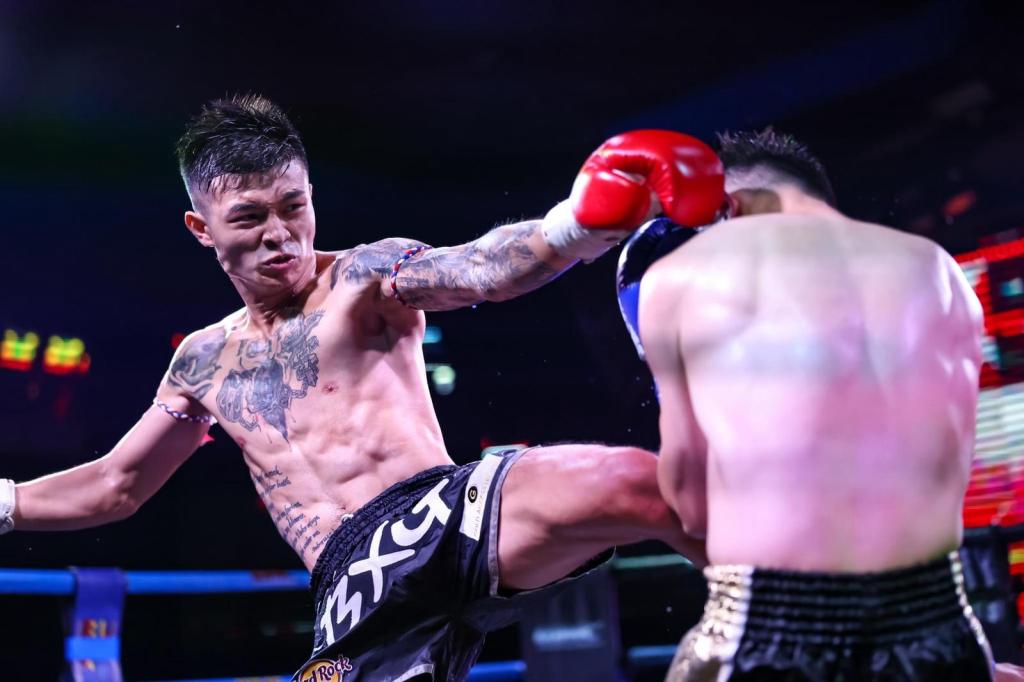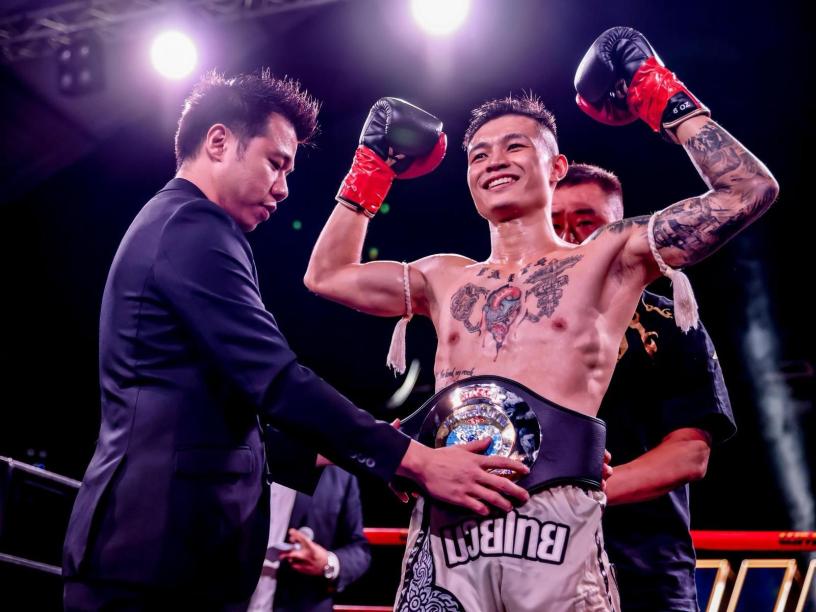
Meet De Jun, a dedicated Muay Thai coach who has proudly represented Singapore in international competitions, showcasing his skill, discipline, and passion for the sport on the global stage. With years of experience both as a competitive fighter and a mentor, he has trained countless students, helping them master the art of Muay Thai while instilling the values of perseverance and resilience.
His journey from an elite athlete to a respected coach reflects his commitment to growing the sport in Singapore, inspiring the next generation of fighters to push their limits and achieve excellence. Read this story on how he fought his way through.
What first got you interested in Muay Thai, and how did your journey begin?
I started Muay Thai because of the movie Ong Bak. Back then, it was one of the top martial arts movies, and I found it really interesting. So why Muay Thai? Before that, I was actually a track athlete. I used to run 400m and 800m events.
However, when I moved on to secondary school, my new school didn’t have track and field. Knowing that, I decided to pick up another sport. Ong Bak was still on my mind, so I decided to try Muay Thai. I searched on Google and picked the closest gym to my home. And that’s how my journey in Muay Thai began.
Did you always know you wanted to become a coach, or was there a turning point in your career that led you to coaching?
Definitely not. When I first started Muay Thai, even my parents doubted whether I would stick with it because I had a habit of starting things but giving up halfway. But when I entered Muay Thai, I told myself I wanted to be the best in this sport. That determination kept me going for such a long time.
Being a Singaporean, where education is highly valued, I never thought I would become a coach. I assumed I would follow the typical path of most athletes in Singapore—pursuing the sport as long as I could, finishing university, then retiring from it to find a corporate job. The turning point came right after completing my National Service. I wanted to continue fighting, but a traditional 9-to-5 job wouldn’t allow that.
So, I started taking on personal students, which gave me the flexibility to train. Over time, I realised that I was truly happy with what I was doing and that the income was sustainable. After talking to friends and seeing a real career progression in coaching, I finally saw myself as a coach.
What are some of the biggest challenges you’ve faced in Muay Thai, whether as a coach or a fighter?
One of the biggest challenges is staying disciplined. Being an athlete, especially at a high level, requires immense mental and physical strength. For example, when I was still a student, I represented Singapore at the SEA Games while preparing for my exams.
Leading up to the SEA Games, I had to cut 7kg, which was already tough. On top of that, I had to bring my laptop with me, complete my assignments, and study while also training for my fight.
For two months, my daily routine was intense. I slept in the gym, woke up at 6 AM, went for a morning run, trained, went to school, then returned to the gym for evening training. After that, I studied and completed my assignments. It was a non-stop cycle.
At that age—between secondary school and polytechnic—friends would often invite me out for gatherings, like hanging out at Starbucks. But I had to reject those invitations because I had bigger goals to focus on. I think one of the hardest parts was resisting the temptations that could take me away from what I needed to do.
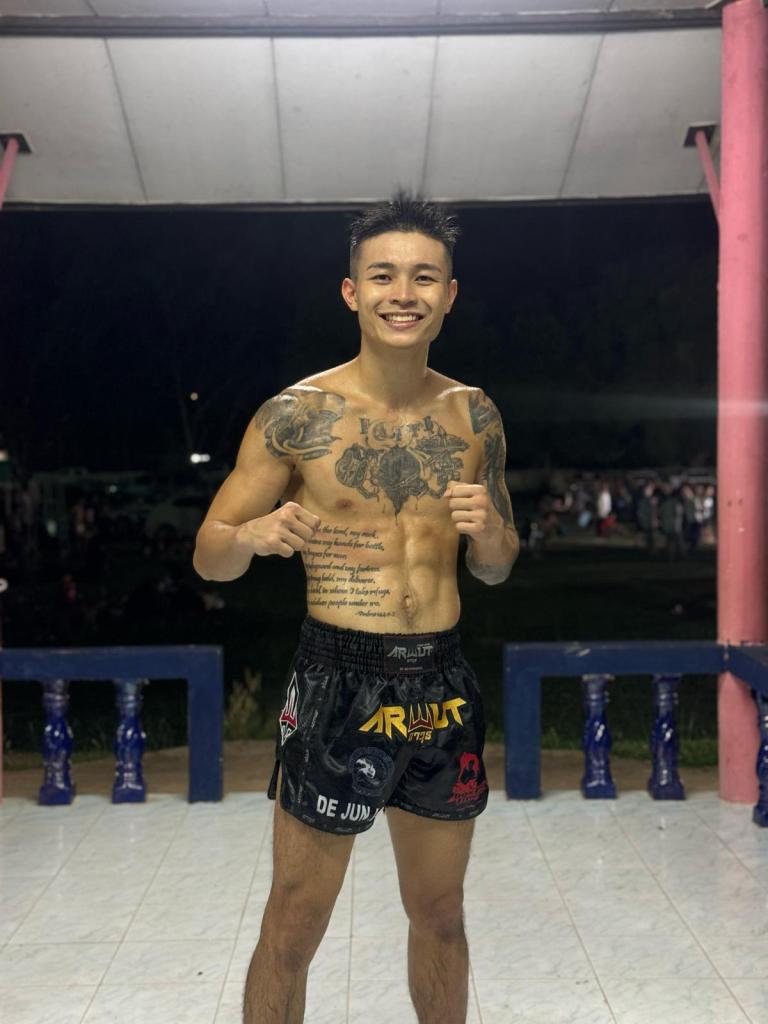
On the second day, I realised—studying isn’t as hard as this! That was the turning point. Muay Thai had built my resilience, and I decided to push through and complete my O-Levels.
Can you share a memorable fight or training experience that shaped you as a martial artist?
My most memorable fight was my first time representing Singapore. In 2016, I was selected to compete in a Korean Masters Championship. It was a big challenge because I had to move up two weight categories.
However, it turned out to be my first knockout loss—I got knocked out within the first minute. Up until then, I had won most of my fights comfortably and hadn’t faced a real tough challenge. My opponent was a well-respected Thai fighter, and he gave me my first knockout.
That experience shaped me because it made me reassess where I stood. After winning several fights and making the national team, I had become somewhat complacent. This loss humbled me and pushed me to change my mindset, restructure my training, and work harder to improve both as a fighter and as a person.
What is your coaching philosophy, and how do you help students grow both physically and mentally?
My coaching philosophy is to always understand the why behind my students’ motivation. Why are they here? What are their goals? Whenever I meet a new student, I ask them what they hope to achieve. It’s like sales—you can’t sell a product to someone who isn’t interested.
Similarly, I can’t effectively train someone who isn’t motivated. Understanding their why ensures that they themselves are clear on their goals. Once I know their motivation, I use that as a driving force to push them, both physically and mentally, throughout their training.
What advice would you give to someone just starting their Muay Thai journey?
Don’t be scared! I’ve heard this from so many people, and I felt it myself when I first stepped into a Muay Thai gym. You see people hitting the heavy bags hard, looking strong and experienced, and it can be intimidating. You might feel shy or embarrassed to be in a new environment.
But the truth is—nobody cares! Everyone is there to train and focus on their own journey. Nobody is judging you, whether you’re good or bad. So just go for it. Don’t worry about being judged. Have fun, because when you enjoy yourself, you absorb knowledge better and progress faster.
How has Muay Thai influenced your personal life and mindset?
Muay Thai has changed me tremendously. When I was younger, I was quite rebellious—getting into fights, causing trouble. When I told my mom I wanted to learn Muay Thai, she said, “Go for it.” Muay Thai helped me stay away from trouble.
My parents knew I was somewhere safe, doing something productive. It also instilled discipline in me. A key moment in my life was when I had to decide whether to continue to Sec 5 for my O-Levels or go to ITE.
My mom really wanted me to go to Sec 5, believing I could succeed if I put in the effort. At the time, I wasn’t sure. I told her I needed time to think and went to Thailand for training. That trip changed me.
On the first day, training started at 5 AM with a 10km run. After breakfast, I trained again. In the afternoon, I trained again. At night, more training. The next day, the cycle repeated. On the second day, I realised—studying isn’t as hard as this! That was the turning point. Muay Thai had built my resilience, and I decided to push through and complete my O-Levels.
Where do you see yourself and what’s your vision for Singapore in the next five years?
I see myself as a Muay Thai gym owner one day. As for Singapore Muay Thai, my vision is to see our athletes standing on the podium at the World Games. I truly believe we have what it takes to reach that level.
With the right people, the right training, and the right mindset, we can make it happen. I also hope Muay Thai gains more recognition as a mainstream sport in Singapore, like football or swimming. I genuinely believe Muay Thai will be among the top sports in the country and even in the Olympics.
Connect with Damien: TikTok and Instagram.