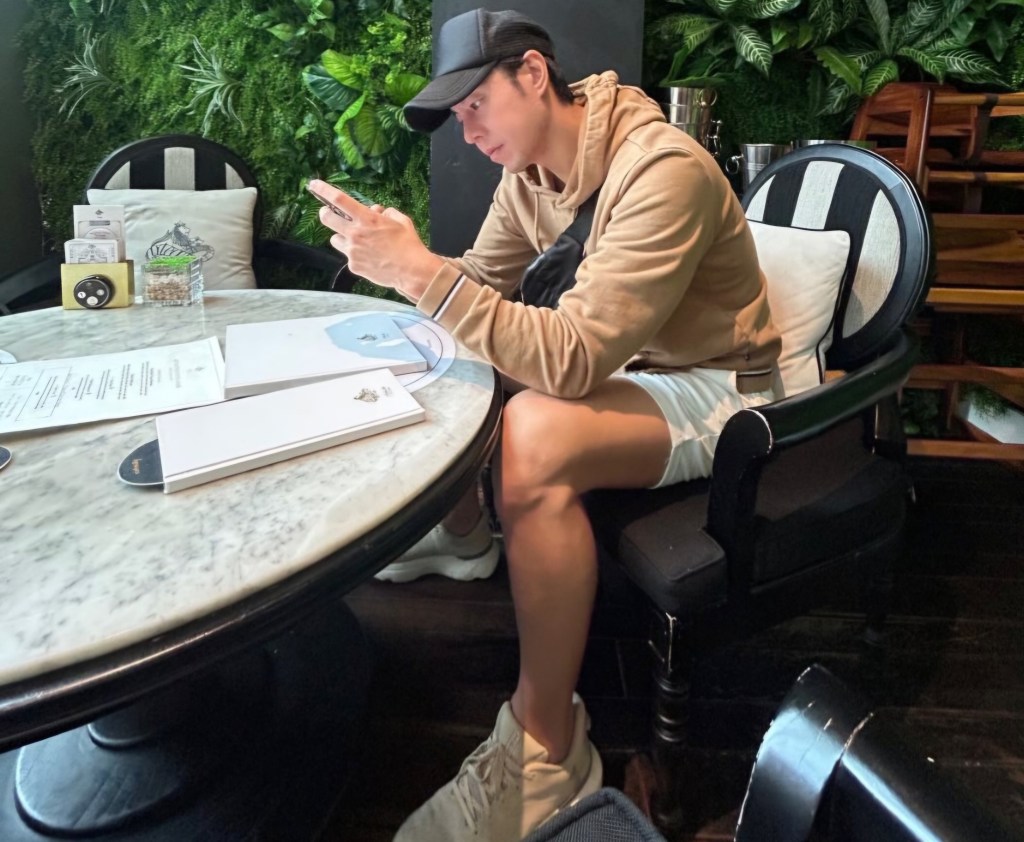
Meet Marcus, once a familiar face on Singapore’s beloved TV shows like Phua Chu Kang and Comedy Night. This former child actor has grown beyond the spotlight to carve out a successful career in the trading industry overseas.
After years of making his mark internationally, Marcus has returned to Singapore with a renewed mission: to inspire and uplift the community. Now focusing on mental well-being, positivity, and health, he hopes to leverage his unique journey to make a meaningful impact and give back to the nation that shaped him.
You were once a prominent child actor in Singapore. What was your experience like growing up in the spotlight?
I never knew or understood what fame was. I was so young. It slowly grew on me, but I didn’t like it because I had to go to school, and people looked at me differently—not just my friends, but also my seniors and even teachers. There were teachers who liked me, and yes, also those that don’t.
Everywhere I went, people on the streets would turn their heads and look at me. I also didn’t capitalise on the fame, unlike people in today’s industry who know how to extract value from their fame.
The spotlight became more stressful during my teenage years. Adolescence and puberty change your mindset. Spotlight only works if you know how to capitalise on it, treasure its value, and have someone to manage it for you. I was too young to understand any of this.
You kept a low profile overseas. What motivated you to step away from the public eye for a while?
It wasn’t just for a while—I stepped away for a really long time. At that time, the industry was so different from today. Now, with social media and the internet, people can reach global markets. Back then, we didn’t have those tools. I didn’t think I could reach my potential value in the media industry.
I had this quote that has stuck with me for a long time: “It’s not okay to be famous but poor.” If you’re famous but poor, it’s rubbish. You can be rich and famous or not famous but rich. For me, it was more important to make money. I was also too young to handle the stress and pressures of being in the spotlight.
If you’re in the spotlight, people expect you to always put on a front, always smile, and be joyous. I wasn’t the kind of person who could fake it. If I wasn’t happy, I couldn’t pretend otherwise. Back then, this wasn’t acceptable. You’d either get blacklisted or pushed out.
Things are different now; you can be raw and real on Instagram, and people accept it. Moving away from the spotlight was heartbreaking. I’ve always felt that MediaCorp never truly valued me. Singapore hasn’t given our talents real opportunities to shine. For me, stepping away felt like the right decision.
What have you been up to during your time away, and how did those years shape your perspective on life and career?
I’ve been away since I was 21. I remember leaving Singapore immediately after my national service, and the first thing I did was go to Hong Kong. I was very lucky to be mentored by a legendary businessman—a Singaporean from a very renowned family.
After my studies in London, I returned to Hong Kong briefly and explored China. It was eye-opening but nothing substantial came out of my time in China. At the age of 28, I landed in South Korea without knowing anyone. While looking for my business niche, I quickly recognised the potential in bringing foreigners into the country.
I got involved in the plastic surgery business, which is very popular in South Korea. This gave me the opportunity to become a middle person in the medical tourism industry.
This experience gave me the opportunity to grow. One thing I’ve learned is that nothing in life is easy. You will always face obstacles. The most important lesson is to choose your friends wisely because, as they say, birds of the same feathers flock together.
Even though I’ve failed in some of my business experiences or projects, I never see them as failures. Even if a certain business or vision didn’t work out the way I wanted, bringing that vision to life is still a form of success.

It’s not okay to be famous but poor. If you’re famous but poor, it’s rubbish. You can be rich and famous or not famous but rich.
Looking back on your acting career as a child, do you have any favourite moments or memories that stand out?
Back in those days, I was literally the only kid at MediaCorp (I was also with SBC, then TCS). There were no other children. There are icons like Zoe Tay, Fann Wong, and Li Nanxing. I was surrounded by them every day of my life. They had massive fan bases and were the top stars, but I was just a kid running around in the makeup room or the green room.
My favourite moments were how they treated me like one of them. It felt great because I looked up to them—I wanted to be like them one day. I remember going to award shows and seeing them win awards, thinking, “I want to get one too.” If I had to name specific memories, it would be working with Jack Neo and Mark Lee.
We had so many funny times when I was a kid, especially with Liang Xi Mei on Comedy Night. There were touching moments too. I remember times when I forgot my lines on stage, but Jack and Mark were so quick to cover for me. We would be laughing even while filming ‘live’, trying to control our laughter on set. Those were such great moments.
For Phua Chua Kang, I was older, and Gurmit Singh was always there. We had a great time, especially during rehearsals. Rehearsals were the best—they were when we laughed at ourselves, the script, or the jokes we added in. It made everything feel more natural. Those are the moments I cherish the most.
Now that you’re back in Singapore, how do you feel about the entertainment industry and the changes it has gone through since you left?
It has changed a lot. In the past, there was only one TV station, and there wasn’t cable at that time. Later, online platforms such as YouTube and Instagram emerged. They opened up a lot of new opportunities for youth and entertainers in Singapore.
But very sadly, we are such a small, targeted audience. There have been gemstones created in Singapore, like influencers on YouTube who have made millions. Kudos to them. But I wish Singapore had more because there is still so much untapped talent.
Now, with social media and these platforms, people have more avenues to express themselves, showcase their creativity, and even earn a living. In the past, fame was judged by TV ratings or the size of your fan base. Now, it’s about viewer numbers and followers. These metrics determine your value.
Do you have any plans to return to acting or focus on other ventures now?
I wouldn’t say acting because that’s more about the film industry—movies, sitcoms, and dramas. I don’t know if I’ll return to acting, but I definitely want to contribute by investing in films and scripts.
I want to find more talent and combine them with my connections to bring these individuals into projects like movies or independent films. As for being on screen, yes. I want to share my thoughts and experiences online, so you’ll see me on screen in that capacity.
My focus is on contributing. Coming back to Singapore is important to me because I want to give back. I’ve been away for 20 years, and during this time, I’ve learned a lot. Through media and speaking out, I want to inspire and make a difference in society.
Where do you see yourself and what’s your vision for Singapore in the next five years?
I’m 40 this year, and my vision is to maintain my youth and keep myself healthy. I believe Singapore should focus more on encouraging and educating people about healthier lifestyles.
In the next five years, I see myself establishing my business ventures here and participating in more events promoting positivity and mental health. I want to bring more value to Singaporeans and contribute to society. Let’s see if I can stick to my word.
I hope that in the future, we will see much more support for developing a distinct Singaporean style and culture that can be shared with the world. Singapore has done so well in terms of infrastructure—our country is beautiful. Why not showcase it through true entertainment and the talents of our people?
Connect with Marcus: Instagram, TikTok and YouTube.