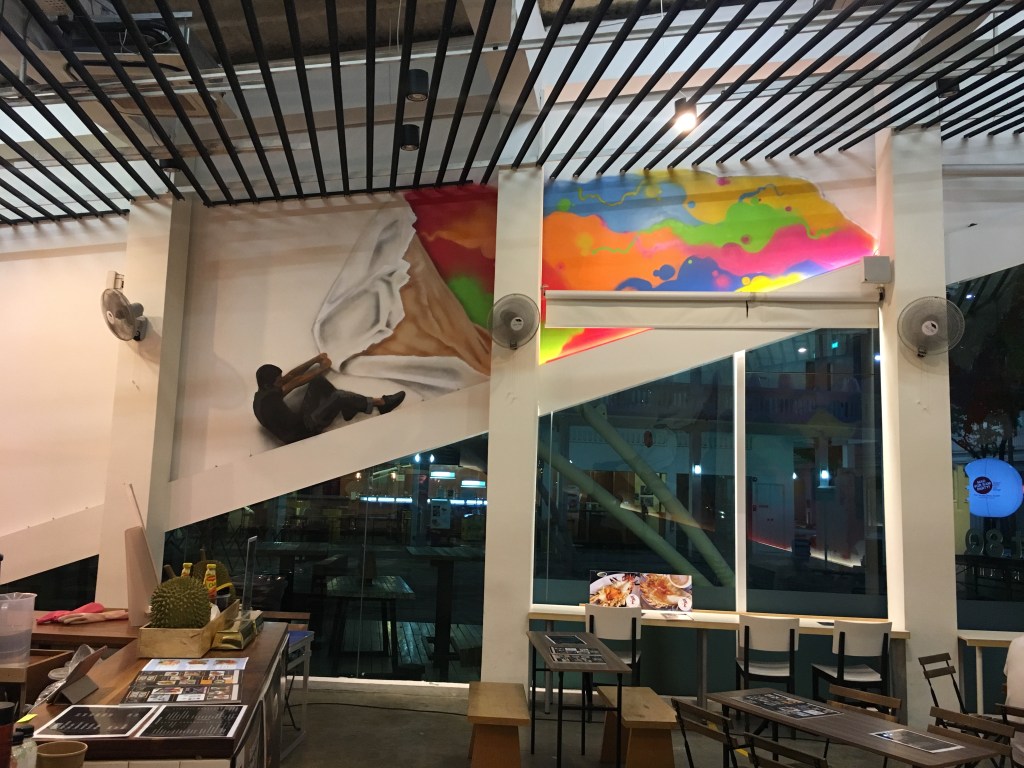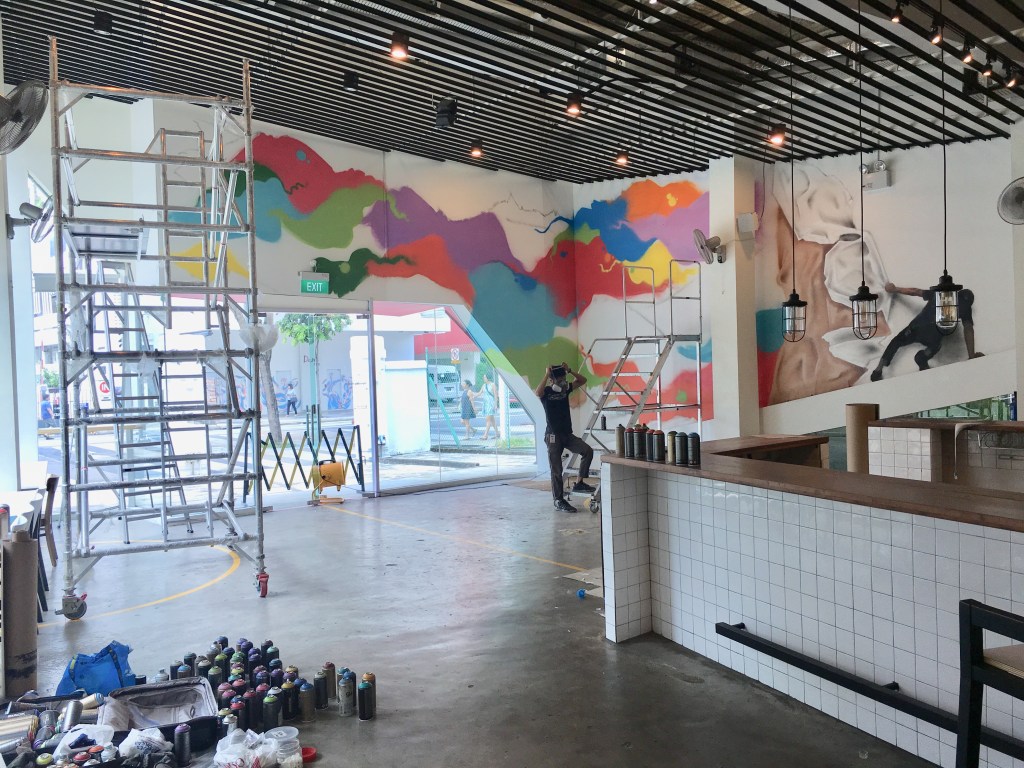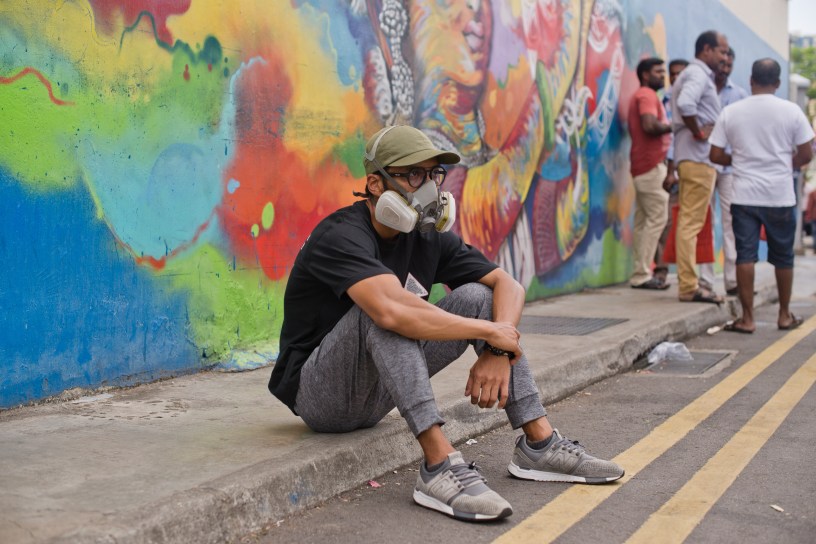
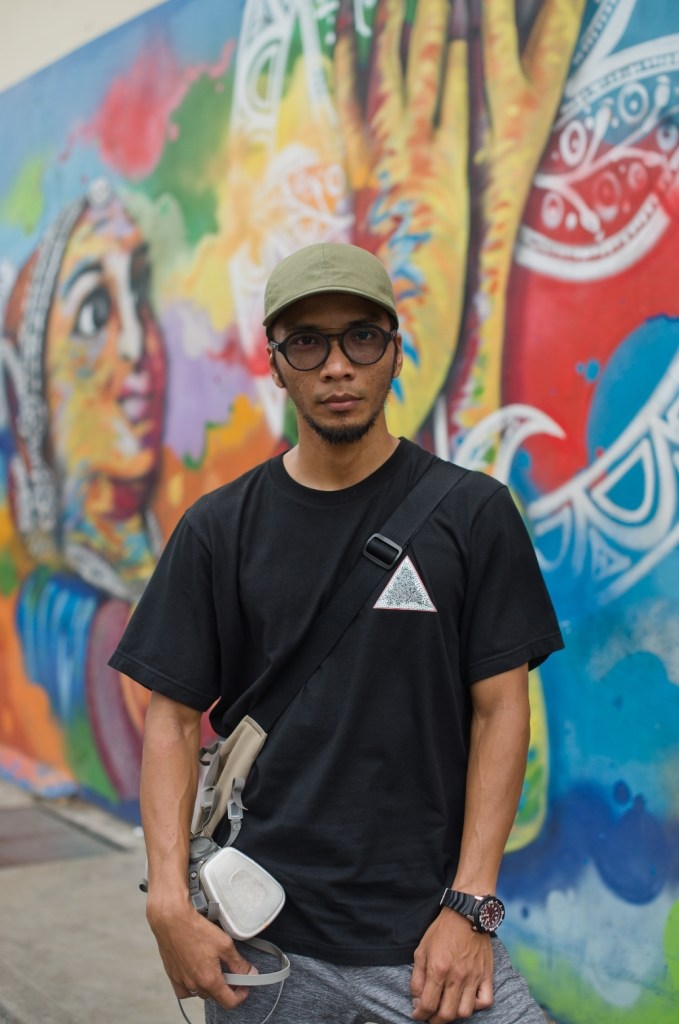
Meet Sufian, a visionary street artist whose vibrant creations have brought life and colour to the streets of Singapore. With a unique style that blends creativity, culture, and storytelling, he has completed numerous projects that captivate passersby and inspire conversations.
Whether it’s turning blank walls into masterpieces or transforming public spaces into works of art, Sufian’s passion for urban art shines through every brushstroke and spray. By redefining how we see our surroundings, he has left an indelible mark on Singapore’s cityscape and its people. Here’s his story.
What inspired you to pursue street art, and how did you get started in the scene in Singapore?
I spent most of my teenage years in the streets, trying out almost every sport with wheels—BMX, inline skating, skateboarding, mountain biking, etc. I was particularly interested in skateboarding because I liked the designs that were printed on the decks. One day, while browsing through skateboarding magazines, I saw photos of skate parks in the US plastered with graffiti all over the place and was immediately captivated.
I didn’t know they were graffiti back then. I was about 15 years old in the mid-90s. The internet wasn’t so easily accessible, so I had to rely on magazines and books in the library to find out what they were. A few years went by, and I went to a couple of hip-hop gigs at the Youth Park around 1999, where I met Scope and Xero from Operation.Art.Core, one of the pioneer graffiti crews in Singapore. These guys showed me the ropes, and everything just snowballed from there.
How would you describe your artistic style, and are there any particular themes or messages you aim to convey through your work?
I try to be versatile and adapt to different styles once in a while. I’ve got a short attention span, so I get bored pretty fast and try to find something new every few years. One particular trait that I enjoy is interacting with the environment where my painting is going to be done.
I try to make use of the elements and make my paintings “interact” with rails and pipes on the walls, for example. Themes depend on the type of canvas I’m working on. For most paintings on walls, it’s about having the work ‘interact’ with the canvas/surface. It can be purely aesthetic with no deeper meaning.
When I paint on canvas, I have a series of paintings called the “Mockumentals.” I take social commentary and inject humour into the work to make it a bit lighthearted, yet it encourages the viewer to think deeper about the issues I present.
Street art can sometimes be seen as controversial—what’s your take on the relationship between street art and traditional art?
It is controversial only if the artist makes it so. Some artists create art purely for aesthetics. They want to make the world a better place—or a better place to look at. Personally, for me, street art is a great tool to send a message. Compared to traditional art in galleries, where people have to visit to view the artworks, street art is out there in the wild, open for everyone to see. So, there’s more viewership.
How do you feel when you see your work displayed in public spaces, and how do the people who see it impact your creative process?
Honestly, I prefer the process of creating more than the finished product. Usually, when I paint on-site, there will be curious onlookers and passersby who sometimes stop to have a chat and ask about what I’m doing. I enjoy that sort of engagement, where I can explain the meaning behind the work.
There’s a two-way conversation, and I get feedback from them on how I can improve the piece or the next one. I’m rarely there once the work is completed, so I don’t know what they think of it—or if they even notice it. Singaporeans walk pretty fast and sometimes pass by things without noticing.
I do get the occasional “this is vandalism” remarks from smart alecks. When I try to engage them in conversation to explain the art form better, they just walk away or pretend they were joking. I just brush it off—they’re just noise to me.
What has been your most memorable or challenging project in your street art career?
I painted a mural for OCBC Bank at Sixth Avenue in 2012. It was a four-storey mural. I had never painted something that tall before, so I had to use a boom lift. I had a month to complete it, so I had to learn how to operate the boom lift immediately. It was challenging because the pathway in front of the wall was very narrow, and I had to park near a slope, so I had to navigate carefully.
I had quite a lot of curious onlookers asking questions and showing appreciation. I had some great conversations as well. I managed to complete the mural ahead of schedule. At that time, it was the biggest project I had worked on and somehow created a lot of exposure for my work. I started getting big projects from then on.
Have you faced any challenges or opposition while creating your art in public spaces? How do you navigate that?
Physical challenges are similar to what I mentioned earlier. Other than that, some projects can be mentally challenging due to size and concept. I’d consider collaborating with other artists if there is an opportunity.
There’s not much opposition nowadays, as society has begun to accept street art as a legitimate form of art. I do get the occasional “this is vandalism” remarks from smart alecks. When I try to engage them in conversation to explain the art form better, they just walk away or pretend they were joking. I just brush it off—they’re just noise to me.
What do you hope to achieve next in your artistic journey, and are there any new mediums or projects you’re excited to explore?
I think I want to take a more supportive role, like working on the back end and managing projects and artists. I’m not done exploring spray paint and am still discovering new ways to use it. It’s the medium I love most. Of course, I’m still open to other mediums, but I’ll try to fuse them with spray cans.
I’m collaborating with some artists for a projection mapping artwork, and I’m super excited to see how it’ll turn out. It’s my first time incorporating such technology into my work. I also get to try managing artists, as this time I’m collaborating with 10 artists to produce the work. Whatever the outcome, I take it as a new learning curve for me.
Where do you see yourself, and what’s your vision for Singapore in the next five years?
In the next five years, I’ll be half a century young. I’d like to see the next generation of street artists stepping up. Hopefully, there’ll be more opportunities to paint incredible pieces on the streets. We already have magnificent infrastructure, where old and modern buildings coexist. I’d love to see some art weaving around and enhancing these places.
Connect with Sufian: Instagram.