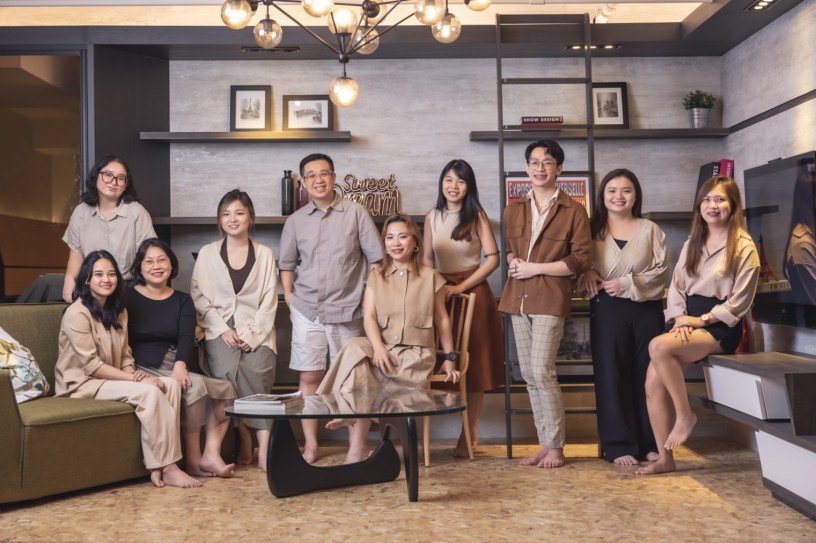
Meet Eric, from crafting cutting-edge software to making smart property investments, he has always embraced new opportunities. Now, alongside his wife, Eric has embarked on an exciting journey as the co-founder of an interior design company Space Factor.
Combining his analytical skills from software development, his strategic mindset from real estate, and their shared passion for design, the duo creates bespoke interiors that balance elegance and functionality. Together, they are transforming spaces and redefining the meaning of home for their clients.
What motivated your transition from software development to property investment and eventually to start your own interior design company?
I think basically, for me, the reason to start this company was that, while doing property investment, I needed to travel a lot. Most of the time, I was only in Singapore for a few days. To balance my marriage and personal life, I realised it wasn’t ideal.
My wife and I thought about what we could do. Since my wife has been in this field for many years, we decided to start something based on her interest. That’s how we started. Initially, we had a small workshop in just a few units downstairs. Over time, we started to grow. The main idea was to reduce my travel obligations and balance my personal and work life. That was the initial thought behind starting this business.
How did your background in software development and property investment shape your approach to running an interior design business?
What I bring to the table is structure. It may sound a bit oxymoronic because creativity often doesn’t align with structure, but it’s essential. I provide the designers with a framework where they can be creative while staying organised.
One common issue with creative people is a lack of organisation, which can be a challenge, especially in residential interior design. We deal with clients directly, and they often want predictability—they want to know what’s next at each stage of the process. I’ve introduced structure in how we handle design, projects, and handovers, ensuring we meet clients’ expectations effectively.
What were the biggest challenges you faced in the early years of your interior design company, and how did you overcome them?
In the early days, transitioning from investments to interior design required a mindset shift. The way I looked at money was completely different. In investments, $1,000 might not seem like a lot, but in interior design, $1,000 means a great deal, especially when costs multiply, such as per square foot calculations.
My biggest challenge was adjusting my perception of money, profits, and revenue. It took time, but once I aligned my mindset with the industry’s dynamics, things became clearer.
How do you and your wife balance your roles in the business, and what strengths do each of you bring to the company?
My wife and I have very clear roles. I handle operations, finance, and administration, while she manages the design aspects. I don’t interfere with design decisions because that’s her area of expertise.
With my corporate experience in software development and investments, I focus on structuring the company and implementing systems. We often joke with our staff that we don’t quarrel; we just have high-volume discussions.

I encourage them to make decisions, whether right or wrong, and to come to me with both problems and proposed solutions. This approach helps us brainstorm and grow.
What do you think contributed most to the company’s success of reaching $25 million in revenue?
At the core, we believe in being faithful with the little things. Many of our clients come through referrals, and some come back to us because we’ve helped them with small tasks, like fixing a tap. Taking on small jobs has led to big opportunities.
By consistently doing the small things well, the bigger things follow. This philosophy is something we instill in our designers too.
How do you stay ahead of design trends and ensure the business continues to grow and prosper?
We stay updated by attending exhibitions and exploring online resources. However, the most important factor is the company’s culture. I tell my team that it’s OK to make mistakes as long as they are worth making.
By that, I mean learning from mistakes and moving forward. I encourage them to make decisions, whether right or wrong, and to come to me with both problems and proposed solutions. This approach helps us brainstorm and grow.
By fostering this culture, I’m also preparing the next generation to take over the business. Eventually, both my wife and I plan to step back and let the younger team take the lead.
What advice would you give to aspiring entrepreneurs looking to pivot into a completely different industry?
First, you need to completely relearn. While past experiences can be useful tools for decision-making, you must be willing to unlearn and relearn everything about the new industry.
Combining your previous experience with new knowledge allows you to bring a fresh perspective to the table. This can be your biggest advantage, even if others see your lack of experience as a drawback.
Where do you see yourself and what’s your vision for Singapore in the next five years?
For myself, my goal is to step back and allow the next generation to take over. My wife and I don’t have children, so our team, with an average age of 25-26, will carry the business forward. They’ve known this from the first day they joined us.
For the interior design industry, especially residential, I believe clients will become more sophisticated. Service providers will need to upgrade continuously. I also emphasise that all interior designers in my company must be trained professionals, not just salespeople posing as designers.
Clients deserve proper design concepts and proposals, not just sales pitches. Globally, the trend has shifted. While people used to prioritise the Milan fair, many Europeans now come to the Shanghai fair. The money is increasingly concentrated in Asia, and this region holds significant opportunities.
Connect with Eric: SpaceFactor, Instagram and YouTube.


