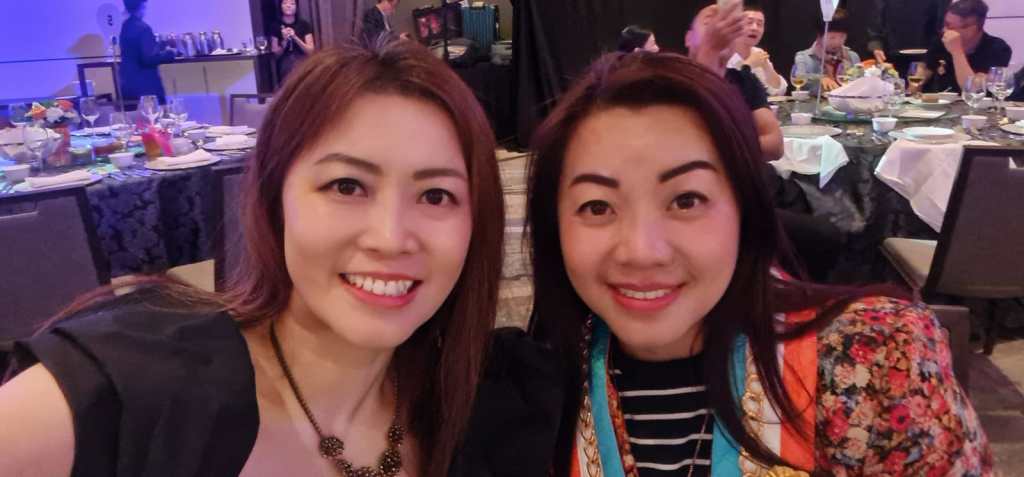
Meet the dynamic sister duo Elaine and Cheryl behind San Cheng, the restaurant chain that has taken Singapore by storm with their authentic Ipoh hor fun. With a passion for preserving family recipes and a drive to bring traditional flavours to the masses, these sisters have sold over 1.1 million bowls to date.
Their dedication to quality, consistency, and the rich culinary heritage of Ipoh has made San Cheng a household name, delighting taste buds across the island and setting a new standard for hawker-style cuisine in Singapore. Here’s their story.
What inspired both of you to start San Cheng focused on selling Ipoh food and why did you choose to focus on hor fun as your signature dish?
When we came to Singapore, we didn’t initially plan to start the F&B business. We came here for work around 2000. While working, we sometimes missed our hometown food. Back in 2000, there wasn’t much Ipoh food in Singapore, so we would cook at home. Sometimes, we shared the food with friends, and they told us the food was good.
Our friends encouraged us to start a business. We also considered our family background—our mother had been a noodle seller in Ipoh for over 30 years and we often helped her with cooking the soup bases and sauces. We learned how to cook through those experiences.
Encouraged by their feedback, we decided to start our first outlet in Singapore in 2010. Our first outlet was at Clarke Quay Central. Hor fun is a signature dish in Ipoh, and it’s well-known and undeniable as a staple there. We had the recipe and knew how to bring authentic Ipoh hor fun to Singapore. We decided to introduce it here so everyone could try it.
Selling over 1.1 million bowls of hor fun is an incredible feat, and it was recorded in the Singapore Book of Records. What do you think makes your hor fun stand out from others in the market?
The one million bowls we sold accumulated over 13 years, from 2011 until today. Currently, we have four outlets in Singapore. The specialty of our hor fun lies in the noodles, which are directly imported from Ipoh. The hor fun from Ipoh is unique because of the water source.
Ipoh is surrounded by mountains, and it’s often referred to as “Mountain City.” The water from Ipoh is rich in minerals, which makes the hor fun silky and smooth—different from the local varieties in Singapore.
We combine these noodles with our mother’s secret recipe, which she has perfected over 30 years. Our soup base is made from chicken broth and prawn broth, giving the dish a distinctive and authentic taste. This hor fun soup is our best-selling item across all our outlets.
As sisters and business partners, how do you divide responsibilities in running the business, and what strengths do each of you bring to the table?
Each of us brings different strengths to the business. Elaine is in charge of marketing and business development. She has a marketing background and is able to communicate effectively with diverse audiences. She can tailor her communication style to different people.
Her interpersonal skills help build strong relationships and ensure clear, concise exchanges, which is a key factor in achieving business objectives. She worked in an MNC logistics firm, so she is familiar with import and export arrangements from Ipoh to Singapore.
I manage the kitchen operations, recipe SOPs, and staff training. Additionally, I handle HR, front-line operations, and daily management. We divide the responsibilities to ensure smooth operations.

We want customers to feel that when they come to San Cheng restaurant and try the Ipoh food, they are experiencing food just like in Ipoh.
What were some of the biggest challenges you faced when growing the business, and how did you overcome them together?
One of the biggest challenges we faced was transitioning from an office environment to the F&B industry. Previously, we worked five days a week, but now it’s seven days with long hours. When we started, we had no customer base. We had to build everything from scratch—sourcing suppliers, purchasing ingredients, and marketing.
Initially, we even bought ingredients from the market ourselves. Location was also a challenge. Our first outlet at Clarke Quay Central was tucked away in a corner. Fortunately, Gong Cha was next to our unit, and during their peak, customers would queue for bubble tea. While queuing, they noticed our store and started trying our food. This slowly built our customer base.
Over time, competition increased, with many new F&B brands entering the market. We faced challenges adapting to sudden changes in the industry and managing manpower issues. Despite this, we focused on maintaining authenticity and retaining our regular customers.
Challenges like COVID-19 were beyond our control, but we managed by adapting and staying true to our roots. Maintaining the quality and authenticity of our food has been key to overcoming difficulties and growing the business.
How do you manage disagreements or differences in vision while keeping the business thriving?
Of course, to manage a business regardless of running it with family or friends, there will be arguments or disagreements. This cannot be denied. Most of the time, we also have arguments. But it’s good that every time we have an argument, we speak up and tell each other. It’s good that both of us listen to each other.
We digest and think about why a point was brought up. In the end, we sit down and compromise. After consideration, we will use those useful points for the good of the company. We will take each other’s input and see how to move forward. Arguments help us understand each other’s thoughts, and by speaking out, we know each other better, which is also good for the business.
The F&B industry is competitive. How do you keep innovating and ensuring your brand stays relevant and appealing to customers?
The F&B industry in Singapore is very competitive. No matter what, we must know our positioning and core values. We must understand what we are doing so that we can create more offerings for customers. On and off, we launch new menus to introduce famous dishes to customers.
Sometimes, we launch menus based on market preferences and trends—what is popular with customers. The F&B market is vast, and while we cannot conquer the whole market, we must know our target customers.
Even after 13 years, we still maintain authenticity, providing high-quality and valuable food to customers. We want to bring authentic food to customers with good quality and good customer service. We want customers to feel that when they come to San Cheng restaurant and try the Ipoh food, they are experiencing food just like in Ipoh.
What are your future plans for San Cheng, and how do you see new opportunities to expand beyond Singapore?
In 2025, we are planning to expand by opening more outlets, such as classic outlets in Singapore. We may also introduce a new concept called “express” outlets, which will feature selected signature items from San Cheng. This express concept will likely focus on halal food. We hope to target a broader customer base, including our Muslim friends.
This concept will allow us to reach more people and introduce important, authentic food to more communities. In the coming years, we are also considering franchising opportunities. If the opportunity arises, we hope to expand our brand overseas to nearby countries such as Indonesia, China, and more.
Where do you see yourself in the next five years?
In the next five years, we hope to get closer to achieving our vision. Of course, once in a while, we need to rest. But after resting, we continue to push forward. We hope to have more leisure time, to travel anywhere, and to spend more time with our families.
We hope to eventually reach a point where we can take breaks from the business for two to three months without worry because our team would have grown. If the business does well, we can also enjoy our lives more.
Connect with Elaine and Cheryl: SanCheng