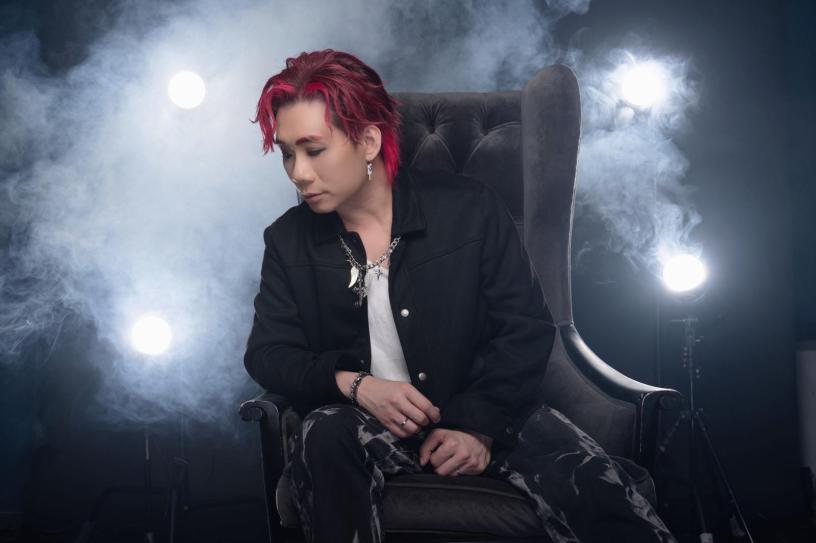
Meet Aaron Xiang Hua, who is a dynamic and versatile artiste, seamlessly blending his talents as a singer-songwriter and dancer in Singapore’s entertainment scene. With a career that began at just 12 years old, Aaron has not only dazzled audiences as a professional dancer but has also taken on roles as a choreographer, dance instructor, and stage director for high-profile events like Singapore’s National Day and Thailand’s Songkran Festival.
His artistry has graced the stages of Marina Bay Sands, Resorts World Sentosa, and Mediacorp, solidifying his reputation as a multi-disciplinary performer with a flair for captivating audiences. His success did not come easy. Read Aaron’s story to learn more about his journey.
What inspired you to transit from dance to singing, and how did that shift influence your creative process?
I started with line dancing, and I kind of liked it. It was my first time moving my body, my first time listening to music. It was like, wow—this is how it all began, which is pretty cool. Now, this is the sad part. It was in the news. I became a choreographer, and did stage directing for a lot of concerts. But I think it was around 2016—if I remember correctly—when one of my dancers told me something.
He said, “Why does everything you do look familiar or similar?” At first, I didn’t get it. I mean, I choreographed based on the songs, so I didn’t understand. But as time went by, I sat down, watched them dance, and realised something was wrong. That’s when I knew I had lost my creativity.
I told myself I needed to find a way to get my creativity and inspiration back. I sat down and reflected on how I started. I remembered I had two paths—one was dancing, and the other was singing. Because of that perspective, I started to go back to singing. I got my friends—who are now my mentors—and told them I wanted to start singing again. I needed to retrain my vocals and everything. So I said, “OK, let’s start.” That’s how I began my singing journey.
Your songs have been featured as sub-themes in TV series and dramas. How does it feel to see your music reach such a wide audience?
That’s good though. I went to Taiwan and I actually met a producer for big variety shows in Taiwan. We had a chat, and I told him, “OK, this is my demo, this is my CV”. When he listened to my song, he actually closed my laptop within two or three seconds.
Then he said, “Aaron, you should stop all your dancing. You need to focus on one thing—just singing.” It was a turning point for me because I wanted to start this career. Eventually, I came back to Singapore. That’s when I started, and released a total of four songs. Three songs were eventually selected by Malaysian and Singaporean drama series.
Honestly, I never thought that would happen. When I was watching the drama series and heard my songs and saw my name, I honestly felt very proud because it’s from Singapore. As time went by, I started thinking, “OK, I think it’s time for me to write my own songs.” That’s why all my songs reflect life stories.

I would say it’s tough because I remember that before COVID, for 10 years, I slept for three hours every day just to do everything.
How do you balance the different aspects of your career, from choreography and stage directing to songwriting as well as performing?
That’s a difficult question. I would say it’s tough because I remember that before COVID, for 10 years, I slept for three hours every day just to do everything. It felt like I had so much on my plate, and I had to finish it all. It was very tiring, but because of passion—because I love the arts—I stuck with it.
But of course, COVID changed everything. I’m still doing stage directing and dance choreography if needed. But most of the time, I focus on releasing songs—writing as many songs as possible, trying to find the right one for the audience.
Can you share the creative process behind the album Mevolution and what that represents for you as an artist?
Before Mevolution, I had three songs—two of them were dramatic. But Mevolution was a turning point as a songwriter. Why? I decided to write about real life. Reminisce in this album was one of those songs. I reflected on what happened in my life—how I got through secondary school and everything else. That’s why all my songs tell different real-life stories. If people read the lyrics, they’ll understand. That’s why I called it Mevolution. It’s like me, but evolving.
What was the most memorable part of collaborating with an Iranian artist for the album Confluence?
He’s a very talented rapper. I told him, “Why don’t we collaborate? It can be a Singaporean and an overseas artist working together.” That’s how it started. I would say it felt different because he has his own catalogs and unique writing styles. Musicians are different everywhere. I was quite surprised by how he wrote his songs.
When he heard my songs, he loved them, and he could immediately write rap lyrics for them. You can’t compare it to R&B or anything else—it’s something entirely unique. That’s why I enjoyed collaborating with him. I love surprises, and working with him brought something new to the table.
I only collaborated with him on two songs—Cactus Love and Fine Line. It’s a process—you write, compose, arrange, and send it out. I suggested he rap instead of just having me sing. I felt he should be part of the track. When he rapped, the whole song transformed. I was really surprised. It turned out great.
Looking ahead, what are your future goals in both music and dance?
After COVID, there have been big changes. Honestly, I feel like the entertainment industry hasn’t fully picked up yet. But I believe one day it will. For now, I’m focusing on songwriting because that’s my goal and career.
As for dance, I’ll continue if needed. I also plan to integrate dance into my music videos. I believe every song should have dance because movement tells a different story. Dance conveys emotions—each movement has its own vibe. I want to bring that into my music.
Where do you see yourself and what’s your vision for Singapore in the next five years?
Sometimes, I visit Taiwan to see my friends. One of my goals is to collaborate with artists there. I want to expand globally, which is why I’m working with international publishers. In five years’ time, I hope my songs will be recognised internationally. I’ll keep pushing for it. If I get the chance to train or work with international artists, I’ll definitely take it.
In the next five years, I believe entertainment will grow. I hope to see more Singaporean songwriters stepping forward and going international. There’s a lot of talent here, but for some reason, there’s a barrier. I don’t know why—maybe it’s cultural—but I believe things will improve. I’m striving for that.
Connect with Aaron Xiang Hua: AaronXiangHua, Instagram and TikTok.

