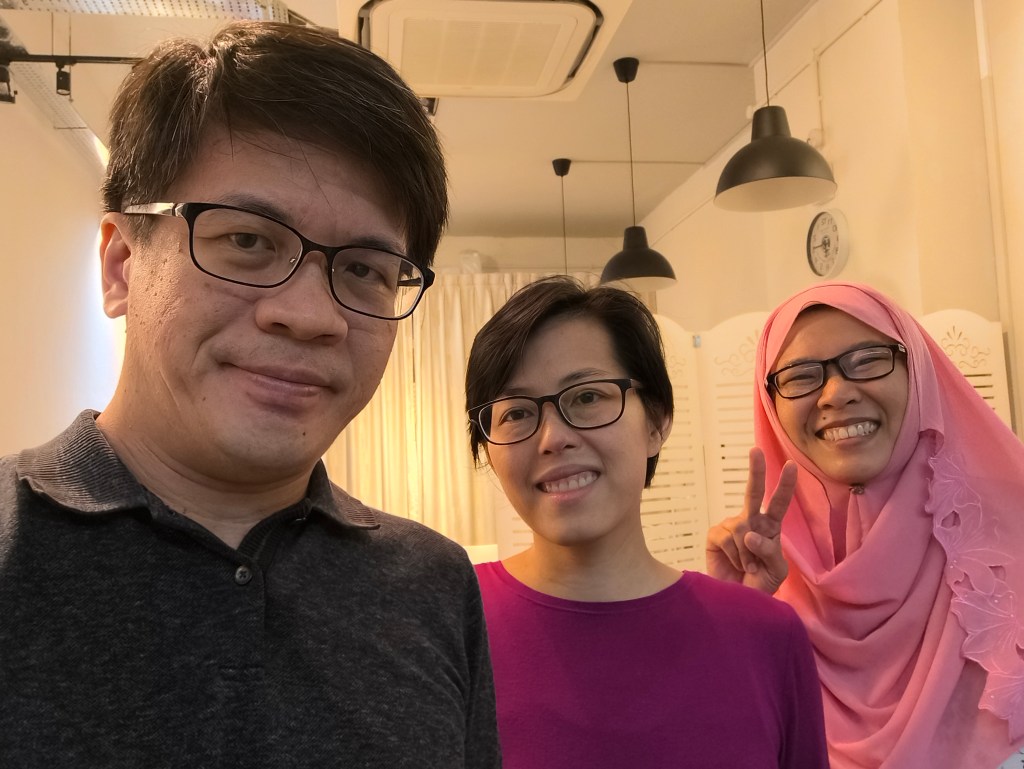
Meet Jimmy, a dynamic entrepreneur navigating the intersections of finance and insurance. As the co-founder of a company specialising in traded endowment insurance policies, Jimmy helps clients maximise returns on pre-owned policies. His business also operates as a trusted affiliate for maid and car insurance, providing comprehensive coverage solutions tailored to individual needs.
A part-time trader with a keen eye for market trends, Jimmy uses his expertise to grow his personal investments while balancing his entrepreneurial ventures. How did he get started? Read his story to learn more.
What inspired you to venture into the financial services industry and how did you develop expertise in areas such as trading and insurance?
Straight after I finished my degree, I worked as a software specialist for about 8 years before I transitioned into entrepreneurship in 2019. What happened was, a friend of mine who was in the financial advisory industry wanted to start a company dealing with the trading of endowment policies.
After conducting research for about a year, he concluded that the business was viable. So, back in 2019, he started the business by roping me and another friend. The three of us formed PolicyWoke Private Limited. I come from a technology background, so when I joined PolicyWoke as the technology lead, I was mainly in charge of building and maintaining the website and managing the social media channels.
Over the past five years, my friend has been training me on how the trading of endowment policies works. Through him, I learned pretty much all of it, and that’s how I became interested in this part of the financial space.
As for trading, I am also a part-time forex trader. For those familiar with trading, I’m more of a swing trader, meaning I enter a position and hold it overnight, sometimes for days or up to two weeks. I call myself a part-time trader because I only monitor the markets for about 15 to 30 minutes per trading day. It’s not really long for a trade. That’s how I got into trading.
How do you balance offering such a diverse range of services, from trading endowment policies to maid and car insurance?
I’ll answer the second part of the question first. Early last year, we pivoted towards other areas, such as business consultancy and affiliate marketing for financial services. Affiliate marketing involves platforms like SingSaver. Some of you may know SingSaver as a one-stop personal finance platform that offers financial products and services with sign-up rewards.
Our company signed up as a collaborator, helping SingSaver promote financial services such as medical and car insurance. We receive a commission for every customer who signs up through our promotional links.
Because of this pivot, we have largely stopped purchasing endowment policies. However, we still have a list of remaining policies for resale, which are listed on our website.
What are some of the key financial trends you have observed recently that clients should be aware of?
In recent years, particularly since late 2023, there has been increasing interest in Web3 finance, also known as DeFi (decentralised finance). Customers familiar with the Web3 or blockchain space participate in various ways of making money, such as staking stablecoins or cryptocurrencies.
Another trend is GameFi, short for gaming finance, where customers play games and earn virtual or additional asset rewards. This trend has grown significantly over the past year. Clients should be aware of these opportunities and assess whether they are suitable to enter the Web3 space. However, they must seek advice from financial professionals before diving in to ensure it aligns with their financial goals and risk appetite.

I believe in “giver’s gain.” As part of building strong relationships, we try to provide value first—not necessarily through our own company services but through our collaborators’ services, like our network of financial advisors.
How do traded endowment policies benefit your clients, and what advice do you give to someone considering this option?
Traded endowment policies give investors the opportunity to buy into low-risk financial products with shorter terms to maturity—typically five, seven, or nine years—and earn returns upon maturity. Investors who buy traded endowment policies generally fall into two categories.
The first category includes those who believe they have a limited time horizon, such as around nine years, and are seeking low-risk ways to invest. The second category comprises more risk-averse investors who prefer low-risk instruments like fixed deposits, Singapore Savings Bonds, or traded endowment policies.
Since we are strictly brokers, local regulations prohibit us from providing financial advice. Investors interested in traded endowment policies must take the initiative to express their interest. We then present them with a list of policies available on our website, and they decide whether to purchase any of them.
What strategies do you use to build trust and long-term relationships with clients in such a competitive industry?
Yes, it’s true that the traded endowment policy space is competitive. I believe there are at least 6-7 other players in Singapore. For us as a business, if we meet someone for the first time, it’s important to build a strong foundational relationship with them.
That includes trying to understand their background, including their financial background, and identifying any financial gaps they may have. Of course, similar to previous questions, we cannot give financial advice. However, as part of our value-added services, we have a network of financial advisors that our customers can potentially contact.
I believe in “giver’s gain”. As part of building strong relationships, we try to provide value first—not necessarily through our own company services but through our collaborators’ services, like our network of financial advisors. This adds real value for our customers. By giving value, we ensure that potential customers keep our company in mind in case they need our services in the future.
What are your future plans for expanding your services?
Honestly, even though we pivoted to business consultancy and affiliate marketing, it is still a competitive field. One reason we pivoted is that today we are in a world with the rise of the Web3 space, and more regulated companies are coming to Singapore to offer a variety of financial products and services.
There are one or two specific companies that offer low-risk products that are highly competitive compared to traded endowment policies. We foresee even more players entering Singapore to offer both high-risk and low-risk financial products. Due to this, we decided to pivot into the current space.
Moving forward, we are looking to expand our network, make new connections with other professionals, and hopefully increase our volume of business consultancy and affiliate marketing sales. That is our direction for the future. We also collaborate with an academy that teaches students how to trade financial instruments like options, forex, CFDs, and others.
They have been in the education space for 14 years, since 2010. The master trainer is Thomas Saw, someone well-known in the trading community as a prominent options trader. I have been maintaining his website and sharing information about his upcoming trading-related events.
Where do you see yourself, and what’s your vision for Singapore in the next 5 years?
Moving forward, the next five years will be a crucial time in my life. I have a rare personal side hustle opportunity due to my five years of experience as an entrepreneur. I have a friend whose father is a top distributor for a direct selling business in Singapore that has been running for more than 50 years.
However, about nine years ago, her father was in a car accident and has been bedridden since. Because of his condition, his daughter—my friend—took over the business. Unfortunately, while she knows the product, she lacks business experience. She called me to join her, and I am now providing business advisory services. It could potentially provide me with a lifetime royalty income. I’m looking forward to seeing how this develops over the next few years.
On a broader scale, I feel that depending on the sector, some businesses may face challenging times over the next five years. From what I see with my customers and friends who are business owners, rising operational costs—like rent and utilities—are forcing them to pass these expenses on to customers.
Many are concerned that they won’t generate enough sales to cover the increasing costs. I believe that while some businesses may struggle, I genuinely hope they survive. It pains me to see businesses close down, and I do wish for all businesses to prosper over the next five years.
Connect with Jimmy: PolicyWoke and LinkedIn.