
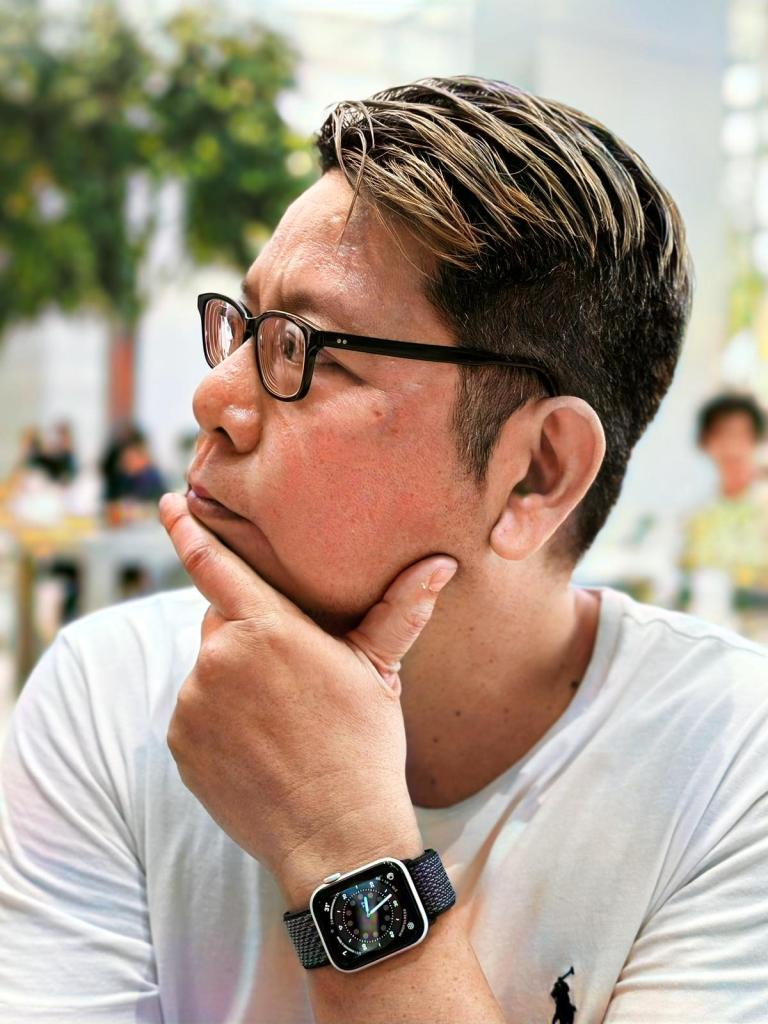
Meet Louis, an entrepreneur and business consultant dedicated to helping Singapore companies expand and thrive in international markets. With extensive experience in global business development, he provides strategic guidance and practical solutions to support SMEs in navigating the complexities of overseas expansion.
From market entry strategies to operational scaling, Louis empowers businesses to seize new opportunities, drive growth, and establish a strong presence beyond Singapore’s borders. Here’s his story on how he got started on this journey.
What inspired you to start a business consultancy focused on helping Singapore companies expand overseas?
I have worked in MNCs for twenty-odd years, and expanding our business seemed like a breeze, with the brands in demand internationally. Naturally, I thought any company, big or small, with a unique value proposition (UVP) should be able to do well internationally.
I was so wrong. My last job was a director for a local SME. It was quite a shock to see the company struggling to achieve growth even post-COVID. The company had resources but there was a huge reluctance to go overseas, mainly due to a lack of confidence and ability to venture out.
I realised that this mindset is not exclusive to my company. As the name suggests, local consultancy companies are only interested in consultancy work. They were not able to support their clients in the execution. In my past jobs, I established many contacts in IMEA (India, the Middle East, and Asia), some of whom have become great friends.
I think there is a gap I can fill with their support by making it easier for companies to venture out of their home countries. This was how Capstone Consultancy was formed – to bring companies out of their home countries into the countries where my team is based, namely Vietnam, Cambodia, India, Malaysia, and Singapore.
What are some key challenges Singapore businesses face when venturing into international markets, and how do you address them?
Singapore companies are used to having an efficient system, from setting up a company with ACRA to getting the lease of their premises. Vendors for their supplies are also readily available, with many options. The first challenge is always convincing the owners that venturing overseas can be successful if the right model is found.
Of course, there will be red tape, bureaucracy, and cultural and language differences. But the potential is enormous compared to our little island. It is impossible to expect profit year-on-year as costs and competition are very high in Singapore. Once the owners are convinced that their business future is overseas, the next challenge is to deep-dive into their business model and develop one that is viable for the targeted overseas market.
As my clients come from various backgrounds – from health and beauty to F&B and education – I must understand their readiness level and guide them toward the right model. This includes developing SOPs, training manuals, marketing plans, etc. The time taken varies, and I always advise clients to be fully ready before venturing overseas. This is especially important if the company needs to partner with an overseas company (which is mostly the case) for franchising or distribution.
Can you share a success story of a company you helped expand overseas and what made it stand out?
I was, and still am, working with a cosmetic and make-up company from Singapore. It mainly has digital assets, and the lady boss is keen to expand overseas, although not aggressively, as she was not keen to travel. I initially thought there would be limited opportunities due to the overall situation.
However, the team created different options for her in the Vietnamese market by constantly visiting Vietnam and talking to potential partners. These options range from licensing her digital assets to beauty salons to having a local partner jointly set up an academy under her brand to train potential skincare and make-up artists.
How do you identify the right overseas markets for your clients, and what strategies do you use to ensure a smooth entry?
My first step is to understand my clients’ business models and UVPs. Then, I will discuss the various options with them (some are not open to being flexible when it comes to franchising; there is no right or wrong answer here). Once I have a clear understanding, I will meet with my associates, usually from Vietnam or India, who will arrange for me to meet industry contacts.
Afterward, I return to discuss the findings further with my clients. Additional calls and meetings are conducted online. These weekly discussions continue until we are confident about the market entry strategy, which is crucial if it is the client’s first time venturing overseas.
However, do not keep researching, which will lead to analysis paralysis. You have just got to take the plunge eventually if you do not want your business to stay stagnant. Remember that your competitors are not staying still.
What roles do cultural differences and local business practices play in your consultancy work?
These are extremely important, as you do not want to offend the locals with ignorance. I had to give up a project to explore importing fresh vegetables and fruits from a cooperative in India to another country (better not name) as a cartel controlled the industry.
Before this, I had known of cases where mishaps happened to individuals who tried to break these unspoken rules in the more traditional sectors. The good news is that the internet makes us more open to cultural differences. And I’m thrilled to be in Asia, as most cultures are friendly and polite.
How do you stay updated with global market trends to provide the best advice to your clients?
I don’t particularly attempt to stay updated. I do read the news online when I have the time. But most of the time, I get an idea of what’s happening in a particular market when I have weekly meetings with my associates. The best way is to spend time in each country to understand trending developments.
What unique value does your consultancy offer compared to others in the same field?
As explained, most consultancy firms are happy to earn money through consulting from government grants like EDG and MRA. They will be satisfied if an overseas enquiry results in a deal and they get their commission. This generally excludes the smaller players, as their work is expensive even after the grants, and there is no guarantee they can find a partner.
We tend to do it differently. Our consultation work is much cheaper, and we allocate more in the commission portion as we are committed to executing clients’ models in the foreign country of choice. We are directly involved in looking for partners, and I travel to some of the countries quarterly, spending up to two weeks each time. In our approach, we have a better model to find the best route-to-market and partner(s) for our clients.
What advice would you give entrepreneurs looking to take their businesses international for the first time?
Trade associations and companies like ours, which genuinely want companies to succeed overseas, always offer help. However, do not keep researching, which will lead to analysis paralysis. You have just got to take the plunge eventually if you do not want your business to stay stagnant. Remember that your competitors are not staying still. They are also finding ways and means to see growth for their business.
What are your plans for growing your consultancy business?
My team currently comprises my trusted friends and associates based overseas. We are focused mainly on SEA and India, which will be the models for our next steps in the Middle East and Africa. I need to share this with friends we can work with. For countries where we do not have associates, we will need to find good and trusted partners when the opportunity arises.
Where do you see yourself, and what’s your vision for Singapore in the next five years?
I see myself relocating overseas with my family to one of the Asian cities. There are limited opportunities for work and business in Singapore, and I always say the future of Singapore’s business is in the overseas market. Singapore companies are more adventurous nowadays. It could be due to grants like MRA and CCP, or they may have realised that it is too tough to fight on local turf.
I hope the government will continue to support and incentivise companies to venture overseas in the next five years. Today, there is Enterprise Singapore and various trade associations. I hope they can proceed with market experts rather than desktop experts/software to give run-of-the-mill replies and guides. They should be more entrepreneurial (if I’m not asking too much) and help Singapore companies more in terms of execution and support.
Connect with Louis: Capstone Consultancy and LinkedIn.

Brilliant is the word to define Louis
LikeLike
Louis is an excellent consultant. He would understand your requirements and fully guide and support. Happy to work with you Louis.
LikeLike