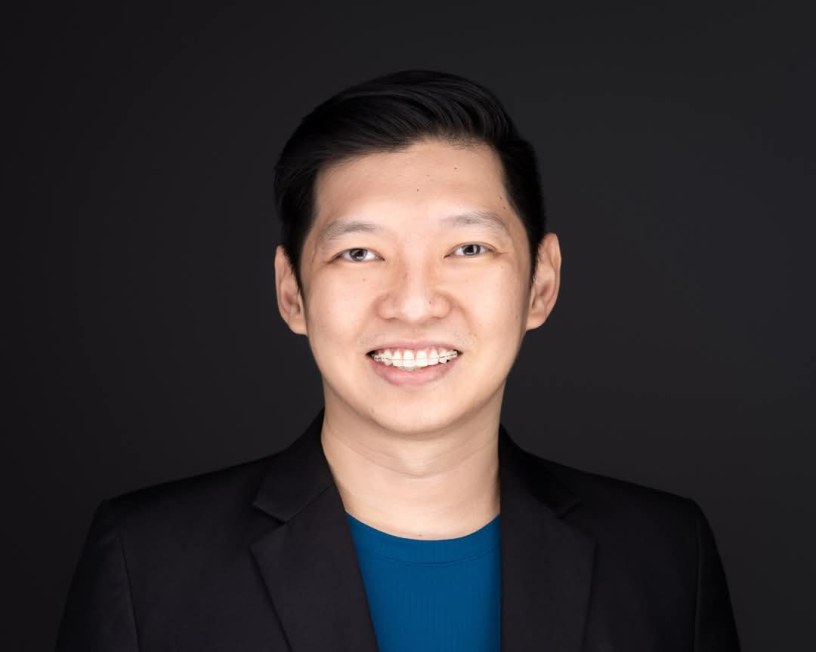
Meet Douglas, an innovative entrepreneur at the forefront of the renewable energy industry, specialising in solar and hydrogen energy solutions. With a strong commitment to sustainability, Douglas has dedicated his career to providing businesses and communities with cutting-edge technologies that harness the power of the sun and hydrogen to create clean, efficient energy.
By offering environmentally friendly alternatives to traditional energy sources, he is helping to shape a greener, more sustainable future for generations to come. Read his story on how he got started on renewable energy and how he’s changing lives, one joule at a time.
What inspired you to venture into the sustainable energy industry, and how did you start your journey toward providing energy solutions?
I think it started after seeing a video that talked about climate change, global warming, and how we should protect our Earth. I just felt that sustainability is something everyone needs to contribute to. It resonated with me, and I told myself that I didn’t need any other reason to do it—I just wanted to. So, I got into it.
Initially, I wanted to transit from a traditional commercial vehicle leasing business, which used diesel-burning vehicles, into one that uses electric vehicles (EVs) or hydrogen-powered vehicles to reduce emissions. But as I studied more about it, I realised that EVs might not be as sustainable as I initially thought. If you think about how our phone batteries wear out, it makes sense. It’s a huge investment in EVs, but I don’t see them as a long-term sustainable option.
This led me to learn more about hydrogen vehicles and how hydrogen can be a totally clean energy source. For example, Toyota uses hydrogen fuel cell technology, and once hydrogen is used, the only byproduct is water. That’s how I got into the whole energy field.
Can you explain the core principles behind your sustainable energy solutions and how they contribute to reducing carbon emissions?
There are a few segments of business that I’m involved in. The first is solar, which is straightforward. As long as there’s sunlight, there’s power, and it’s ‘green’. Using solar power, we don’t emit much carbon, unlike burning coal or natural gas.
The more solar panels we have, the less emissions we produce. This is one part of our business. The other part involves hydrogen. If we’re able to produce ‘green’ electricity from renewable sources like solar or hydro, we can then use that electricity to produce ‘green’ hydrogen. Hydrogen, as a source of energy, becomes an optimal sustainable fuel, and no emissions are generated during the process. That’s the core concept of my business.
How do you ensure that your energy solutions provide long-term energy independence for your clients?
Many people still believe that solar is very expensive with a return on investment (ROI) of 10 years, but that was true 3-5 years ago. Solar technology has evolved significantly. It now makes total sense to install solar panels on your property because the ROI is now between 3-5 years.
It is a good investment that will last you for 25 years. You’ll also achieve energy independence because you’ll be producing your own electricity and saving on your electricity bill. You won’t be as affected by rising electricity prices, and as long as there’s sun, you’ll have power. Solar is one way to protect yourself from energy price inflation.
What are some of the most common misconceptions that people have about sustainable energy, and how do you address these concerns?
One common misconception is that renewable energy is very expensive. Of course, there will be some initial capital expenditure, but in the long term, it’s really something we need to focus on. Global climate change has reached a point where we need to start taking action now. As mentioned earlier, if the ROI is 5 years, that’s a 20% return per year, which is excellent for any investment.
To push solar in Singapore, we’re even willing to invest in the infrastructure to provide lower electricity prices for roof owners. In some cases, we’re even willing to pay rent for the rooftops, as long as the economics make sense.
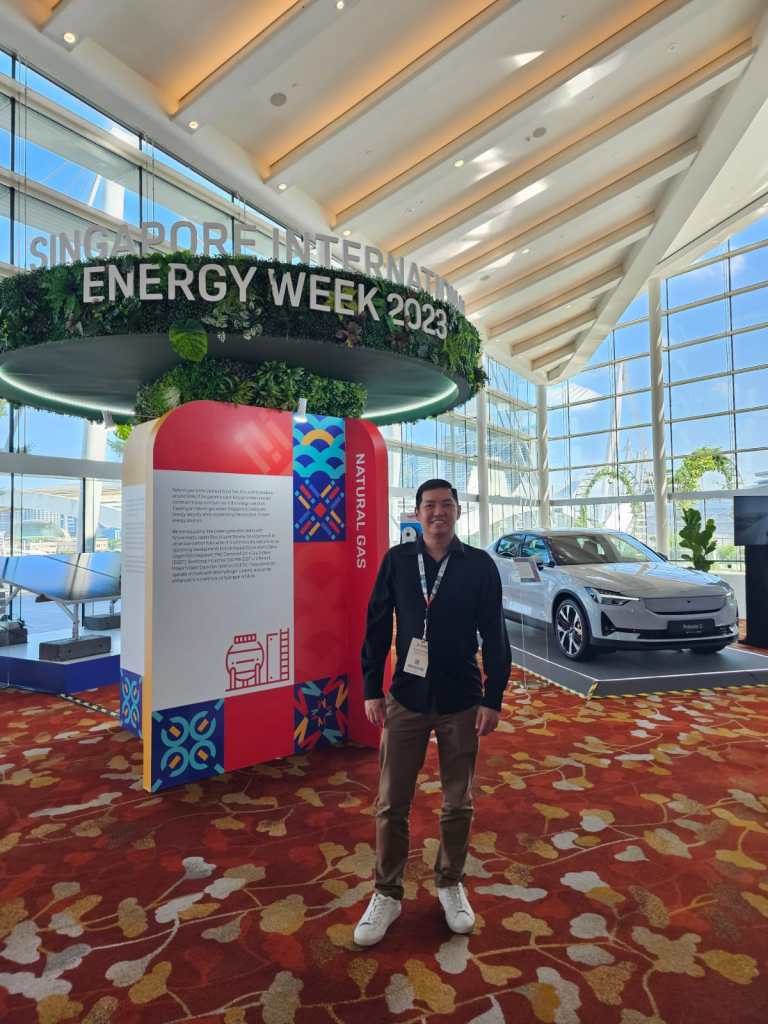
I see myself as an advocate for hydrogen and sustainable energy. In five years, I hope to have played a significant role in Singapore’s energy transition.
Aside from the cost, what other factors should be taken into account when determining if solar energy is a good choice?
Everyone who uses power emits some level of carbon. Singapore, for example, has one of the highest per capita carbon emissions, even more than cities like Hong Kong, Tokyo, and Beijing. We can do our part for climate change. For clients who own landed properties, once they installed solar panels, they significantly reduced their carbon emissions and energy use.
Singapore is unique in that you don’t need to have a pre-signed quota to generate power from solar energy. As long as you have an account with SP (Singapore Power) and a bi-directional meter, any excess energy you generate can be fed back into the grid, and SP will credit you for it. This process allows property owners to keep track of their carbon emissions and reduce them by using renewables such as solar.
How do you keep up with the constantly evolving technologies and innovations in the renewable energy space?
Given that time is limited for everyone and we all have our own areas of expertise, the best way for me to stay updated is by working with strong partners. For example, we work with Longi, one of the largest solar manufacturers in the world.
They spend a huge amount in their R&D budget, so by partnering with them, we save a lot of time and money. We also work with well-known scientists from Chinese universities, who help us develop and overcome any technological bottlenecks.
What role do government policies and incentives play in the growth of sustainable energy, and how can businesses take advantage of these grants or incentives?
In Singapore, it’s not easy to give grants to push green initiatives because we need to have viable pathways. Singapore is small, with limited natural resources, so we should adopt proven models from other countries. For example, in China, they have a system for converting methanol into hydrogen and electricity, and methanol is cheaper than diesel.
Singapore can adopt such commercially viable models and use government incentives and grants to help businesses transit into these proven solutions. It’s a long process, but as long as the government sees these solutions as viable, it will create incentives to support businesses.
What do you see as the next big development in sustainable energy, and how do you plan to integrate this into your business model?
Although we want to go ‘green’, Singapore has limitations in space, which makes it difficult to produce renewable energy from solar or wind. Nuclear energy could be an option, but it comes with concerns. I believe the future of energy for Singapore lies in importing ‘green’ renewables, particularly from China, where there are large-scale wind and solar farms.
We recently struck a deal with a local government in China to purchase cost-effective wasted energy. We have the technology to convert this into hydrogen, but hydrogen has storage and transport issues. To solve that, we can convert it into ‘green’ methanol, which is easier to store and transport. By doing this, we can ship cheap ‘green’ methanol to Singapore and use it as renewable energy. This is, in my view, the most viable pathway for Singapore in the future.
Where do you see yourself, and what’s your vision for Singapore in the next five years?
I see myself as an advocate for hydrogen and sustainable energy. In five years, I hope to have played a significant role in Singapore’s energy transition. I want to help Singapore and other countries move quickly toward clean hydrogen energy and combat climate change.
Our goal is to keep global temperature rises below 2°C, ensuring that we don’t face catastrophic flooding in the next 50 years. I hope Singapore can quickly adopt clean energy and all work together to address climate change.
Connect with Douglas: SynergyPacific and LinkedIn.
