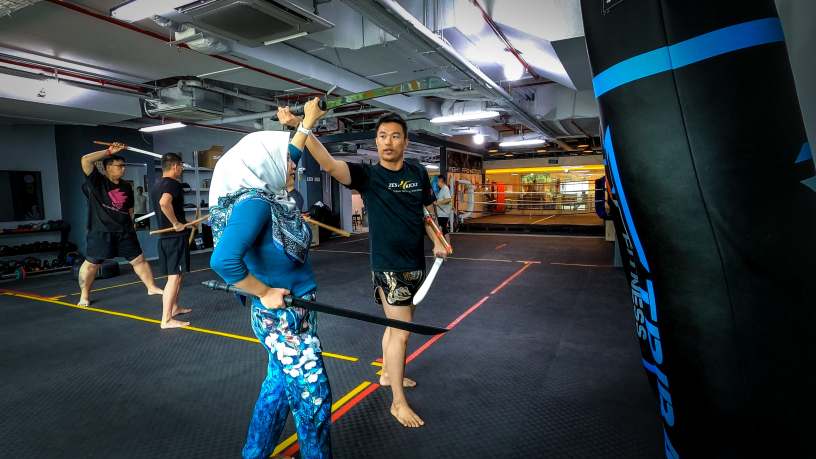
Meet Vinz, a former auditor who traded spreadsheets and numbers for passion and power in the world of Thai martial arts. After years in the corporate world, Vinz found his true calling in martial arts. He is also a registered Muay Thai Coach with World Muay Thai Organisation (WMO) and the Singapore representative for Tactical Thai Sword Singapore.
Today, he is the proud owner of a thriving martial arts studio, where he inspires others to embrace strength, resilience, and personal growth through the art of combat. His journey from auditor to entrepreneur is a testament to the courage it takes to pursue one’s passion and turn it into a successful venture. Read more about what got Vinz started.
What inspired you to leave your job as an auditor to become a Thai martial arts trainer and eventually open your own studio?
I’ve always been interested in martial arts and sports. This interest grew from a personal experience—my dad was in a traffic accident, and I often thought about how to improve his quality of life. After he passed, I saw an opportunity to help others. I decided to use Thai martial arts to improve people’s mobility, health, and fitness.
What challenges did you face when transitioning from being a trainer to running your own studio, and how did you overcome them?
Definitely the rental costs and manpower. With good business strategies, we can share resources and create a collective space, offering a one-stop shop. To scale the business, I believe in investing in human capital—our instructors, front desk staff, and holding regular meetings to align everyone’s goals. We make sure that everyone is technically sound and moving in the same direction.
How do you design your training programs to cater to students of different levels and goals?
I serve as a trainer for fitness professional continuing education courses, supported by SkillsFuture and NTUC UTAP grants.
We take these programs overseas and emphasise a progressive curriculum. When individuals join, we first assess their pre-existing medical conditions, injuries, and any previous martial arts background. From there, our robust curriculum, endorsed by the Krabi Krabong Association, allows us to tailor our teaching based on individual needs, proficiency levels, and past injuries.
I understand there’s another form of Thai martial arts Muay Boran. Can you tell us more about Muay Boran?
For those familiar with the movie Ong-Bak by Tony Jaa, you’ll have seen elements of Muay Boran. “Boran” means “ancient” and refers to the traditional Thai boxing system. It’s divided into different regional styles, such as Northern, Northeastern, and Southern styles, like Muay Chaiya.
Our system follows the Krabi Krabong Association and is built around codified systems of punches, kicks, and footwork. These techniques are not only used in modern-day sports but also in recent events like ONE Championship.
What sets Zesty Kickz apart from others in the fitness and Thai martial arts industry?
We are the only academy offering both Krabi Krabong, which is the traditional Thai weapon system, and Muay Thai. Additionally, we offer sports-style Muay Thai, which most people are familiar with.
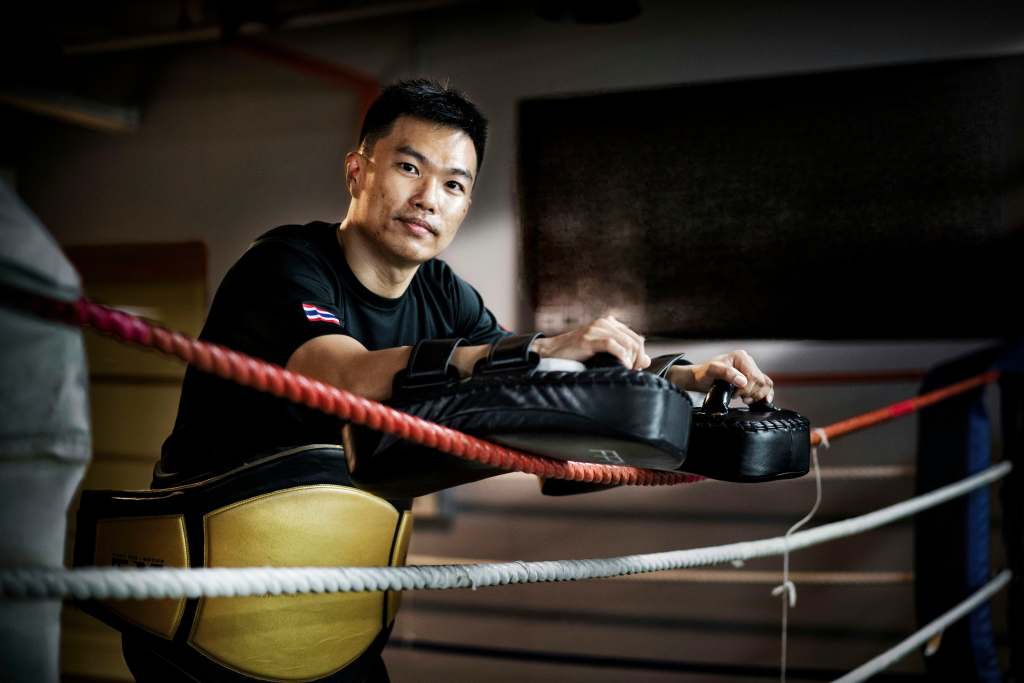
A common misconception is that Muay Thai is dangerous and will leave you bruised or injured. We emphasise safety and control in our training.
How do you promote a sense of community and motivation among your members?
It’s important to keep them engaged in class by knowing their objectives. Some are here to learn Muay Thai, some want to stay fit, and others just want to sweat it out. Ultimately, it’s about serving our members. We keep in touch via Instagram, Facebook groups, and Telegram chats. During festive seasons, we organise small gift exchanges to foster a sense of community.
We often see movies featuring Thai boxers and fighters. What are some misconceptions people have about Muay Thai, and how do you address them?
A common misconception is that Muay Thai is dangerous and will leave you bruised or injured. We emphasise safety and control in our training. Sparring is always technical, and members must master the basics before engaging in any sparring. For beginners, there’s absolutely no sparring. Even for experienced individuals, we ensure they are mentally and physically prepared.
The other misconception is that you need to be fit to start Muay Thai. But in reality, Muay Thai itself can make you fit. It improves agility, coordination, and overall fitness, as it’s an ambidextrous activity that challenges both sides of the body.
Can you share a success story of a student who achieved their goals through training at your studio?
One success story involves a lady in her 50s. Before joining us, she was very active in her community, doing dance aerobics. She began experiencing knee pain, and after assessing her condition, we incorporated sports science principles into her training.
We focused on improving her knee mobility, flexion, and extension. Along with Muay Thai and Krabi Krabong exercises, she built strength and mobility. Now, she’s able to perform in both her dance classes and in our martial arts programs.
How do you balance managing the business side of the gym with your passion for training?
This is an interesting question. To scale the business, I’ve learned from more experienced business owners. I delegate the operational and teaching responsibilities to my instructors, but I still make sure the curriculum stays on track.
My focus has shifted to business development—meeting other business owners, engaging with different communities, and getting the word out that our academy is the only one offering both Krabi Krabong and Muay Boran.
What are your long-term plans for your gym and your career in the Thai martial arts industry?
I hope to open more gyms with instructors offering Krabi Krabong. Eventually, I’d like to see these beautiful Thai weapon systems spread across more gyms in Singapore, with Krabi Krabong being incorporated into their curriculums.
Where do you see yourself and what’s your vision for Singapore in the next five years?
I hope that Thai martial arts can be used not just for fitness but also for seniors. Personally, I’ve modified Krabi Krabong techniques and volunteered with SPD Singapore to help people with disabilities. I’ve taught seniors in wheelchairs simple movements like how to brush their teeth, pick up newspapers, or eat with utensils.
With my sports science background, it’s easier for me to adapt exercises to the needs of the participants. I hope that, in the future, Thai martial arts can empower more people in Singapore, including seniors and those with disabilities.
Connect with Vinz: ZestyKickz, Instagram and LinkedIn.
