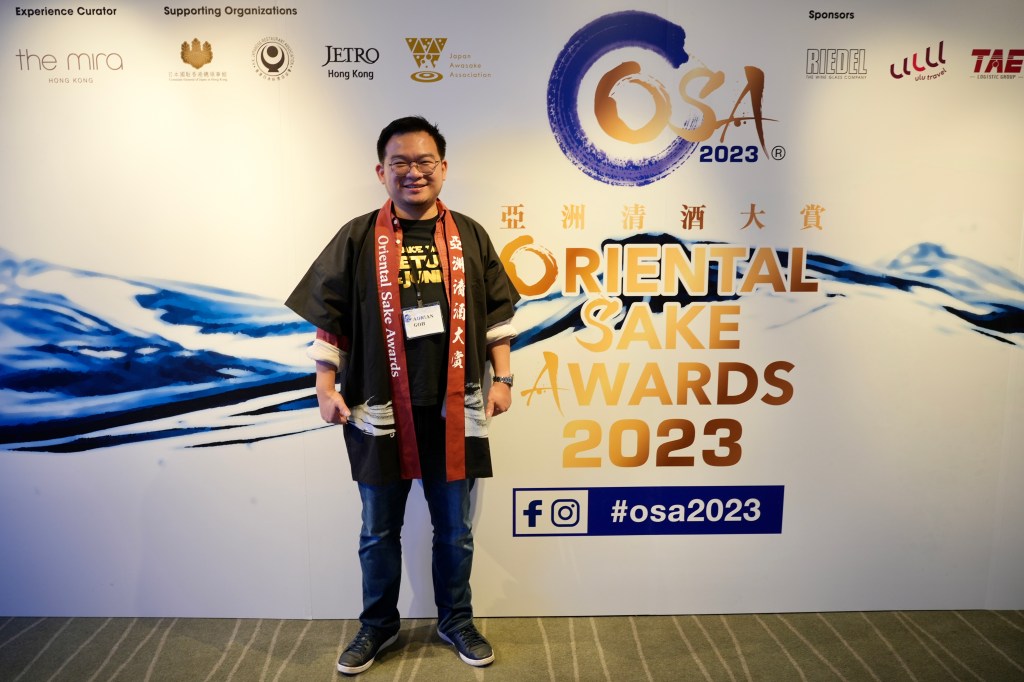
Meet Adrian, Singapore’s first Sake Samurai and a passionate advocate for the art of sake. With a deep knowledge and appreciation for this traditional Japanese drink, he has made a significant mark in the local sake scene as both a distributor and a key figure in its promotion.
As the first to earn the prestigious title of Sake Samurai in Singapore, he has dedicated himself to educating others about sake’s rich history and cultural significance. Currently, Adrian is embarking on a new venture to establish the Sake Sommelier Association of Singapore, aiming to further elevate the appreciation and expertise of sake in the region. Here’s his story on how he started from zero.
Can you share your journey into the world of sake and what inspired you to become a sake distributor?
I have been in this industry since 2013. Back when I was younger, my family used to eat a lot of Japanese food, so I was exposed to sake quite often. Back then, Japanese sake was just something nice to drink with Japanese food. After I started working, I was mostly dealing with intangible things like online IT, ad sales, and advertising. These were not tangible, not “bread and butter,” things you can’t touch or feel.
Later, I spent some time in China, where the drinking culture was very heavy. I ended up drinking a lot of baijiu, which was quite difficult to drink at times, along with whisky and beer. Whenever a drinking session involved Japanese sake, it made me very happy because it was easy to drink and went down smoothly. That’s how Japanese sake held a special place in my mind.
After my stint in China, I came back to Singapore and was looking for something to do. Initially, I considered wine or whisky because they were more popular, but I realised the market was too competitive. Then, I thought back to what I personally enjoyed. In 2013, Japanese sake wasn’t very popular in Singapore, with only around 10 companies dealing in it. I saw an opportunity to do something with that.
How does being the first sake Samurai in Singapore influence your role in promoting sake culture?
Being the first sake Samurai in Singapore is a huge honour. As the first Singaporean to receive this title, I carry the responsibility of increasing the recognition, awareness, and consumption of Japanese sake in Singapore. This title is usually given to Japanese people; out of the 101 people ever honoured, only 40 are non-Japanese, and out of those, only about 5 are Chinese.
Since receiving the title a few months ago, I’ve been organising events to promote Japanese sake. I am also planning to start the Sake Sommelier Association of Singapore in collaboration with the Sommelier Association of Singapore.
This initiative aims to enhance the visibility of sake professionals and improve the quality of service in the sake industry.
What challenges did you face when you first started this business, and how did you overcome them?
Before starting this business, I had no knowledge of retail, distribution, the F&B industry, or working with Japanese people. I started from zero, armed only with an idea and a willingness to learn. I was fortunate to meet many mentors in the restaurant industry, especially service staff who were passionate about Japanese sake.
I approached the business with a strong desire to learn, which led me to study sake through other distributors, educators, and sake breweries in Japan. One of the major challenges in the F&B industry is cash flow. To manage this, maintaining open communication and developing strong relationships with people you enjoy working with is crucial.
What are some misconceptions people have about sake, and how do you address them?
The biggest misconception is that Japanese sake is only to be consumed with Japanese food. Sake breweries outside Japan are gaining popularity. For instance, I recently visited a sake brewery in Vietnam. Sake is also being brewed in America, Europe, and other parts of Asia. When sake is brewed outside Japan, it is often paired with local cuisines, demonstrating its versatility beyond Japanese food.
Another common misconception, particularly in Singapore, is that only high-end sake is worth drinking, and cheaper sake is not good. This is because high import duties in Singapore mean we generally don’t see “table sake,” the cheapest category of sake. Instead, we tend to drink higher-quality sake, with Singapore ranking second globally (behind Hong Kong) in terms of the average value of sake bottles purchased.
While premium sake like Junmai Daiginjo is excellent, I believe sakes of slightly lower grades, like Junmai Ginjo or Junmai, are often better for pairing with local cuisine due to their richer umami profiles.
Before starting this business, I had no knowledge of retail, distribution, the F&B industry, or working with Japanese people. I started from zero, armed only with an idea and a willingness to learn.
How do you curate your selection of sake to cater to the Singaporean palate?
I’ve learned that my personal preferences may not align with the mass market. My company aims to make sake accessible to a broad audience. When selecting a sake brewery to represent, I consider factors like quality, design, story, pedigree, and region. I believe in regionality—sake from different parts of Japan has unique characteristics suited to pairing with various cuisines.
When evaluating a brewery, I request as many samples as possible, replicating the conditions under which they will be distributed. I don’t taste them alone; I involve my staff and regular customers in blind tastings and use a rating system to assess the sakes. Based on these results, and other factors, we decide whether to represent the brewery.
Can you share a memorable moment or achievement in your sake distribution career?
Not every career provides moments of recognition. I’m fortunate that, despite being in sales, I’ve received acknowledgment for my efforts in promoting sake. The title of Sake Samurai is a testament to this recognition, granted by sake brewers, prefectures, and associations in Japan.
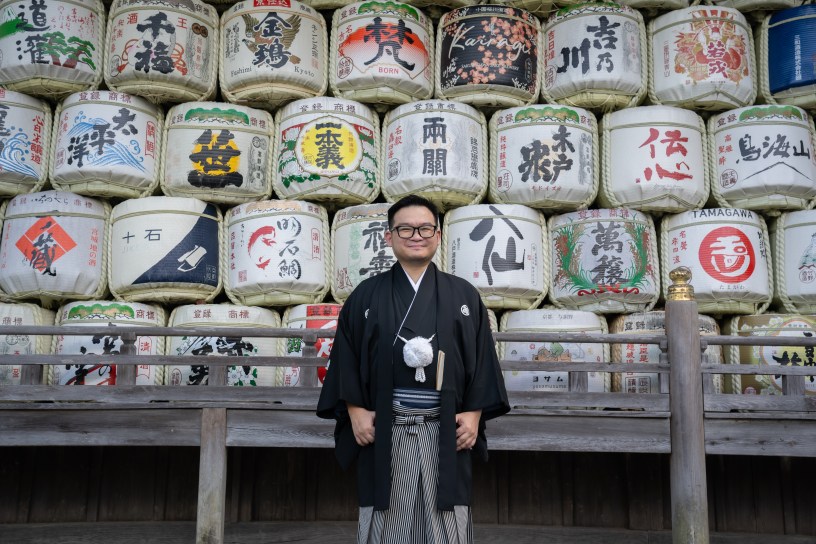
The ceremony for receiving the title was overwhelming. It involved wearing traditional Japanese ceremonial attire, participating in a temple ceremony officiated by priests, delivering a speech at a press conference, and, of course, enjoying a celebratory dinner with drinks afterward.
What trends do you see emerging in the sake industry, both locally and globally?
Japanese sake is becoming more widely accepted due to increased education and exposure through competitions. Frontline sommeliers and consumers are discovering how well sake pairs with a variety of foods, especially seafood.
In Singapore, sake is appearing more frequently on wine menus and in pairing sessions. Locally brewed sake is also gaining traction. This year, a sake brewery opened in Singapore, and several Singaporeans, including myself, have traveled to Japan to brew their own sake.
I understand that you conduct sake tastings. Can you share more about these activities?
For my company, education is key to increasing awareness of sake. Many Singaporeans are well-educated about food and alcohol and are curious about what they consume. The trend is shifting towards drinking less but drinking better.
I regularly conduct tasting sessions for alumni groups, regular customers and corporate clients. With Singaporeans’ love for Japanese food, the interest in sake has been growing rapidly, catching up with the demand for Japanese cuisine.
What advice would you give to someone exploring sake for the first time?
Sake is unique for several reasons. Firstly, it has a long history, over 2,000 years. Some sake breweries are centuries old, with the oldest I’ve visited being nearly 900 years old, meaning it has spanned over 43 generations.
Secondly, sake is made using koji fungus, which converts starch into sugar. This process produces high levels of amino acids, resulting in a distinct umami flavour, making it excellent for food pairing. Lastly, sake can be enjoyed at multiple temperatures, with names for each five-degree increment. This versatility enhances its appeal.
Where do you see yourself and what’s your vision for Singapore in the next five years?
For myself, I will be building up the industry through the Sake Sommelier Association. By banding together, we can increase the knowledge base and gain more support from Japan.
During COVID, sake consumption in Singapore spiked, growing by over 100%. Although it has normalised, interest remains high, partly due to increased tourism in Japan. Moving forward, I see Japanese sake becoming even more popular in Singapore, increasing its share of the alcohol market. This growth will likely be driven by continued education and the establishment of local sake breweries.
Connect with Adrian: Inter Rice Asia and LinkedIn.